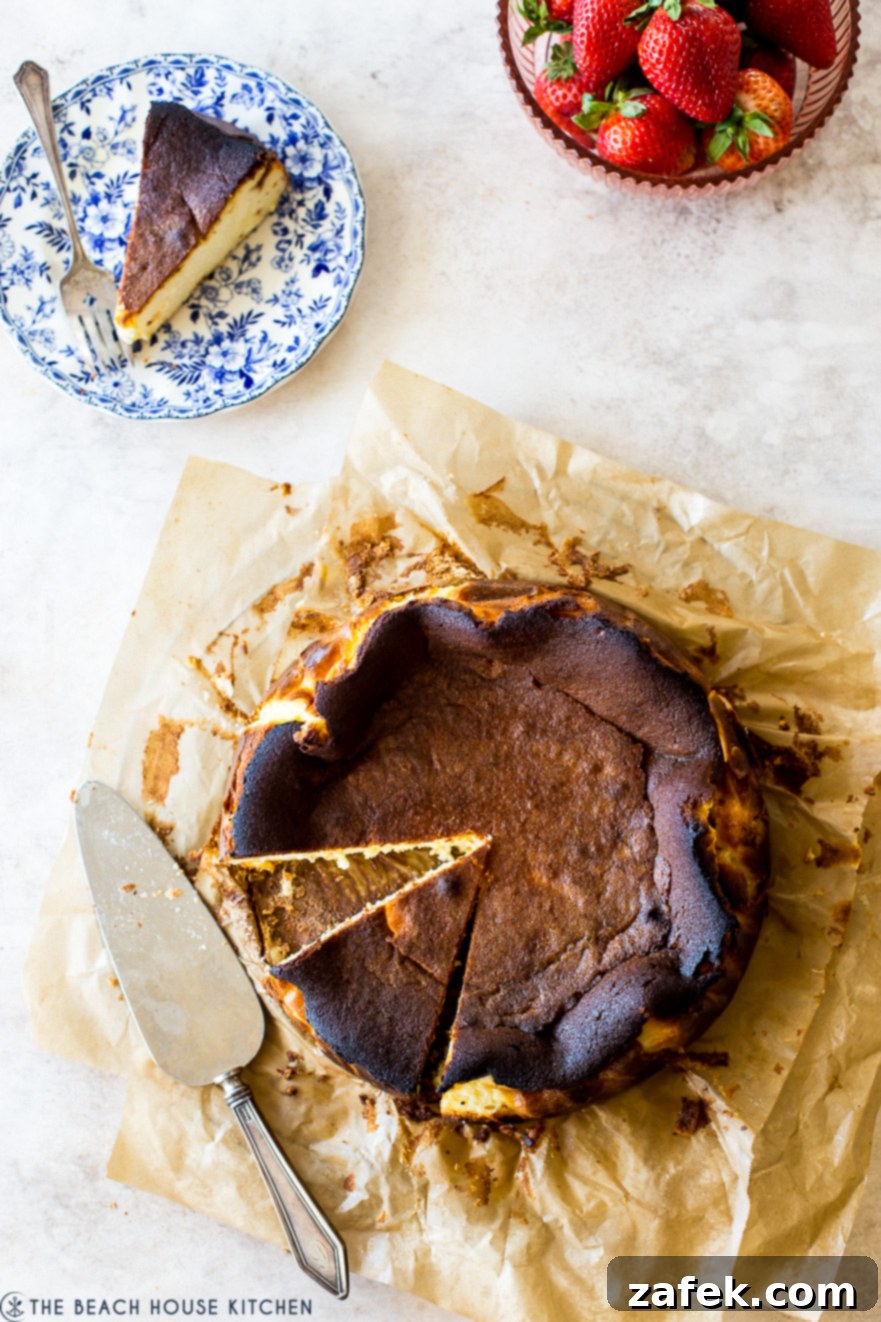
Welcome to the captivating world of Burnt Basque Cheesecake, a dessert that defies conventional beauty standards and delights with its rustic charm and unbelievably creamy texture. Hailing from the picturesque culinary haven of San Sebastián, Spain, this crustless wonder is a testament to simple ingredients coming together to create something truly extraordinary. Forget your meticulously smoothed, perfectly uniform cheesecakes; the Basque version embraces an intentionally “burnt”, deeply caramelized exterior that gives way to a luxuriously soft, almost molten center. It’s a bold, decadent, and utterly unforgettable dessert experience that has captivated food lovers worldwide.
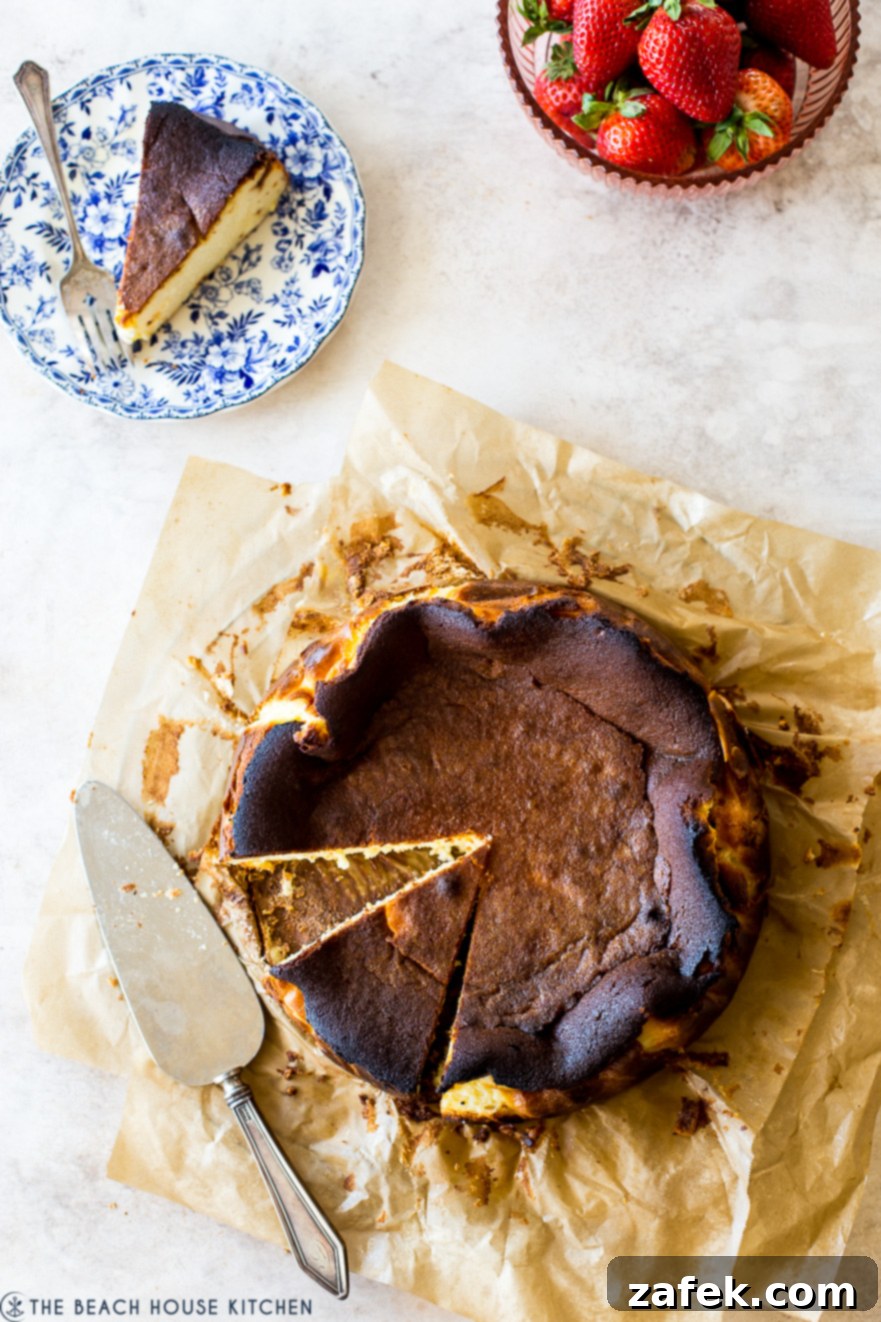
For too long, I stood on the sidelines, observing the global adoration for this unique cheesecake. While trends like baked feta pasta captured fleeting attention, I found myself drawn to the timeless allure of the Burnt Basque Cheesecake. It’s more than just a dessert; it’s a statement—a delightful rebellion against culinary norms, much like standing out in a crowd. Today, I’m here to wholeheartedly embrace this delicious deviation, because when it comes to cheesecake, sometimes the best path is the one less taken, especially when it leads to such an exquisite treat.
Embrace the Imperfect Perfection: Easy Decadent Burnt Basque Cheesecake
While the Burnt Basque Cheesecake might seem like a recent phenomenon in the wider culinary world, its origins are rooted in the heart of the Basque Country. It was perfected by chef Santiago Rivera at La Viña restaurant in San Sebastián, where it quickly became a local legend before gaining international fame. What makes this cheesecake truly revolutionary is its complete disregard for a crust and a water bath – two staples of traditional cheesecakes. This simplicity is its genius, making it incredibly accessible for home bakers of all skill levels.
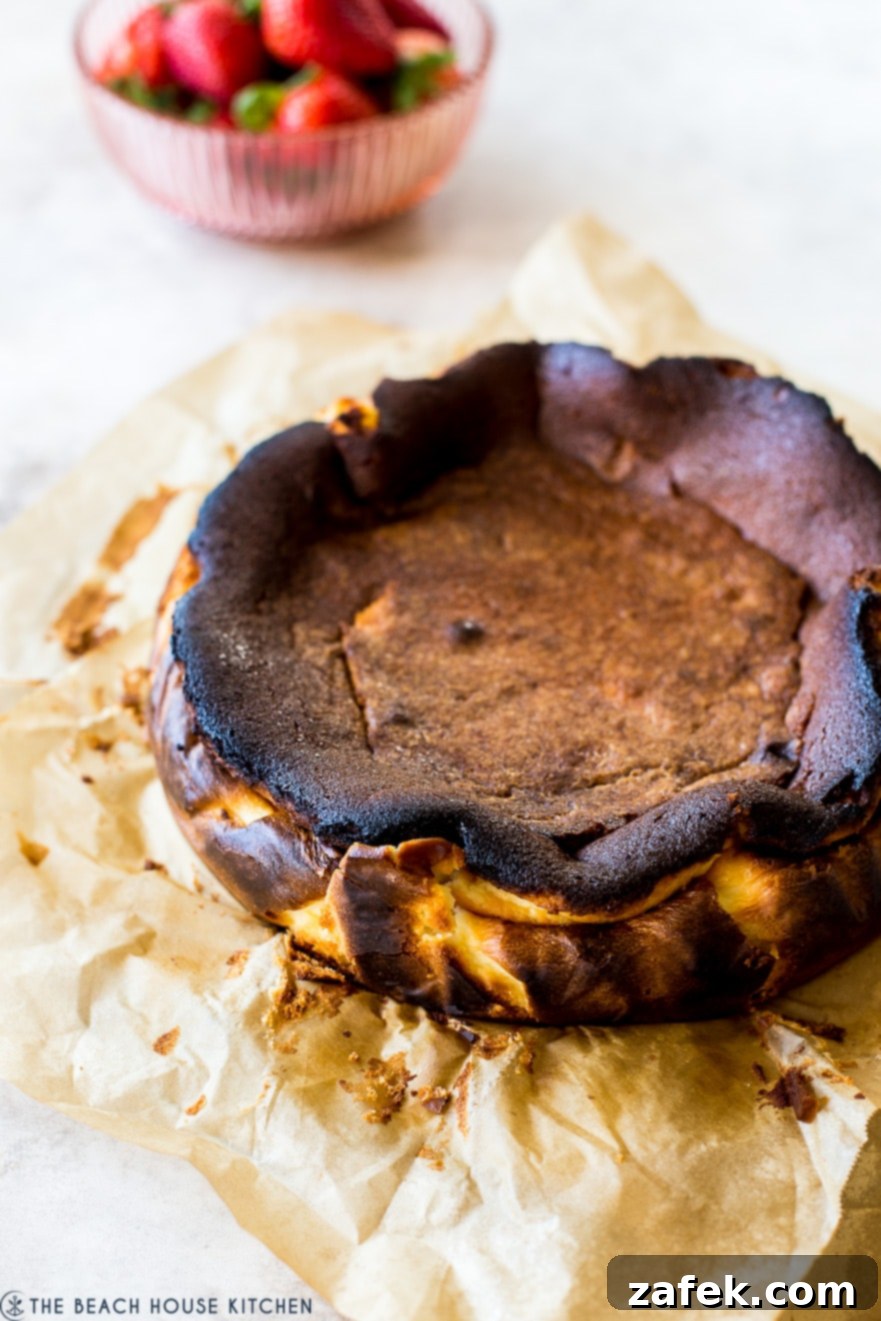
My journey to perfecting this recipe began with a discovery online, tracing back to the highly regarded Bon Appétit version. As a devoted fan of cheesecake, my husband Tom immediately recognized the appeal of that stunning, dark, caramelized top. It presented a compelling contrast to the dense, smooth perfection of classic New York-style cheesecakes. This was an invitation to explore something new, exciting, and surprisingly straightforward.
The beauty of the Burnt Basque Cheesecake truly lies in its effortless preparation. The absence of a delicate crust to press, blind bake, and cool eliminates a significant step, simplifying the entire process. This means less fuss, less time, and fewer opportunities for things to go wrong. It’s a dream come true for anyone who loves baking but sometimes shies away from complex desserts. You’ll be amazed at how quickly you can whip up the batter for this spectacular treat.
Key Ingredients for Your Burnt Basque Cheesecake
The magic of Burnt Basque Cheesecake comes from a handful of simple, high-quality ingredients. Each plays a crucial role in achieving that signature texture and flavor:
- Cream Cheese: The foundation of any great cheesecake. Opt for full-fat, brick-style cream cheese at room temperature for the smoothest batter. It provides the characteristic tang and richness.
- Granulated Sugar: Sweetens the cheesecake and contributes to the caramelization of the top.
- Eggs: Act as a binder, giving structure to the cheesecake while keeping it tender. Room temperature eggs emulsify better with the other ingredients.
- Heavy Cream: Essential for that unbelievably smooth, custardy, and luxurious texture. It adds richness and helps prevent the cheesecake from becoming too dense.
- Kosher Salt: A touch of salt enhances all the other flavors, balancing the sweetness and richness.
- Vanilla Extract: Provides a warm, aromatic depth that complements the creamy flavors beautifully.
- All-Purpose Flour: Just a small amount of flour helps stabilize the batter, preventing it from cracking and ensuring that signature jiggly, creamy center.
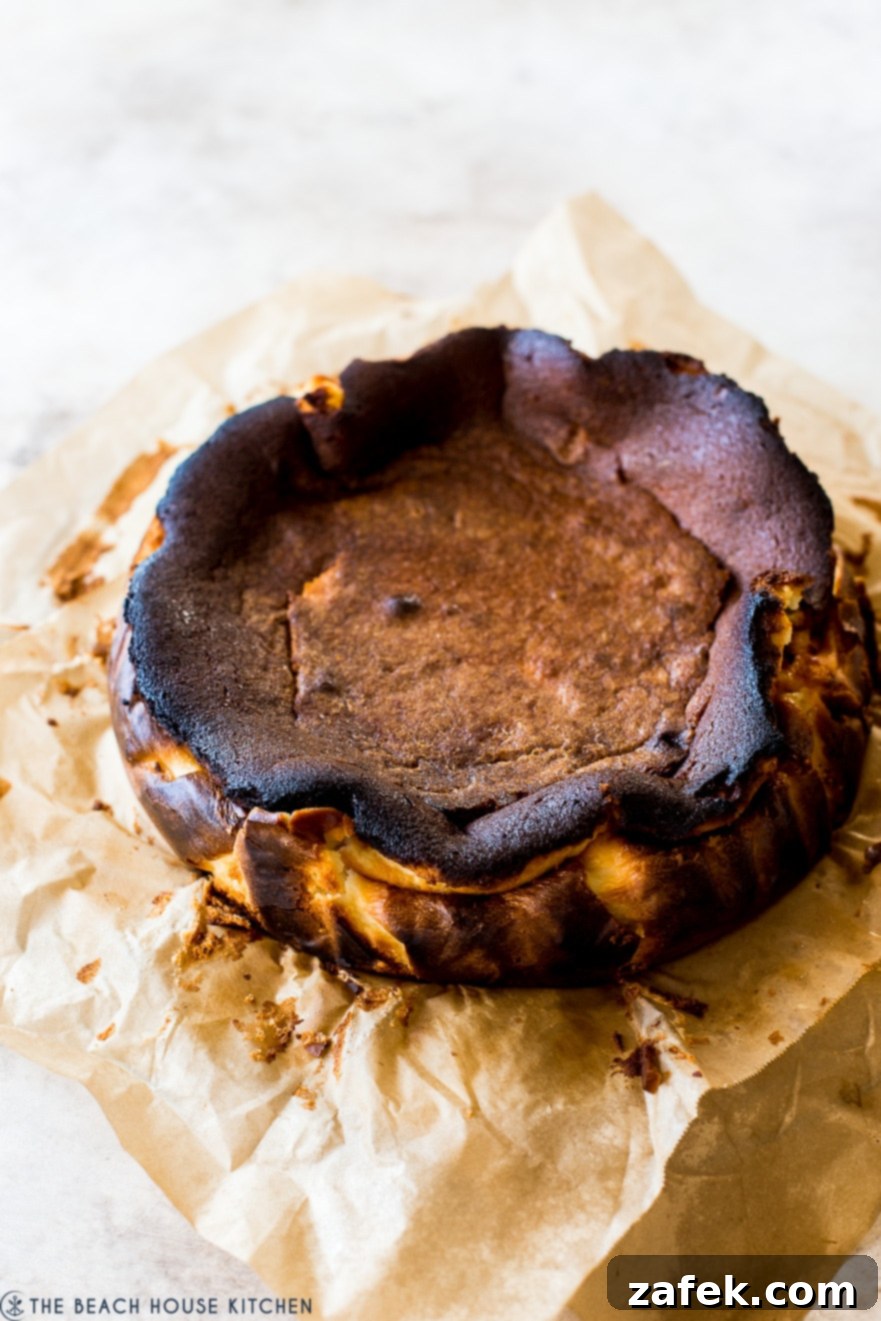
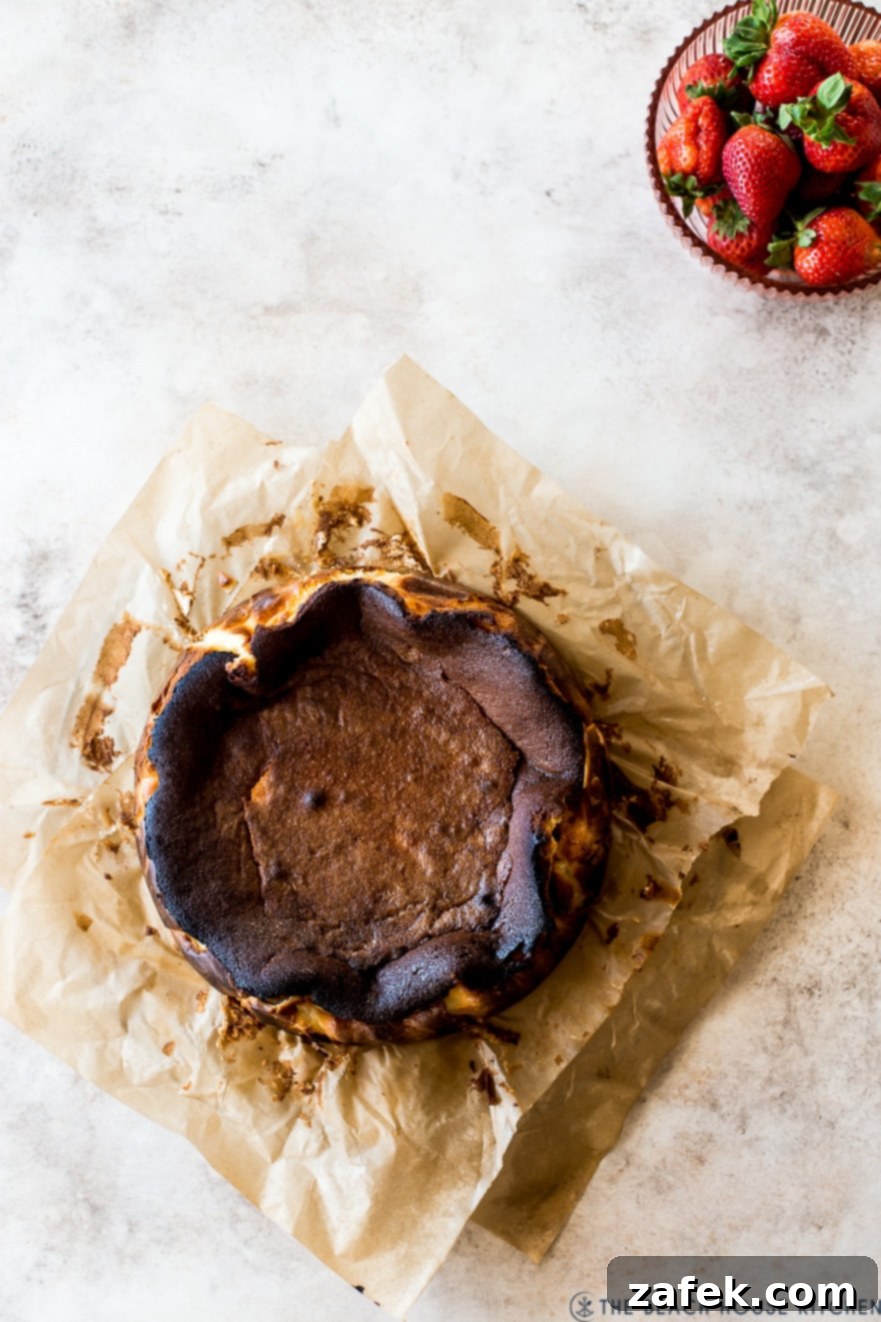
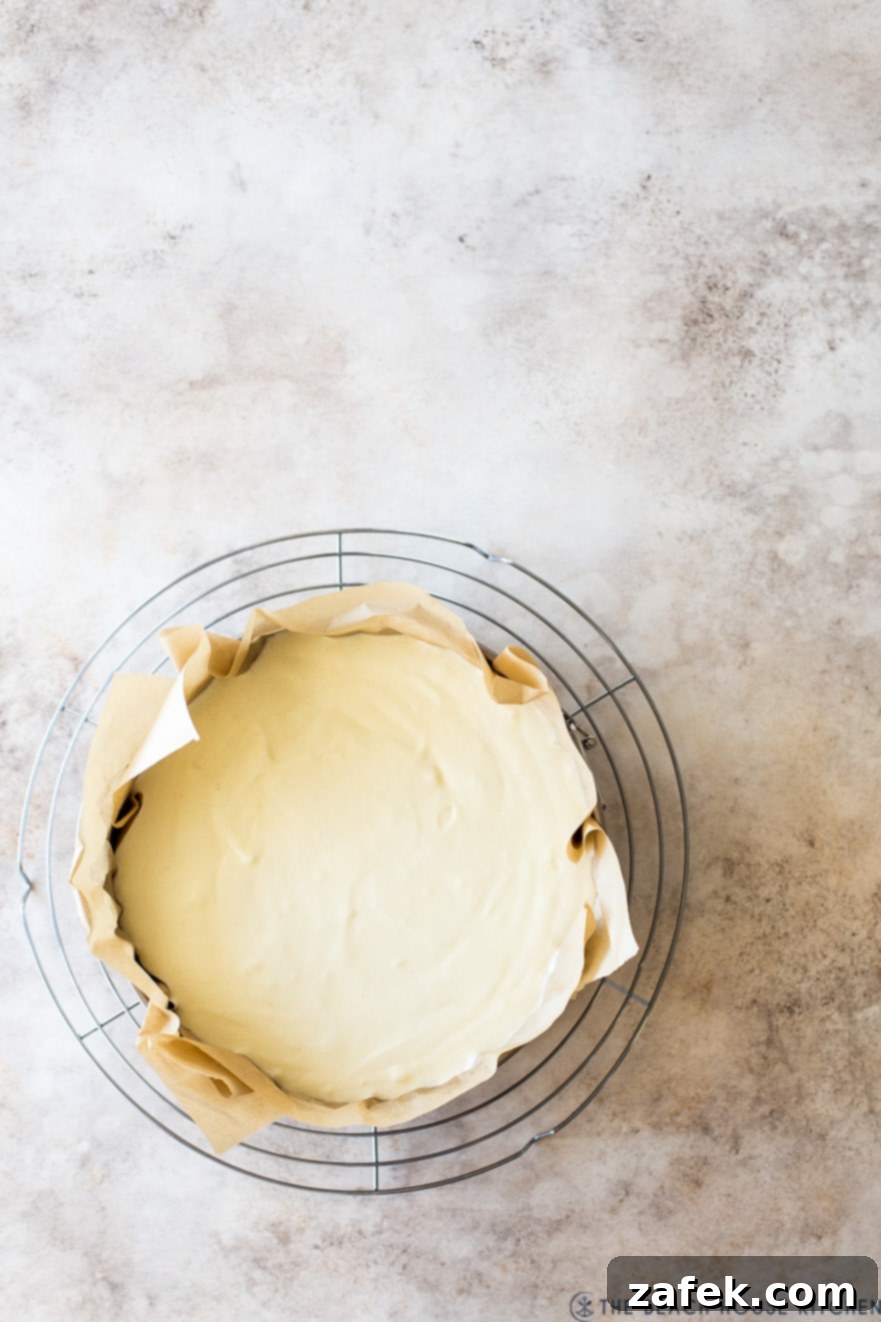
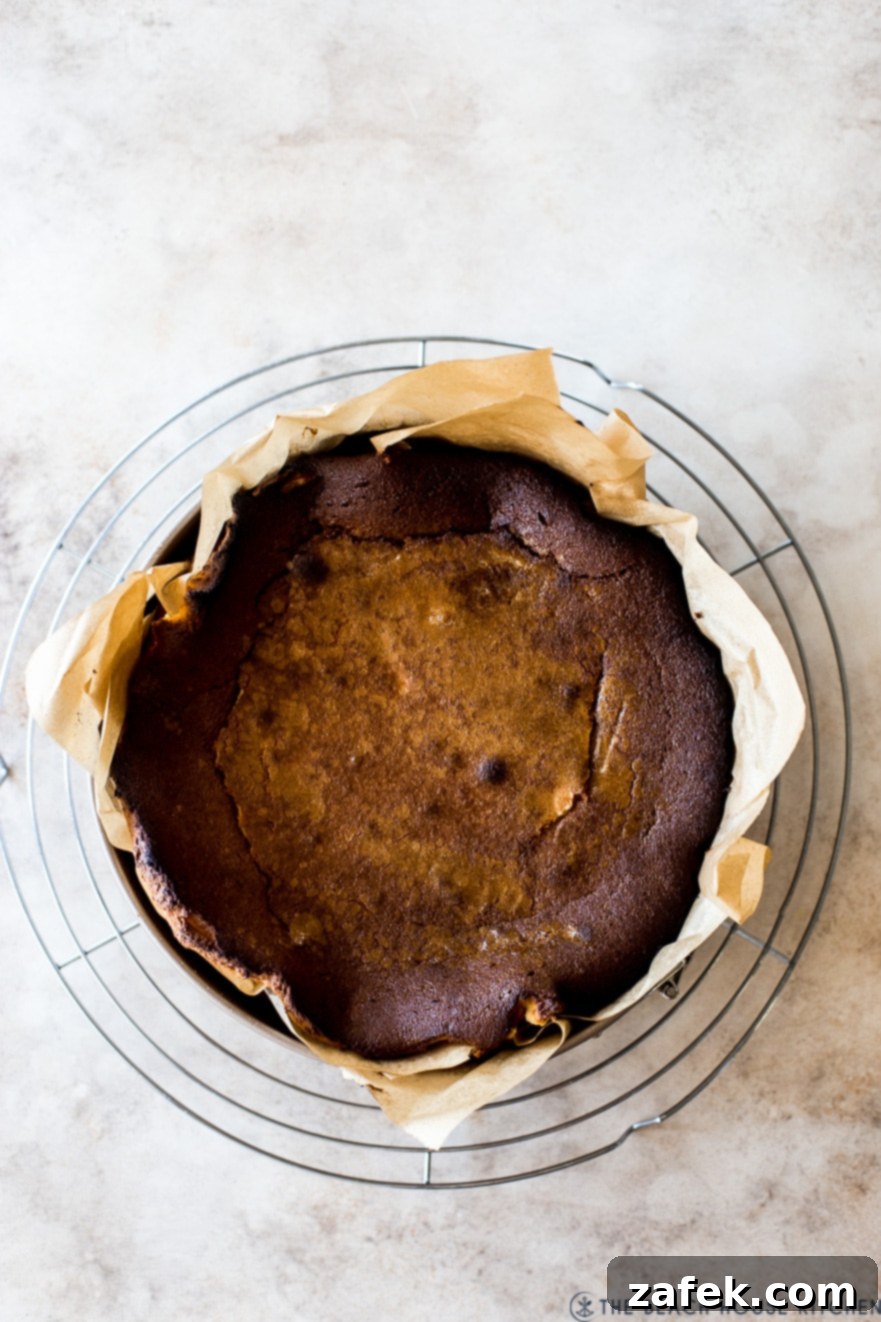
The preparation process is remarkably straightforward, focusing on proper mixing and baking technique. You’ll begin by buttering your springform pan generously, then lining it with two overlapping sheets of parchment paper. This parchment is key – it should extend at least a couple of inches above the rim of the pan, acting as a collar to contain the cheesecake as it rises and to ensure effortless unmolding. Next, you’ll combine your ingredients, beating them to a smooth, airy batter. The mixture is then poured into your prepared pan and baked at a high temperature until the top achieves that stunning, almost blackened caramelization, while the center remains delightfully jiggly. This “burnt” appearance is not an accident; it’s the hallmark of an authentic Basque cheesecake, contributing a unique, slightly bitter counterpoint to the sweet, creamy interior.
Once out of the oven, the most challenging part of making this cheesecake is undoubtedly the waiting game. It requires patience to allow it to cool properly, first at room temperature and then in the refrigerator. This cooling period is absolutely crucial for the cheesecake to set correctly and develop its iconic texture.
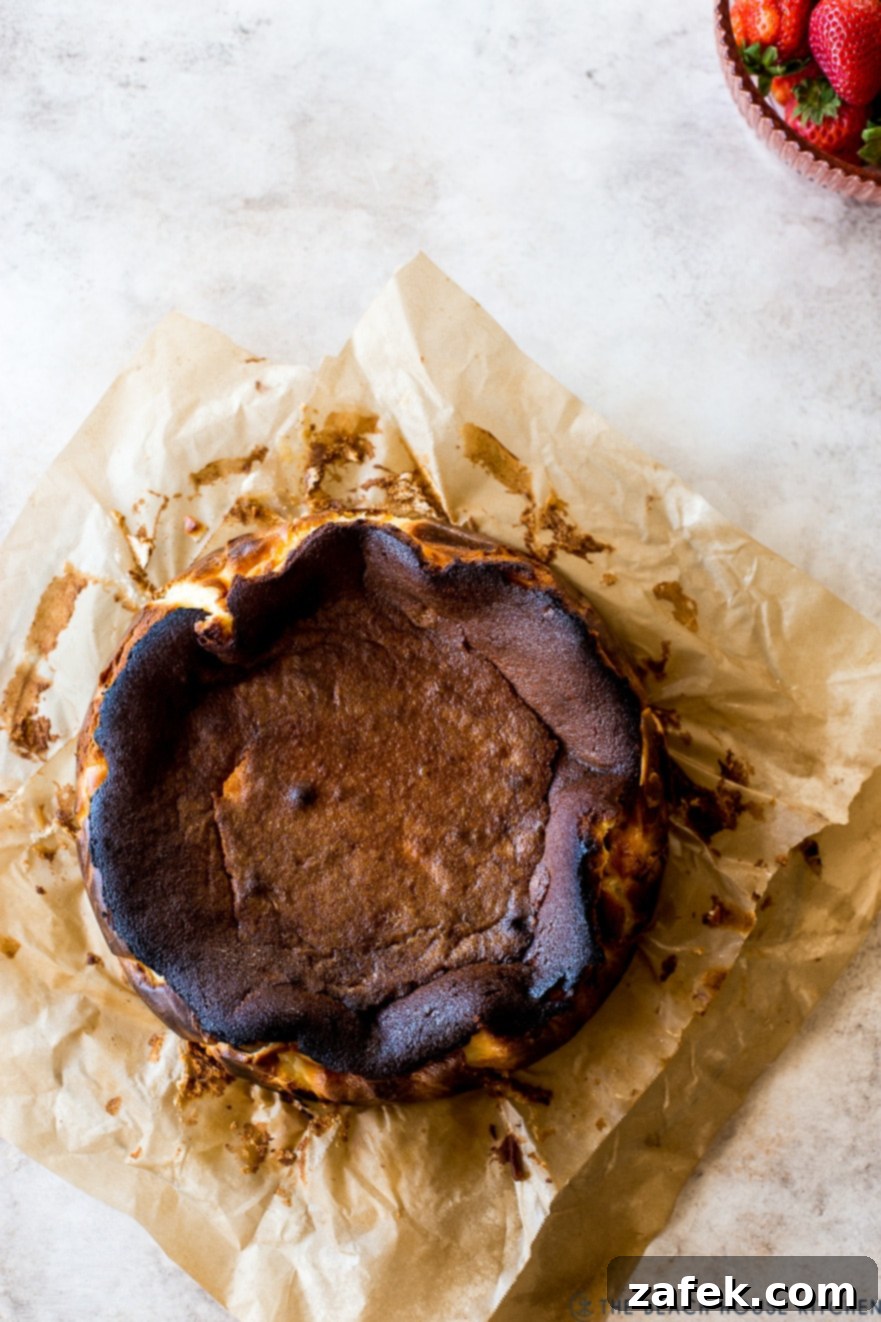
As your cheesecake cools, you’ll observe a natural phenomenon: it will “fall” or deflate. Do not be alarmed by this; it’s a completely normal and expected characteristic of Burnt Basque Cheesecake! The high baking temperature and the deliberate slight undercooking of the center are what create its signature creamy, almost custard-like texture. The edges, being fully baked, will maintain their height, while the softer, less cooked center will gently sink as the cheesecake cools and contracts. This dramatic rise and fall is part of its charm and contributes to the alluring, rustic appearance. The contrast between the firm, dark edges and the ethereal, pale center is what makes each slice so visually appealing and texturally exciting.
I genuinely hope you take the leap and try this luscious, creamy, and utterly decadent dessert. It’s a culinary experience that promises to delight your senses and leave a lasting impression. Whether you’re a seasoned baker or a novice, this forgiving and flavorful cheesecake is bound to become a new favorite. Enjoy every single bite of its unique blend of textures and tastes!
Essential Cook’s Notes for a Perfect Burnt Basque Cheesecake
To ensure your Burnt Basque Cheesecake turns out perfectly every time, keep these practical tips in mind:
- The Right Pan: A 10-inch springform pan is highly recommended for this recipe. Its design allows for easy release of the cheesecake, preserving its unique shape and delicate sides. Don’t forget to line it meticulously with parchment paper extending well above the rim.
- Advance Preparation: This cheesecake is an excellent make-ahead dessert. Preparing it a day in advance allows the flavors to meld and the texture to fully set and mature in the refrigerator. Simply cover it loosely with plastic wrap once completely cooled before chilling.
- Serving Temperature: For the ultimate experience, remember to remove the cheesecake from the fridge a few hours before you plan to serve it. Allowing it to come to room temperature softens the center to its ideal creamy consistency, enhancing its luxurious mouthfeel and flavor. The contrast between the cool, firm edges and the slightly warmer, yielding interior is simply divine.
- Parchment Paper is Your Friend: Don’t skimp on the parchment paper. Using two overlapping sheets ensures that the tall sides of the cheesecake are fully encased, making unmolding a breeze and preventing any sticking. The crinkled, rustic look of the paper is part of the Basque cheesecake’s charm.
- Don’t Be Afraid of the “Burnt” Top: The high baking temperature is intentional. That dark, almost black crust is not a mistake; it’s where much of the unique flavor comes from. It provides a delightful bitterness that cuts through the richness of the creamy interior. Trust the process!
More Decadent Desserts to Satisfy Your Sweet Cravings
If you’ve fallen in love with the rich and satisfying nature of the Burnt Basque Cheesecake, you might be eager to explore other delightful confections. Here are a few more decadent dessert ideas to add to your baking repertoire, perfect for any occasion:
Lemon Layer Cake: A bright, zesty, and beautifully layered cake that offers a refreshing contrast with its vibrant citrus notes and tender crumb.
Chocolate Orange Bundt Cake: Indulge in the harmonious pairing of rich chocolate and tangy orange, baked into a stunning bundt shape that’s perfect for sharing.
Black Bottom Cupcakes: These charming cupcakes feature a delightful surprise—a rich cream cheese filling baked into a moist chocolate base, offering a miniature version of cheesecake satisfaction.
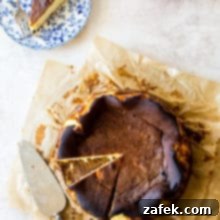
Burnt Basque Cheesecake
Print Recipe
Pin Recipe
Ingredients
- unsalted butter, for preparing the pan
- 2 lb. cream cheese, full-fat, softened at room temperature
- 1 1/2 cups granulated sugar
- 6 large eggs, at room temperature
- 2 cups heavy cream
- 1 tsp. kosher salt
- 1 tsp. vanilla extract
- 1/3 cup all-purpose flour
Instructions
- Position an oven rack in the middle of your oven and preheat it to 400°F (200°C). Prepare your 10-inch springform pan by buttering it thoroughly, then line it with two overlapping sheets of 16×12″ parchment paper. Ensure the parchment paper extends at least 2 inches above the top edge of the pan on all sides, creating a high collar. Place the prepared pan on a rimmed baking sheet for easy handling and to catch any potential drips.
- In the bowl of a stand mixer fitted with a paddle attachment, combine the softened cream cheese and granulated sugar. Beat them together on medium-low speed until the mixture is completely smooth and creamy, about 2 minutes. Remember to pause and scrape down the sides of the bowl as needed to ensure all ingredients are well incorporated and no lumps remain.
- Increase the mixer speed to medium. Add the eggs one at a time, beating each egg for approximately 15 seconds before adding the next. This ensures each egg is fully incorporated into the batter. After all eggs are added, scrape down the bowl once more. Reduce the mixer speed to medium-low, then add the heavy cream, kosher salt, and vanilla extract. Beat for about 30 seconds until these ingredients are just combined.
- Turn off the mixer. Sift the all-purpose flour evenly over the cream cheese mixture in the bowl. This prevents lumps and ensures smooth distribution. Turn the mixer back on to low speed and beat until the flour is just combined, approximately 15 seconds. Scrape down the sides of the bowl again and continue to beat for another 10 seconds until the mixture is uniform and smooth. Be careful not to overmix at this stage.
- Carefully pour the prepared batter into your parchment-lined springform pan. Transfer the baking sheet with the cheesecake to your preheated oven. Bake for 60-65 minutes, or until the top of the cheesecake is deeply golden brown (almost black in spots) and the center is still very jiggly when the pan is gently shaken. The jiggliness is crucial for that characteristic creamy texture.
- Once baked, remove the cheesecake from the oven and let it cool slightly on the baking sheet on a wire rack. As it cools, the cheesecake will naturally fall and settle, which is exactly what you want for its creamy texture. Once it has cooled to room temperature (this can take a few hours), carefully unmold it by releasing the springform pan and peeling away the parchment paper from the sides. For best results, chill the cheesecake in the refrigerator for at least 4 hours, or preferably overnight. Slice and serve at room temperature to fully appreciate its unique flavor and consistency.
Notes
This cheesecake can be prepared a day in advance without compromising its quality; in fact, its flavors often deepen overnight. Simply cover it loosely and chill it in your refrigerator once it has fully cooled.
If you opt to make it ahead of time, be sure to remove it from the refrigerator a few hours before you plan to serve it. Allowing it to come to room temperature ensures the optimal creamy texture and enhances its rich flavor profile.
Nutrition
Recipe adapted from Bon Appétit Magazine.