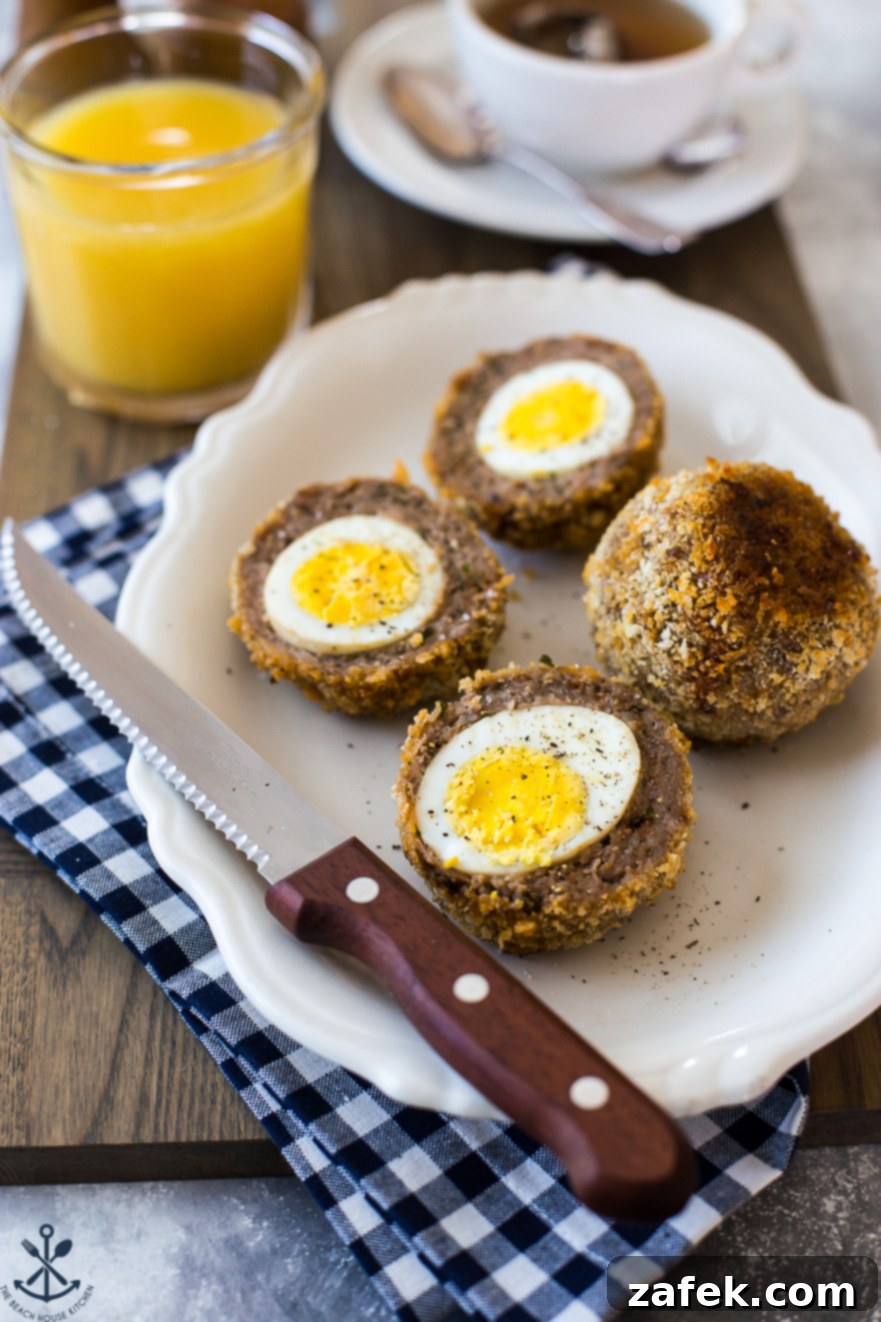
Let’s jazz up breakfast with something besides the usual breakfast strata! Scotch Eggs are easy, delicious and they always impress.
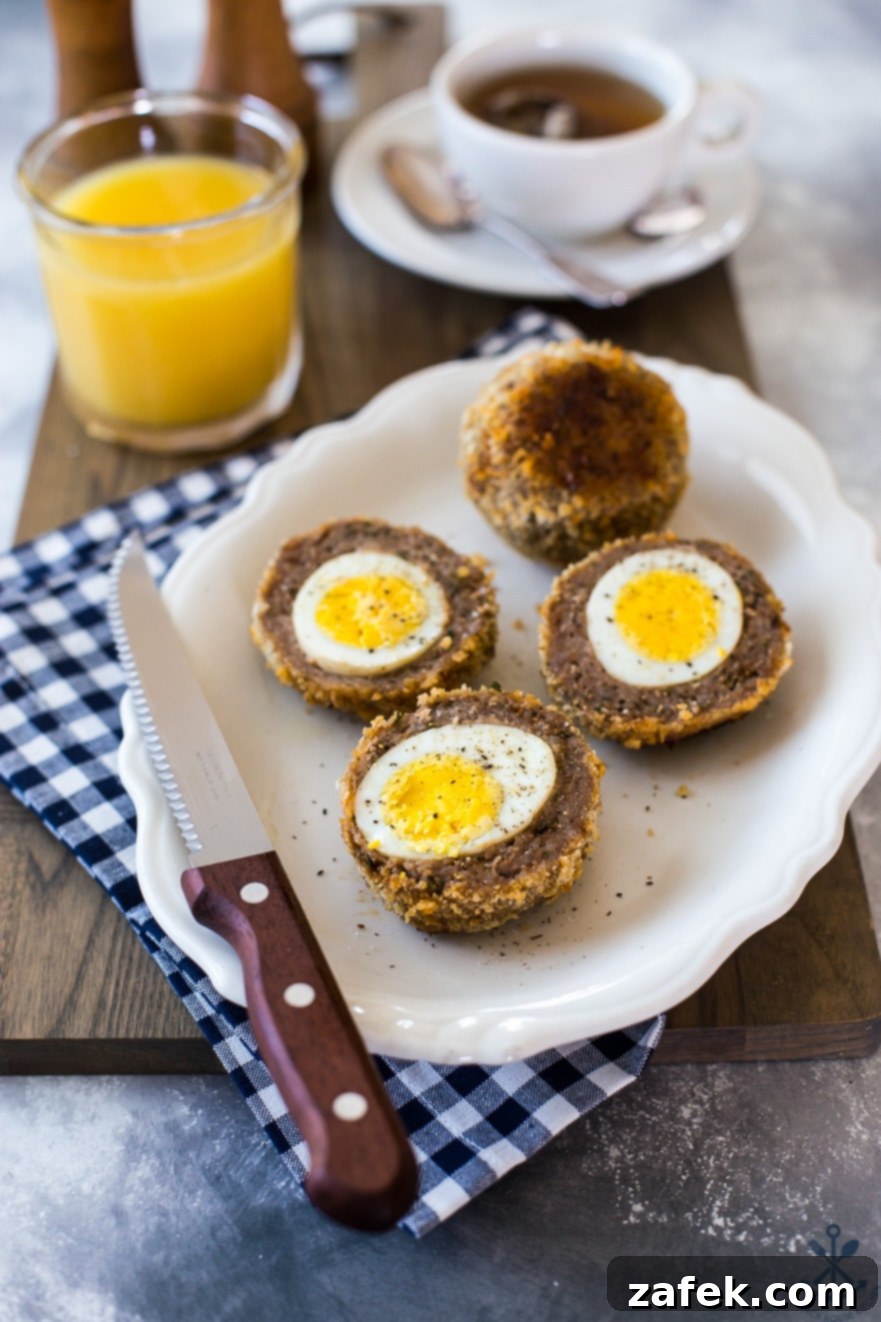
Happy Monday, friends! It’s been a little while since we delved into the breakfast category here at the BHK, but today, we’re serving up a breakfast — or brunch — that’s truly special: Scotch Eggs! If you’ve never experienced the pure joy of a perfectly made Scotch Egg, you’re in for an absolute treat. These culinary marvels transform a simple hard-boiled egg into an exciting, flavorful meal that’s both comforting and gourmet.
Scotch Eggs hold a special place in my heart. My mother often prepared them for holiday brunches when I was growing up, and they quickly became one of my all-time favorites. It seems the apple doesn’t fall far from the tree, as my husband, Tom, shares the same adoration for this unique dish. They’re more than just food; they’re a delightful memory wrapped in savory goodness, perfect for gathering friends and family around the table.

What Exactly is a Scotch Egg? Unveiling a Culinary Classic
A Scotch Egg, at its core, is a beautifully simple yet ingenious creation. It consists of a whole, hard-boiled egg encased in a seasoned sausage meat mixture, coated in crispy breadcrumbs, and then either baked or deep-fried until golden brown and cooked through. While their name often leads people to believe they originated in Scotland, culinary historians largely credit the prestigious London department store Fortnum & Mason with inventing them in 1738. Originally, they were likely served as a portable snack for travelers, a convenient and hearty meal on the go. Over centuries, this delightful dish has evolved, making its way into pubs, picnic baskets, and brunch menus across the globe, beloved for its satisfying textures and rich flavors.
What makes Scotch Eggs truly stand out is their ability to elevate an ordinary meal into something extraordinary. When you’re hosting a brunch, everyone anticipates the usual suspects like breakfast strata, French toast casserole, or pancakes. While delicious in their own right, these familiar dishes can sometimes feel a bit predictable. Scotch Eggs, however, are wonderfully out of the ordinary. They offer a sophisticated twist, a delightful surprise that adds a touch of elegance and novelty to any spread. They’re not just special because they’re different; they’re special because they deliver on taste, texture, and visual appeal, always leaving a lasting impression on your guests.
Beyond their impressive presentation and unique flavor profile, one of the most appealing aspects of Scotch Eggs is their surprising ease of preparation. Don’t let their gourmet appearance intimidate you! With a little planning and a simple assembly line approach, you can create these delicious treats right in your own kitchen. The process is straightforward, making them accessible even for novice cooks looking to add a touch of flair to their breakfast or brunch repertoire. This recipe focuses on a baked version, which is not only healthier but also much less messy than deep-frying, yielding a perfectly crispy exterior every time.
Mastering the Scotch Egg: Essential Ingredients
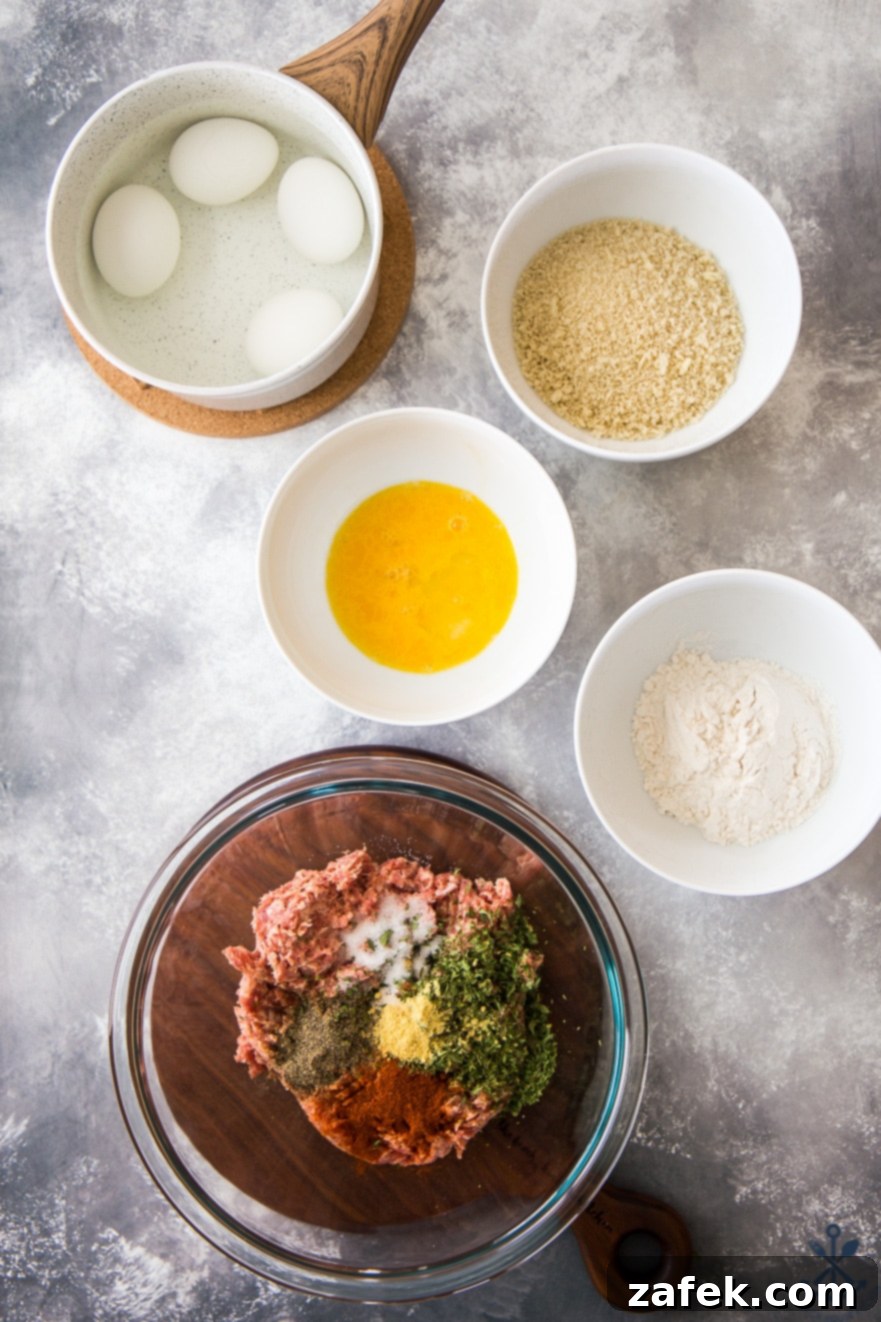
Creating the perfect Scotch Egg begins with selecting quality ingredients. Here’s what you’ll need for this classic baked recipe:
- 5 Large Eggs: Four will be hard-boiled for the core, and one raw egg will be used as part of the coating.
- 1 lb. Ground Pork Breakfast Sausage: Opt for a good quality sausage. You can choose mild or spicy, depending on your preference.
- 2 tsp. Dried Parsley Flakes: Adds a touch of herbaceous flavor and color to the sausage.
- 1 tsp. Ground Mustard: A key ingredient that enhances the savory depth of the sausage and complements the egg beautifully.
- 1 tsp. Paprika: For a mild, sweet peppery note and a lovely color. Smoked paprika can also be used for an extra layer of flavor.
- ¼ tsp. Salt: Essential for seasoning the sausage mixture.
- ½ tsp. Ground Black Pepper: Freshly ground pepper offers the best flavor.
- ⅓ cup All-Purpose Flour: Used for dusting the eggs, helping the sausage adhere.
- 1 cup Plain Panko Crumbs: Panko breadcrumbs are coarser and create a much crispier coating than standard breadcrumbs.
- 2 Tbsp. Unsalted Butter, melted: Brushed over the panko coating for extra crispiness and golden-brown perfection.
Tips for Perfectly Boiled Eggs
The foundation of a great Scotch Egg is a well-cooked egg. While you can opt for a soft-boiled egg with a runny yolk for a more decadent experience, a hard-boiled egg is generally easier to work with, especially for beginners, and holds its shape better. For perfect hard-boiled eggs:
- Place four eggs in a medium-sized saucepan and cover them with about an inch of cold water.
- Bring the water to a rolling boil over medium-high heat.
- Once boiling, immediately remove the pot from the heat, cover it tightly with a lid, and let it stand for exactly 9 minutes. This method helps prevent overcooked, rubbery eggs with a grey-green ring around the yolk.
- After 9 minutes, drain the hot water and immediately transfer the eggs to an ice bath (a bowl of cold water with ice cubes). This stops the cooking process and makes the eggs easier to peel.
- Once cooled, gently peel the eggs under running cold water.
Step-by-Step Instructions for Baked Scotch Eggs
Once your eggs are prepped, the assembly process is quite fun and efficient with a simple setup. Think of it as an assembly line to ensure smooth coating and consistent results.
- Prepare Your Workspace: Preheat your oven to 375°F (190°C). Line a large baking sheet with parchment paper to prevent sticking and make cleanup easier.
- Season the Sausage: In a medium bowl, combine the ground pork breakfast sausage with the dried parsley, ground mustard, paprika, salt, and black pepper. Use your hands to gently but thoroughly mix the seasonings into the sausage until evenly distributed. Divide the seasoned sausage mixture into four equal portions.
- Set Up the Dredging Stations: You’ll need three shallow bowls. In the first bowl, place the all-purpose flour. In the second bowl, whisk the remaining raw egg until well beaten. In the third bowl, spread out the plain panko crumbs. This setup streamlines the coating process.
- Assemble Each Scotch Egg:
- First, lightly dust one peeled hard-boiled egg with flour. This crucial step helps the sausage adhere better to the smooth surface of the egg.
- Next, take one portion of the seasoned sausage mixture and flatten it into a thin, even patty, large enough to fully encase the egg.
- Place the floured hard-boiled egg in the center of the sausage patty.
- Gently but firmly shape the sausage around the egg, ensuring it’s completely enclosed without any gaps. Take your time to press and mold the sausage evenly, sealing any seams.
- Dip the sausage-wrapped egg into the beaten egg, allowing any excess to drip off.
- Finally, roll the egg in the panko crumbs, pressing gently to ensure a thick and even coating all around. Repeat this process for the remaining three eggs.
- Bake to Perfection: Place each coated Scotch Egg onto the prepared baking sheet, ensuring they are spaced apart. Brush the tops and sides of each egg generously with the melted unsalted butter. This helps achieve that beautiful golden, crispy crust. Bake for approximately 35 minutes, or until the sausage is thoroughly cooked through and the panko crumbs are lightly browned and deliciously crispy.
- Rest and Serve: Once baked, remove the Scotch Eggs from the oven and let them cool on the baking sheet for about 5 minutes before slicing and serving. This allows the internal temperatures to settle and makes them easier to cut.
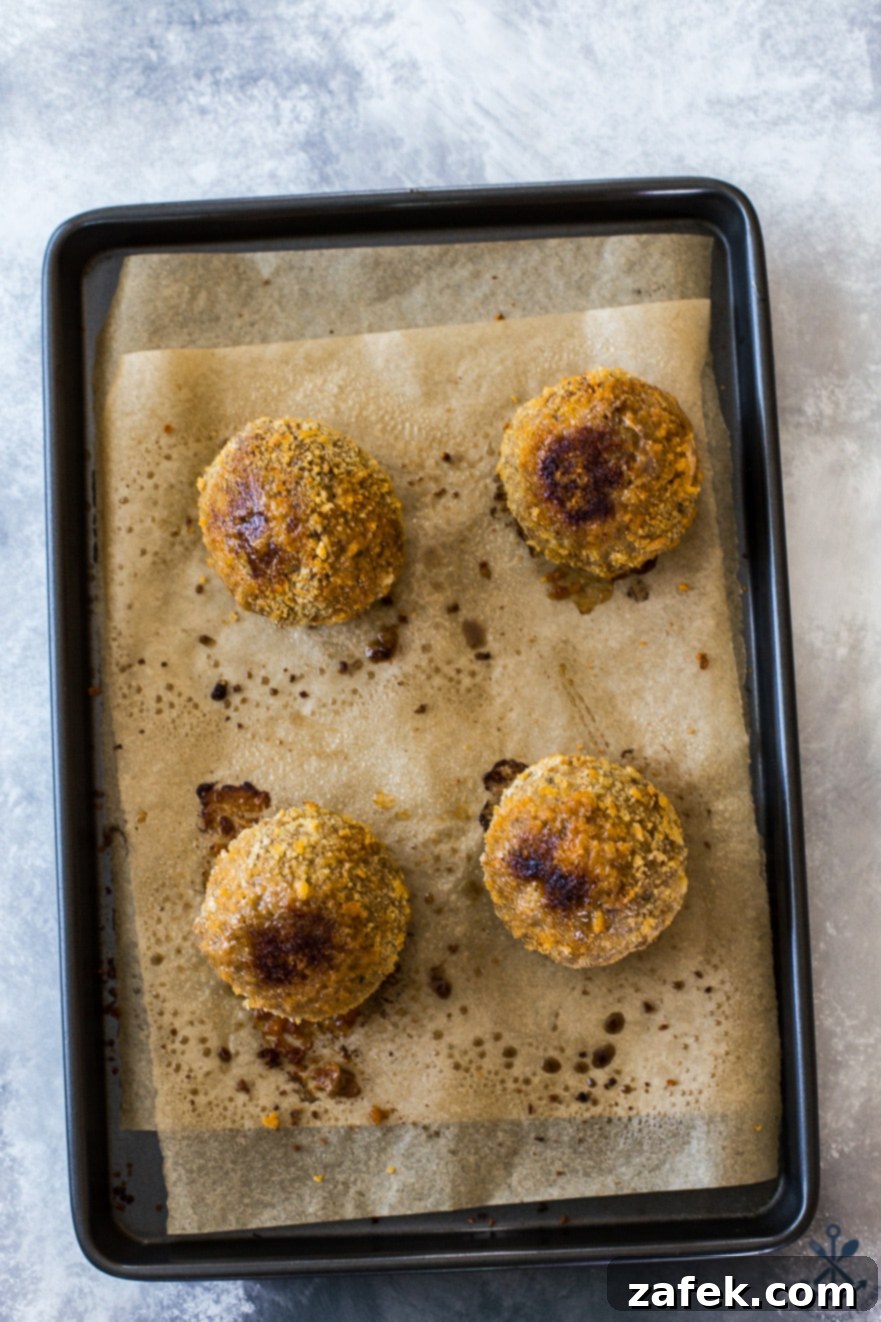
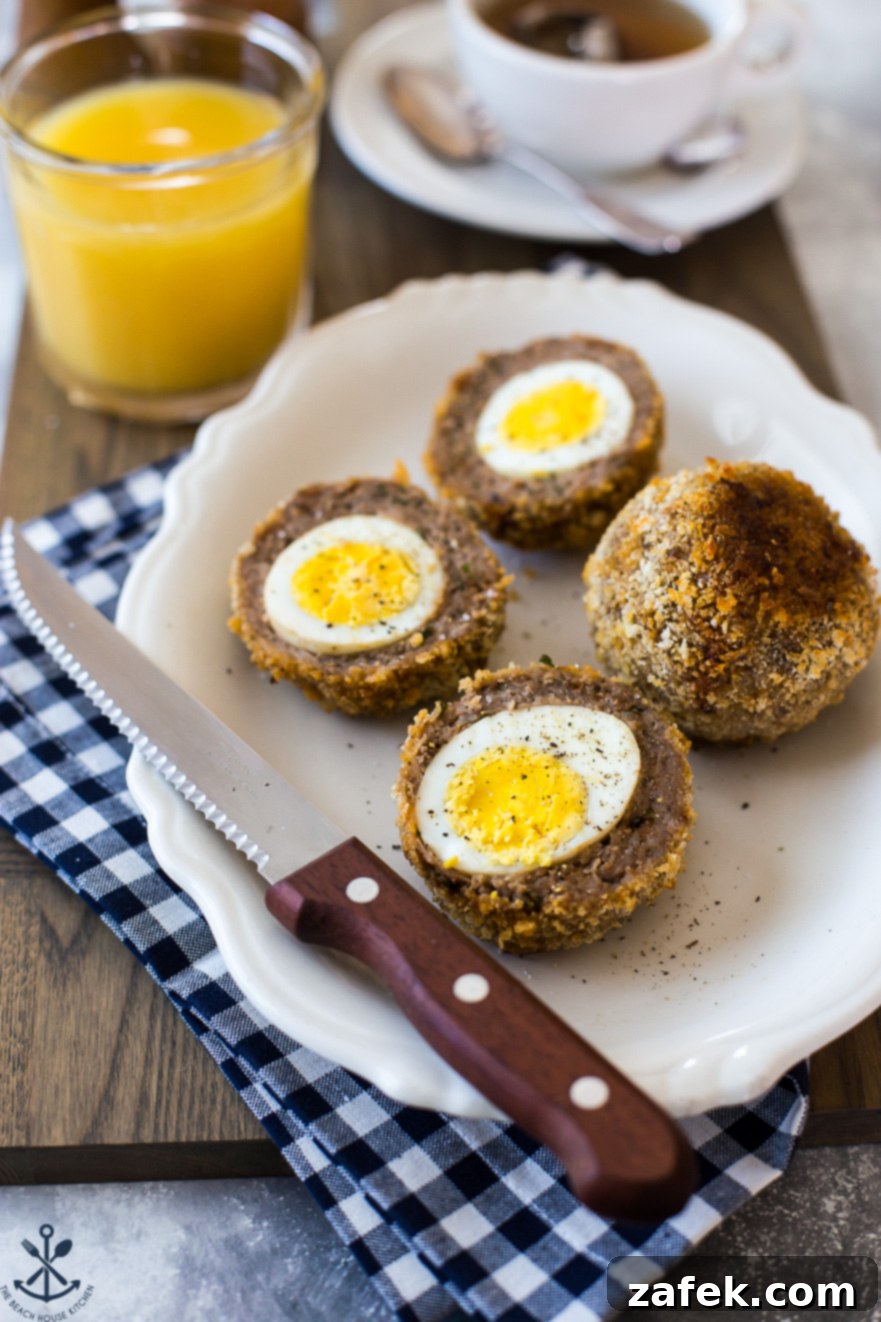
These baked Scotch Eggs truly offer a delightful departure from typical breakfast or brunch fare. They’re a real treat, satisfyingly hearty, and undeniably impressive. Enjoy every savory bite!
Cook’s Notes & Expert Tips for Scotch Eggs
- Egg Doneness Matters: While my mother always made hard-boiled eggs for convenience, you absolutely can use soft-boiled eggs for a richer, more luxurious experience with a runny yolk. Just remember that soft-boiled eggs can be a bit trickier to peel and handle without damaging them. If aiming for soft-boiled, reduce the standing time in hot water to 6-7 minutes.
- Reheating: Handle with Care! If you happen to have any leftovers (a rare occurrence with these delicious bites!), Scotch Eggs reheat beautifully in the oven. Preheat your oven to 300°F (150°C) and warm them for 15-20 minutes, or until heated through. A crucial warning: Do NOT reheat Scotch Eggs in the microwave. The intense, uneven heat of a microwave can cause the egg to build pressure and potentially explode, creating a huge mess and a wasted meal. Stick to the oven for best results and safety!
- Serving Suggestions: Scotch Eggs are incredibly versatile. They are delicious served simply on their own, perhaps with a side of your favorite mustard (dijon, whole grain, or honey mustard all work wonderfully). For a heartier meal, pair them with classic breakfast potatoes, roasted asparagus, a fresh green salad, or even a dollop of cranberry chutney for a festive touch.
- Flavor Variations: Don’t be afraid to customize your sausage mixture! Add a pinch of cayenne pepper for a spicy kick, some finely chopped fresh herbs like sage or thyme, or even a small amount of grated cheddar cheese to the sausage for extra flavor. You can also experiment with different types of ground meat, such as chicken or turkey sausage, though pork sausage provides the most traditional flavor and fat content for a juicy result.
- Deep-Frying Option: While this recipe focuses on baking, you can certainly deep-fry your Scotch Eggs for an even crispier, richer crust. Heat about 2-3 inches of oil (vegetable or canola) in a heavy-bottomed pot to 350°F (175°C). Carefully lower the Scotch Eggs into the hot oil, frying in batches if necessary, for about 5-7 minutes, turning occasionally, until golden brown and the sausage is cooked through. Drain on a wire rack over paper towels.
Classic Scotch Egg Recipe
Author: MaryAnn Dwyer

Let’s jazz up breakfast with something besides the usual breakfast strata! Scotch Eggs are easy, delicious and they always impress.
Recipe Details
- Servings: 4 servings
- Prep Time: 15 mins
- Cook Time: 35 mins
- Total Time: 50 mins
Ingredients
- 5 large eggs (4 for hard-boiling, 1 for binding)
- 1 lb. ground pork breakfast sausage
- 2 tsp. dried parsley
- 1 tsp. ground mustard
- 1 tsp. paprika
- ¼ tsp. salt
- ½ tsp. ground black pepper
- ⅓ cup all-purpose flour
- 1 cup plain panko crumbs
- 2 Tbsp. unsalted butter, melted
Instructions
- Place 4 eggs in a medium saucepan and cover with water. Heat over medium-high heat until the water comes to a boil. Remove the pot from the heat, cover, and let stand for 9 minutes. Drain, rinse with cold water, and peel once cool enough to handle.
- Preheat oven to 375°F (190°C). Line a large baking sheet with parchment paper and set aside.
- In a medium bowl, combine ground pork breakfast sausage with dried parsley, ground mustard, paprika, salt, and pepper. Mix well. Separate the mixture into 4 equal portions.
- Prepare your dredging stations: Add the flour to a small bowl. Beat the last egg in a separate small bowl. Add the panko crumbs to another small bowl.
- To assemble each Scotch Egg: First, lightly coat each peeled hard-boiled egg in flour. Flatten one sausage portion into a thin patty. Place a floured egg in the center of the patty and gently shape the sausage around the egg, ensuring it’s completely enclosed. Dip the sausage-wrapped egg in the beaten egg to coat, then roll in panko crumbs until evenly coated. Repeat with remaining eggs. Place each egg on the prepared baking sheet. Brush generously with melted butter. Bake for 35 minutes until the outside is lightly browned and crispy.
- Remove from oven and let cool for 5 minutes before serving.
Nutrition (per serving)
- Calories: 603 kcal
- Carbohydrates: 22g
- Protein: 29g
- Fat: 44g
- Saturated Fat: 16g
- Trans Fat: 1g
- Cholesterol: 330mg
- Sodium: 933mg
- Potassium: 521mg
- Fiber: 2g
- Sugar: 2g
- Vitamin A: 1266 IU
- Vitamin C: 4mg
- Calcium: 113mg
- Iron: 5mg
Keywords:
eggs, sausage, comfort food, breakfast, brunch, recipe
Cuisine:
Scottish (modern interpretation)
Course:
Breakfast, Brunch, Appetizer
Before your first bite, snap a photo and share! If you make this recipe, I’d love to see! Be sure to follow thebeachhousekitchen on Instagram and tag @thebeachhousekitchen or tag #thebeachhousekitchen!
Frequently Asked Questions About Scotch Eggs
Can I prepare Scotch Eggs ahead of time?
Yes, you can! You can hard-boil and peel the eggs a day or two in advance. You can also fully assemble the Scotch Eggs (sausage-wrapped and breaded) and store them uncooked in the refrigerator for up to 24 hours. Just cover them loosely with plastic wrap. When ready to bake, proceed with the recipe as usual, adding a few extra minutes to the baking time if cooking from cold.
What kind of sausage should I use?
A good quality ground pork breakfast sausage works best for traditional Scotch Eggs. You can choose a mild or spicy variety based on your preference. If you can’t find breakfast sausage, plain ground pork can be seasoned with sage, thyme, a pinch of red pepper flakes, salt, and pepper to mimic the flavor profile.
Can I use other types of breadcrumbs?
While panko crumbs are highly recommended for their superior crispiness, you can use regular fine breadcrumbs as an alternative. Keep in mind that the texture might be slightly less crunchy. For an extra layer of flavor, you could try seasoned breadcrumbs.
Are Scotch Eggs healthy?
Our baked version is a healthier alternative to deep-fried Scotch Eggs, significantly reducing the amount of added fat. While they are a hearty and calorie-dense dish due to the sausage and egg, they provide a good source of protein. Enjoy them as an occasional treat or as part of a balanced meal.
What’s the best way to serve Scotch Eggs?
Scotch Eggs are incredibly versatile. They make an excellent main dish for breakfast or brunch, served hot with a side of mustard, baked beans, or roasted vegetables. They are also fantastic cold or at room temperature, making them perfect for picnics, packed lunches, or as an impressive appetizer.
Conclusion: A Taste of Tradition, Reimagined for Your Table
Whether you’re hosting a festive brunch or simply looking to elevate your weekend breakfast, Scotch Eggs offer an unforgettable culinary experience. They combine the comforting familiarity of eggs and sausage with an exciting texture and presentation that’s sure to delight. From their fascinating history to the satisfying process of creating them in your own kitchen, every aspect of Scotch Eggs is a testament to the joy of good food. So, step outside the ordinary, embrace this charming classic, and prepare to impress yourself and your loved ones with this truly special dish. Happy cooking!