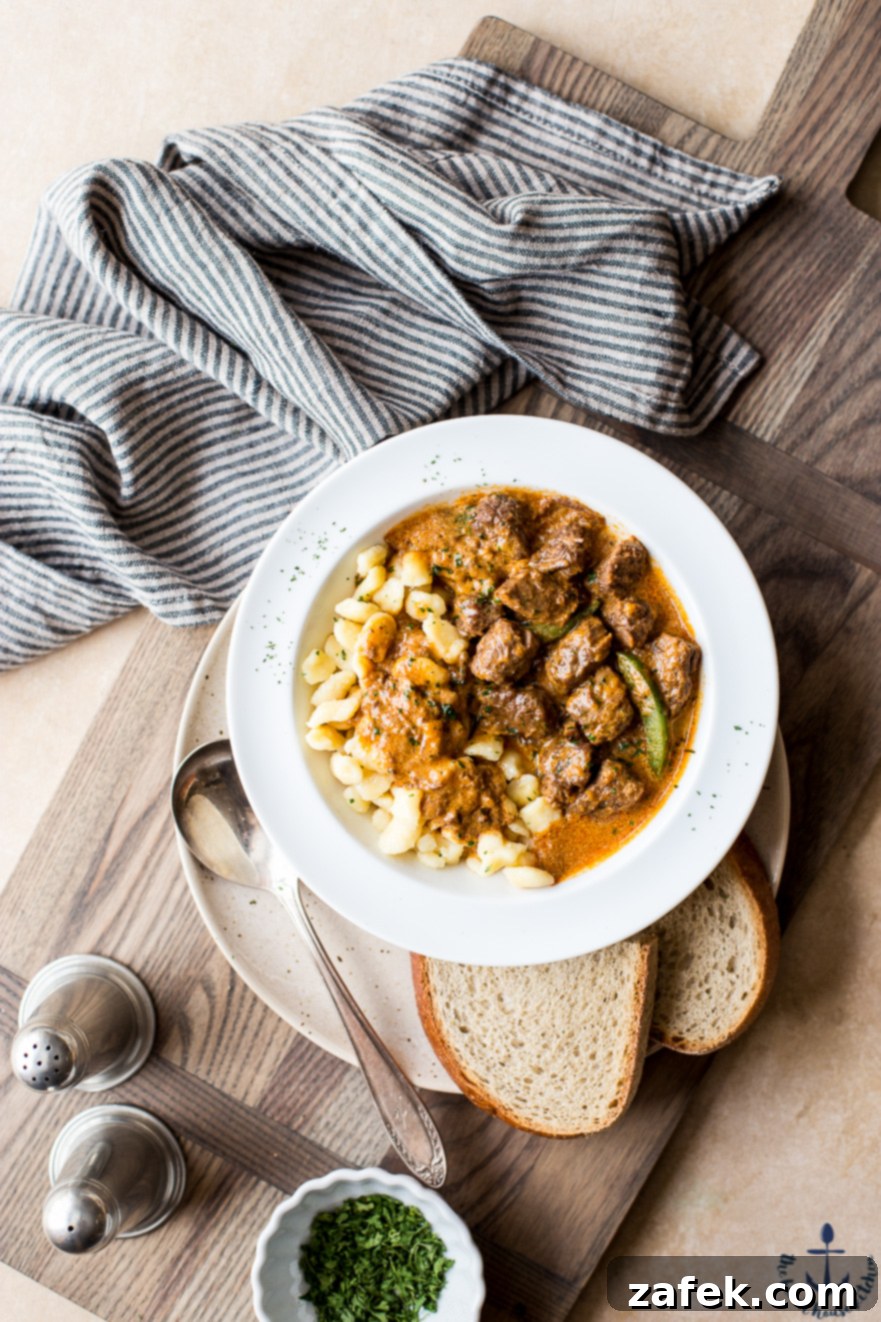
Experience the true essence of Hungarian culinary tradition with this authentic Hungarian Beef Goulash. More than just a stew, it’s a deeply comforting and flavorful dish, meticulously slow-cooked until the beef is incredibly tender and literally melts in your mouth. This cherished family recipe promises a hearty, satisfying meal that embodies generations of love and flavor.
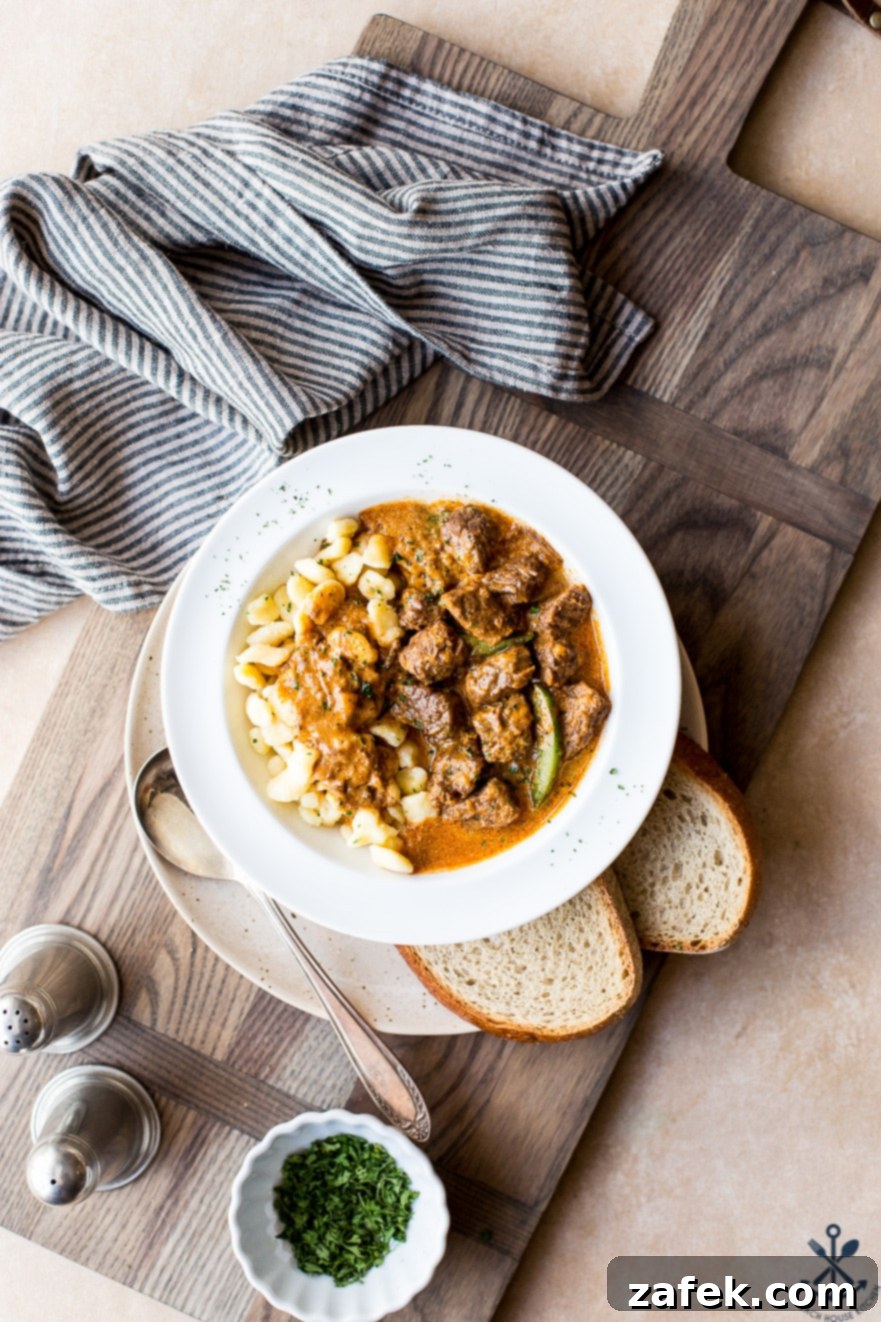
Authentic Hungarian Beef Goulash: A Timeless Family Treasure
There’s a common misconception about goulash, often fueled by lackluster versions encountered in less authentic settings. I once overheard a fellow food blogger lamenting goulash as her least favorite childhood dish. It immediately struck me that she must never have tasted the genuine, soul-stirring Hungarian Beef Goulash that graced our family table growing up. For me, it was – and still is – the epitome of comfort food, a dish that transforms a simple cut of beef into something truly extraordinary.
This isn’t just any goulash; it’s *the* goulash, a treasured recipe passed down through my family, originating from the celebrated Chef Louis Szathmary’s renowned “The Chef’s Secret Cookbook.” Chef Szathmary, a legendary figure in Hungarian-American cuisine, was a master at preserving and sharing the rich heritage of Hungarian dishes. His book is a treasure trove of traditional recipes, from savory delights like chicken and veal paprikash to decadent desserts, but his goulash recipe holds a special place in my heart. My mother prepared this robust stew countless times throughout my childhood, filling our home with its intoxicating aroma and our bellies with its hearty goodness. It’s a taste that instantly transports me back, a culinary hug in every spoonful.
What Exactly is Authentic Hungarian Goulash?
To truly appreciate Hungarian goulash, one must understand its roots. Goulash, or “gulyás” in Hungarian, isn’t merely a stew; it’s one of Hungary’s national dishes, deeply woven into the fabric of its culinary identity. Its origins trace back to the 9th century, evolving from the simple, hearty stews prepared by Hungarian shepherds, known as “gulyás” (herdsmen). These early versions were often dried meat cooked with onions and stored in sheep’s stomachs, a practical solution for nomadic life. Over centuries, as paprika became a staple spice in Hungarian cuisine during the 18th and 19th centuries, it was incorporated into the stew, transforming it into the vibrant, flavorful dish we know today.
At its core, traditional Hungarian goulash is a rich, flavorful beef (or sometimes veal) stew, characterized by several key components:
- Quality Beef: Typically made with tougher cuts like beef chuck or shank, which become incredibly tender after long, slow simmering.
- Abundant Onions: A significant quantity of onions forms the base, caramelizing slowly to provide a deep, sweet foundation for the gravy.
- Hungarian Paprika: This is the soul of goulash. Authentic Hungarian sweet paprika (often denoted as ‘noble sweet’ or ‘édesnemes’) provides not just a beautiful reddish-orange color but also a complex, sweet, and slightly peppery flavor profile that is distinct from other types of paprika. It’s crucial for the true goulash experience.
- Slow Cooking: The hallmark of a great goulash is its patient, low-and-slow cooking process, allowing the beef to become fork-tender and the flavors to meld perfectly.
Unlike some “goulash” dishes found outside of Hungary, particularly in America, which often incorporate macaroni, tomatoes, and other vegetables, authentic Hungarian goulash focuses on the trinity of beef, onions, and paprika, often with minimal other vegetables, though a touch of green pepper is traditional. The richness comes from the carefully developed gravy, not necessarily from a multitude of ingredients.
The Art of Perfecting Hungarian Goulash: Flavor and Texture
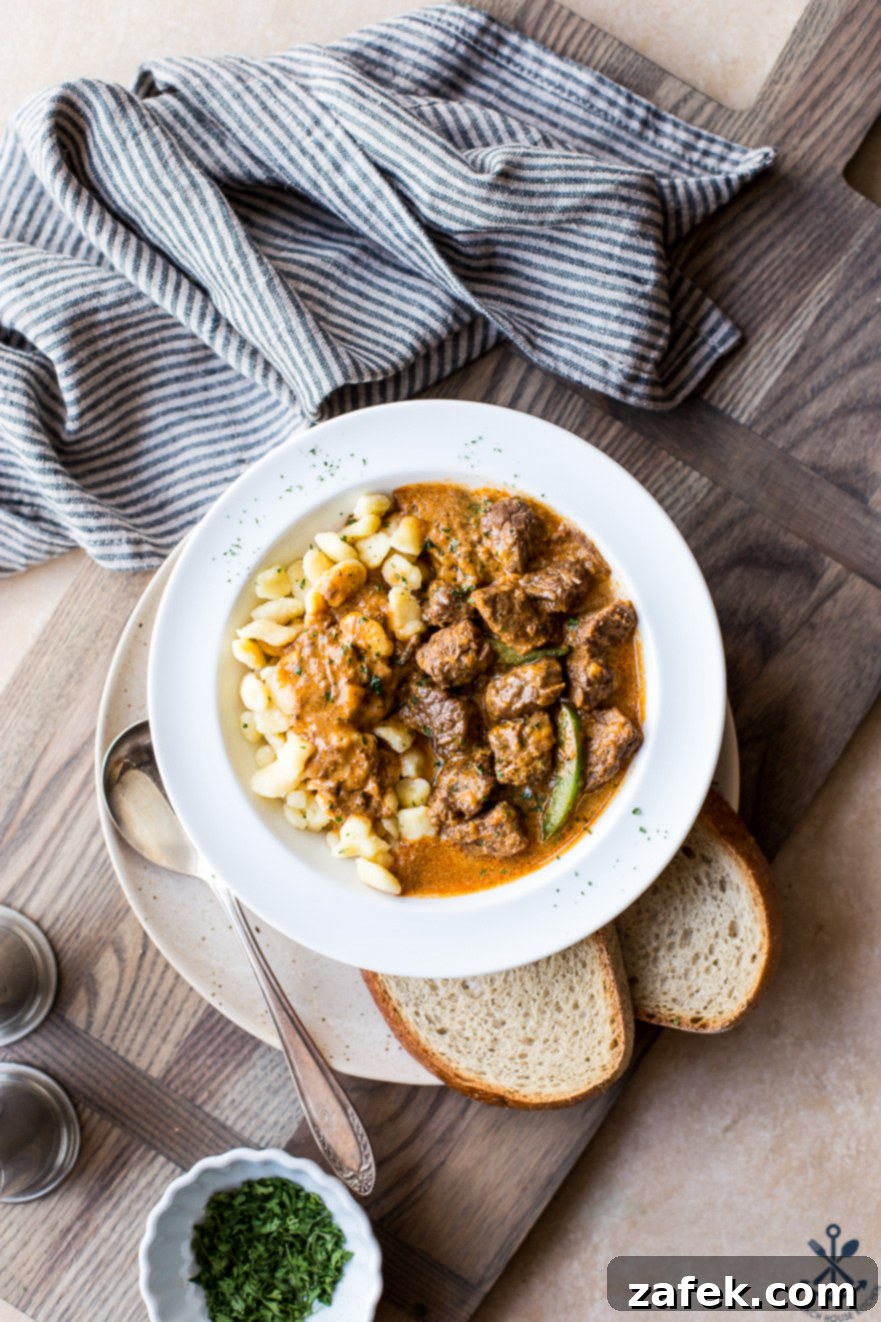
While Hungarian goulash might be considered a humble, everyday meal in its homeland, its flavor profile is anything but ordinary. The magic happens through patient cooking. The beef stew meat, ideally a tough but flavorful cut like chuck, is cooked for hours over low heat until it transforms into unbelievably tender morsels that practically dissolve in your mouth. This slow braising allows the connective tissues in the beef to break down, enriching the gravy and creating that desirable melt-in-your-mouth texture.
The gravy itself is a masterpiece of balanced flavors. It begins with a robust beef broth base, deepened by the slow-cooked onions and the rich, complex notes of authentic Hungarian paprika. Unlike simply adding paprika at the end, incorporating it early allows its flavors to infuse deeply into the dish. Just before serving, a generous dollop of sour cream is stirred in, adding a delightful tanginess and a creamy, velvety texture that thickens the gravy to perfection without making it heavy. This final touch is crucial, imparting a characteristic richness and a subtle sour note that beautifully complements the savory beef and sweet paprika.
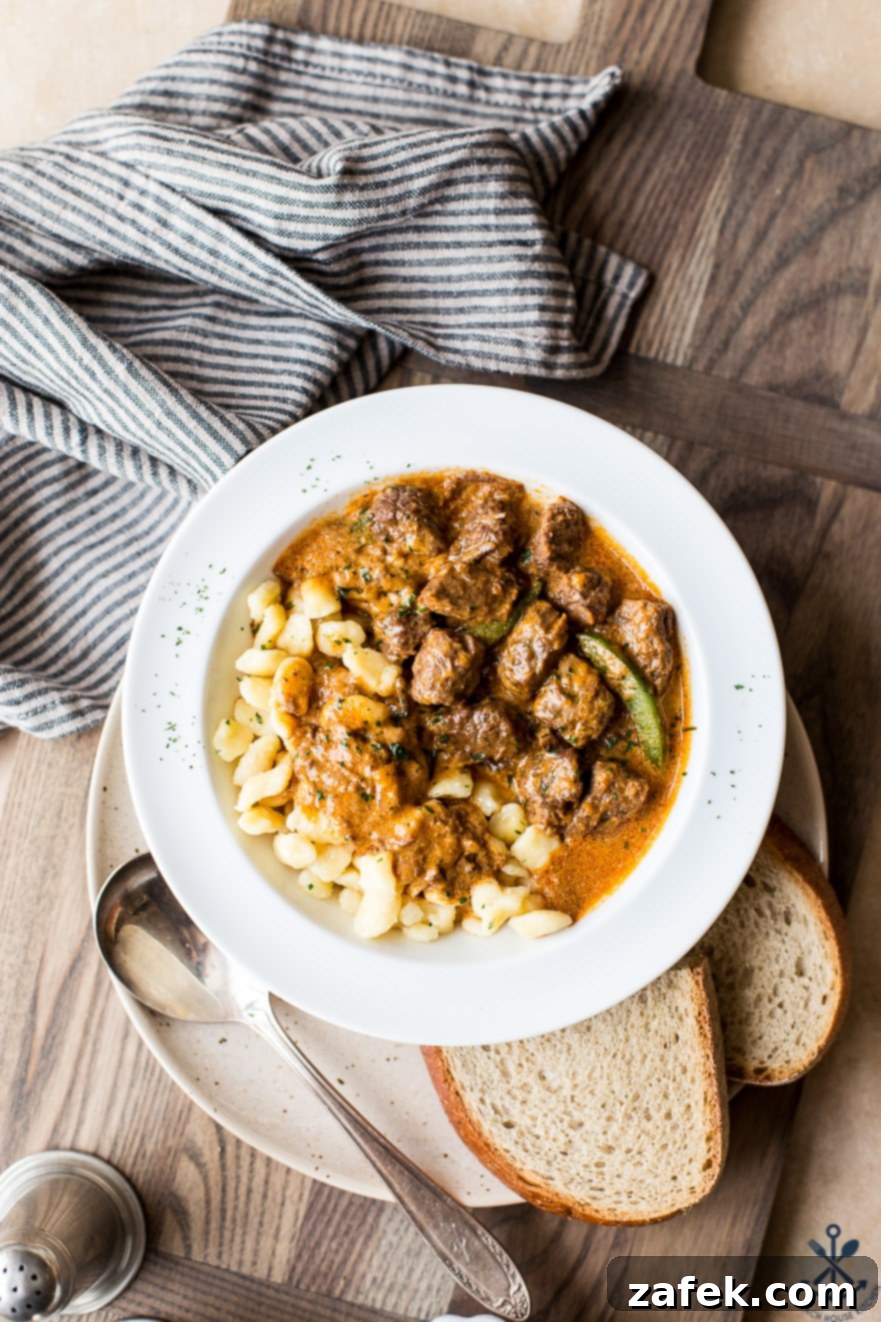
I find my goulash truly shines when served over homemade spaetzle, those delightful little German-Austrian-Hungarian dumplings that are perfect for soaking up every drop of the luxurious gravy. However, if spaetzle isn’t on your menu, classic egg noodles or even cavatelli make fantastic alternatives, offering their own unique textures to contrast with the tender beef. Some people also enjoy it with steamed potatoes, or simply a crusty piece of fresh rye bread to sop up the flavorful sauce.
If your past experiences with goulash have left you unimpressed, I urge you to try this recipe. I am confident that its authentic flavors, tender beef, and rich, creamy gravy will win you over and redefine your understanding of this incredible dish. Enjoy the comforting warmth and exquisite taste of this Hungarian classic!
Essential Tips for Crafting the Perfect Hungarian Beef Goulash
Achieving goulash perfection is straightforward with a few key considerations. Here are some cook’s notes and tips to ensure your homemade Hungarian Beef Goulash is nothing short of spectacular:
- The Browning Fat: Lard or Bacon Fat: Chef Szathmary’s original recipe traditionally calls for browning the beef cubes in lard, which imparts a wonderful depth of flavor. My mother, however, had her own ingenious twist: she’d often make goulash on Sundays, utilizing the flavorful bacon fat reserved from our Sunday breakfast. This not only added a delightful smoky note but also made the most of every ingredient. Either lard or rendered bacon fat will provide a superior flavor compared to neutral oils, truly enhancing the authenticity of the dish.
- Quality Paprika is Key: Invest in good quality, authentic Hungarian sweet paprika. The difference in flavor and color compared to generic paprika is immense and crucial for a true goulash.
- Low and Slow is the Way: Resist the urge to rush the cooking process. The long simmering time is essential for the beef to become incredibly tender and for the flavors to fully develop and meld. This is where the magic happens.
- Preventing Curdled Sour Cream: When adding sour cream, ensure your stew is no longer at a rolling boil. It’s best to temper the sour cream by mixing a small amount of the hot stew liquid into it before stirring it back into the main pot. This helps prevent it from curdling and ensures a smooth, creamy finish. Only cook for a short period after adding the sour cream, just until heated through, to maintain its texture and flavor.
- Serving Suggestions: While spaetzle and egg noodles are classic pairings, consider serving your goulash with a side of fresh, crusty rye bread. It’s ideal for soaking up every last drop of the rich, savory gravy. A simple green salad or pickled cucumbers also offer a refreshing contrast to the hearty stew.
- Make Ahead: Goulash, like many stews, often tastes even better the next day after the flavors have had more time to deepen and meld. It reheats beautifully, making it an excellent candidate for meal prep.
On a side note, if you’re eager to explore more Hungarian delights, be sure to check out my recipes for Hungarian Kifli and Hungarian Farsangi Fànk. They are wonderful additions to any Hungarian-inspired feast!
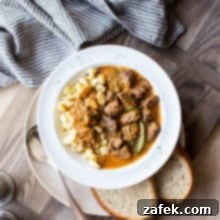
Hungarian Beef Goulash
MaryAnn Dwyer
6
servings
Print Recipe
Pin Recipe
20 minutes
2 hours
2 hours
20 minutes
Ingredients
-
2 lbs.
beef chuck meat,
cut into 1-inch cubes -
salt and pepper,
to taste -
1/2 cup
lard,
or bacon fat -
1 lb. (about 2 1/2-3 cups)
onions,
peeled and finely chopped -
2 Tbsp.
sweet Hungarian paprika -
2 Tbsp.
all-purpose flour -
3 cups
beef broth -
2 Tbsp.
tomato paste -
1 medium
green pepper,
cut into thin strips -
2 cups
sour cream -
dried parsley,
for sprinkling, if desired
Instructions
- Season meat with salt and pepper.
- In a large saucepan, heat the lard or bacon fat to the smoking point over medium-high heat. Add the meat carefully. Brown the meat on all sides. Add the onions and cook until softened. Reduce the heat to low and add the paprika and flour and cook, stirring often for two minutes.
- Add the beef broth and tomato paste. Stir until well combined. Simmer, covered over low heat for 1 1/2 hours, or until the meat is tender.
- Add green pepper and sour cream and continue to cook until heated through, about 15 more minutes. Serve over spaetzle, egg noodles or cavatelli. Sprinkle with dried parsley, if desired.
Nutrition
Calories:
614
kcal
|
Carbohydrates:
18
g
|
Protein:
40
g
|
Fat:
43
g
|
Saturated Fat:
19
g
|
Cholesterol:
152
mg
|
Sodium:
442
mg
|
Potassium:
1171
mg
|
Fiber:
4
g
|
Sugar:
7
g
|
Vitamin A:
3053
IU
|
Vitamin C:
23
mg
|
Calcium:
145
mg
|
Iron:
5
mg
goulash, beef, Hungarian
Hungarian
Main Dish
Before your first bite, snap a photo and share!
If you make this recipe, I’d love to see! Be sure to follow thebeachhousekitchen on Instagram and tag Mention @thebeachhousekitchen or tag #thebeachhousekitchen!
Adapted from The Chef’s Secret Cookbook