The Ultimate Guide to Rustic No-Knead Bread: Achieve Bakery-Quality Loaves at Home
Imagine a loaf of bread: light, airy, with a deeply satisfying crackled crust that sings as you slice it. Now imagine achieving this masterpiece with minimal effort, no complicated kneading, and just four simple ingredients. This isn’t a baker’s fantasy; it’s the incredible reality of Rustic No-Knead Bread. A true game-changer for anyone who dreams of homemade artisan bread without the fuss.
There’s an undeniable comfort that comes from the aroma of fresh bread baking, especially when the weather outside turns chilly. That warm, inviting scent fills the home, promising a simple pleasure that’s hard to beat. For many, the idea of baking bread from scratch can seem daunting, a task reserved for seasoned bakers. Visions of endless kneading, intricate shaping, and complex techniques often deter aspiring home bakers. But what if we told you that creating a truly spectacular loaf of bread, one with a professional-looking crust and an exquisitely airy crumb, could be incredibly straightforward?
Why No-Knead Bread is a Game Changer for Home Bakers
For years, the conventional wisdom for bread making dictated that extensive kneading was essential to develop gluten, the protein network that gives bread its structure and chew. This often meant vigorous hand-kneading for 10-15 minutes or relying on a stand mixer. While effective, it was also time-consuming and often physically demanding, making bread baking feel like a significant commitment. Enter the no-knead method, a revolutionary technique popularized by New York baker Jim Lahey of Sullivan Street Bakery.
Lahey’s genius lies in harnessing the power of time and hydration. Instead of mechanical kneading, his method relies on a very wet dough and a long, slow fermentation period. This extended rest allows the gluten to develop naturally, creating a strong, elastic network without any manual intervention from the baker. It liberates home bakers from the most intimidating step of traditional bread making, making artisan-quality loaves accessible to everyone, regardless of their baking experience.
The Magic of Slow-Rise Fermentation: Flavor, Texture, and Simplicity
The secret to this Rustic No-Knead Bread, as outlined in Jim Lahey’s groundbreaking book, My Bread, is its simplicity combined with the transformative power of slow-rise fermentation. Forget complicated techniques; this recipe calls for just four core ingredients: bread flour, salt, instant yeast, and cool water. The labor involved is truly minimal—about five minutes of stirring to combine everything. The real magic happens during the extended resting period, typically 12 to 18 hours, often overnight.
During this long fermentation, several wonderful things occur. The yeast slowly consumes the sugars in the flour, producing alcohol and carbon dioxide. This process not only creates the beautiful bubbles and airy texture characteristic of artisan bread but also develops a complex, nuanced flavor profile that quick-rise breads simply can’t achieve. The high hydration of the dough keeps it very pliable, and the long rest allows the flour to fully absorb the water, forming a strong gluten structure without any kneading. This combination results in a bread that is incredibly light and open on the inside, with an irresistibly crispy, deeply browned crust on the outside.
Making the dough after dinner and letting it rise overnight means you wake up to a dough ready for its final stages. A quick shaping, a second shorter rise, and then it’s ready for the oven. This method perfectly fits into a busy schedule, allowing you to enjoy freshly baked bread with minimal active cooking time.
Essential Equipment for No-Knead Bread Success
While the ingredients are simple, there are a couple of key pieces of equipment that will significantly enhance your no-knead bread baking experience and ensure fantastic results:
- A Heavy-Bottomed Pot (Dutch Oven): This is arguably the most crucial tool. A 4 1/2 to 5 1/2 quart cast iron Dutch oven with a lid is ideal. The heavy pot traps steam released from the dough during baking, creating a moist environment that mimics a professional steam-injected oven. This steam is essential for developing that wonderfully crisp, crackled crust and allowing the bread to achieve maximum oven spring (the final burst of rising).
- Linen Tea Towels: Unlike terry cloth, linen towels are less likely to stick to the moist dough during the second proofing. Dusting them lightly with flour helps prevent sticking even further.
- Large Mixing Bowl: A spacious bowl allows the dough to expand significantly during its long rise.
- Rubber Spatula: Useful for scraping the sticky dough out of the bowl without adding excess flour.
Baking Perfection: From Dough to Golden Loaf
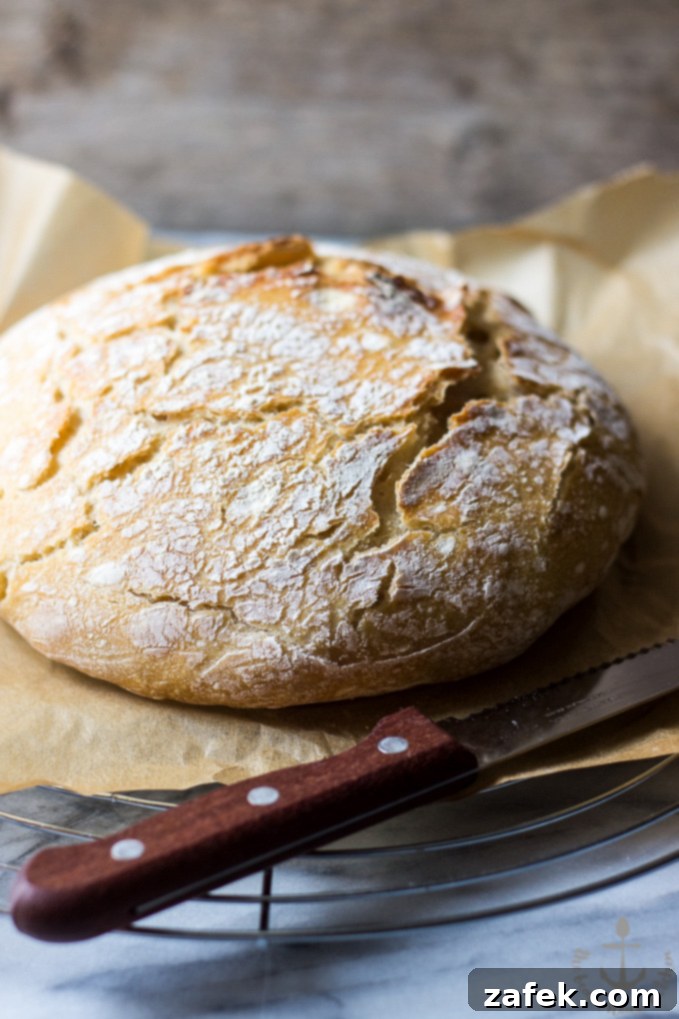
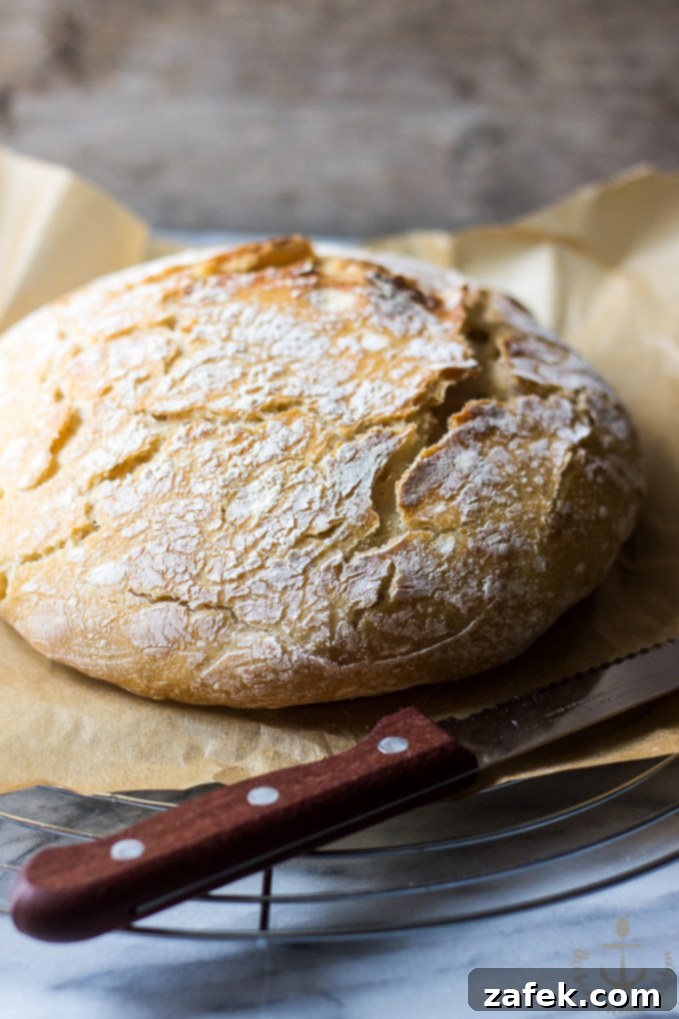
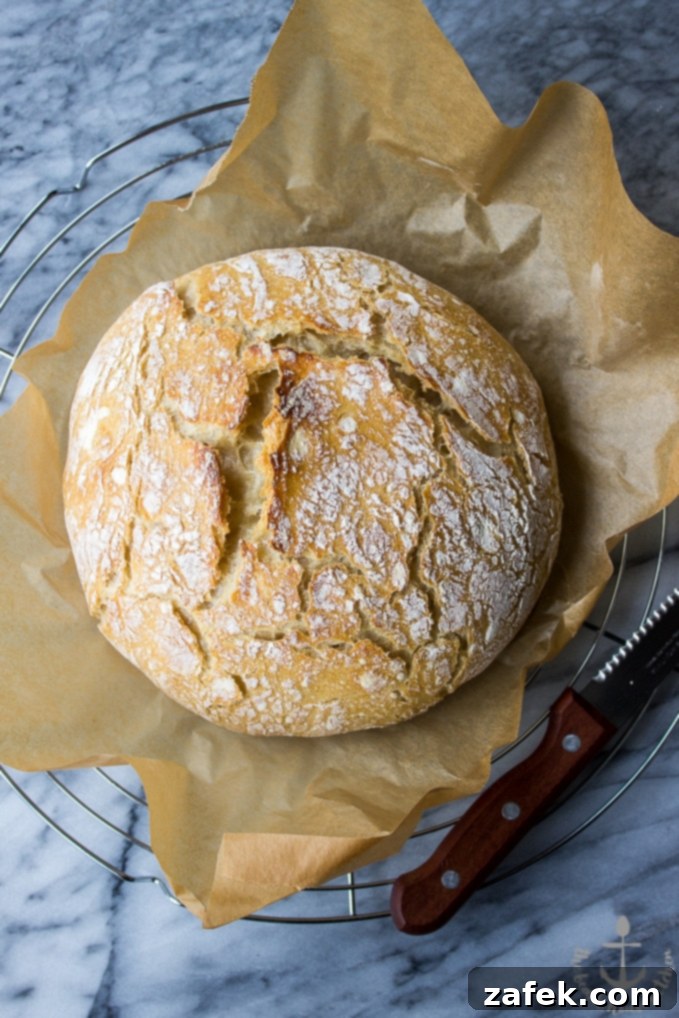
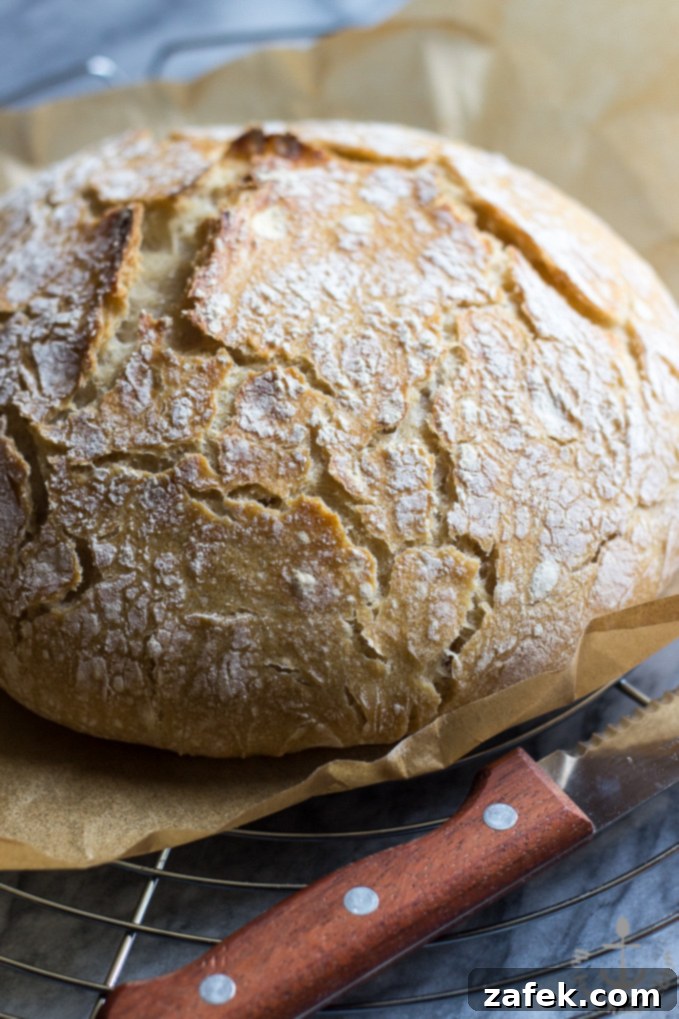
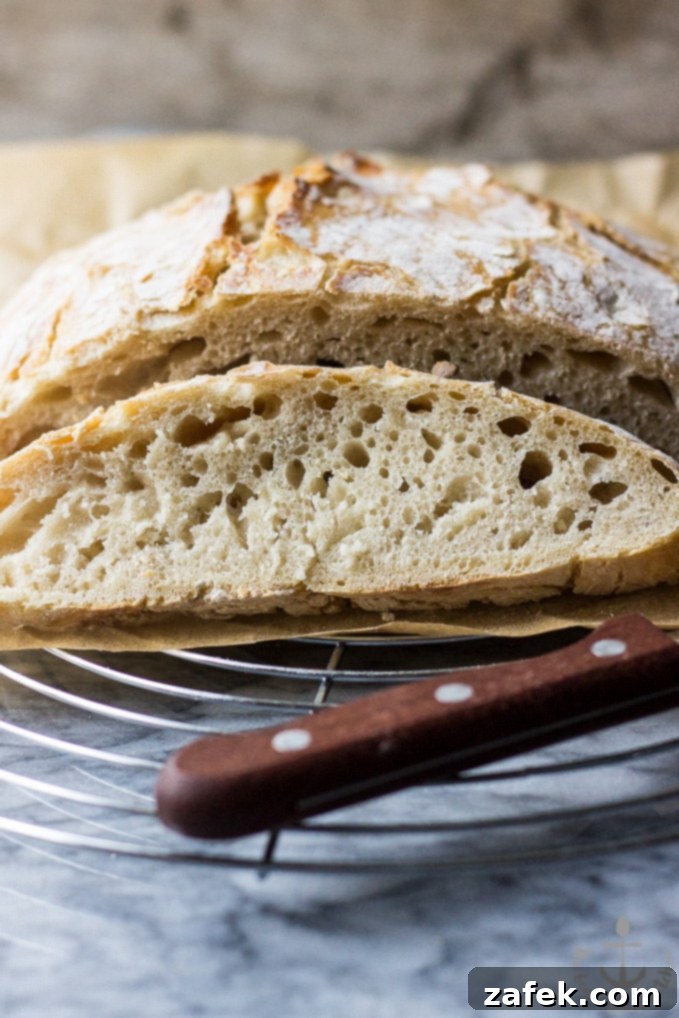
When you finally pull your finished loaf from the oven, you’ll be greeted by a sight that rivals any artisanal bakery. The rich, golden-brown crust, the delicate crackling sound as it cools, and the enticing aroma are all testament to the simplicity and effectiveness of this method. But the real reward comes when you slice into it: an incredibly airy, open crumb that’s soft and slightly chewy. Slather a warm slice with some butter, and you’ll understand why this bread has captivated home bakers worldwide.
Rustic No-Knead Bread Recipe
Rustic No-Knead Bread
Author: Mary Ann Dwyer
This incredibly easy no-knead bread recipe yields a truly spectacular rustic loaf with a gorgeous crackled crust and an airy, light interior. Perfect for beginners, this method relies on a long, slow fermentation to develop flavor and texture with minimal effort.
Print Recipe
Pin Recipe
Prep Time: 18 hrs
Cook Time: 45 mins
Total Time: 18 hrs 45 mins
Ingredients
- 3 cups bread flour (plus additional flour for dusting)
- 1 1/4 tsp. table salt
- 1/4 tsp. instant yeast
- 1 1/3 cups cool water (55-65 degrees F)
Instructions
- In a medium bowl, stir together the bread flour, salt, and instant yeast until well combined.
- Add the cool water to the dry ingredients. Using a wooden spoon or rubber spatula, mix for about 30 seconds until a shaggy, sticky dough forms. The dough should be very wet and sticky to the touch. If it feels too dry, add an additional tablespoon or two of water, mixing until just incorporated.
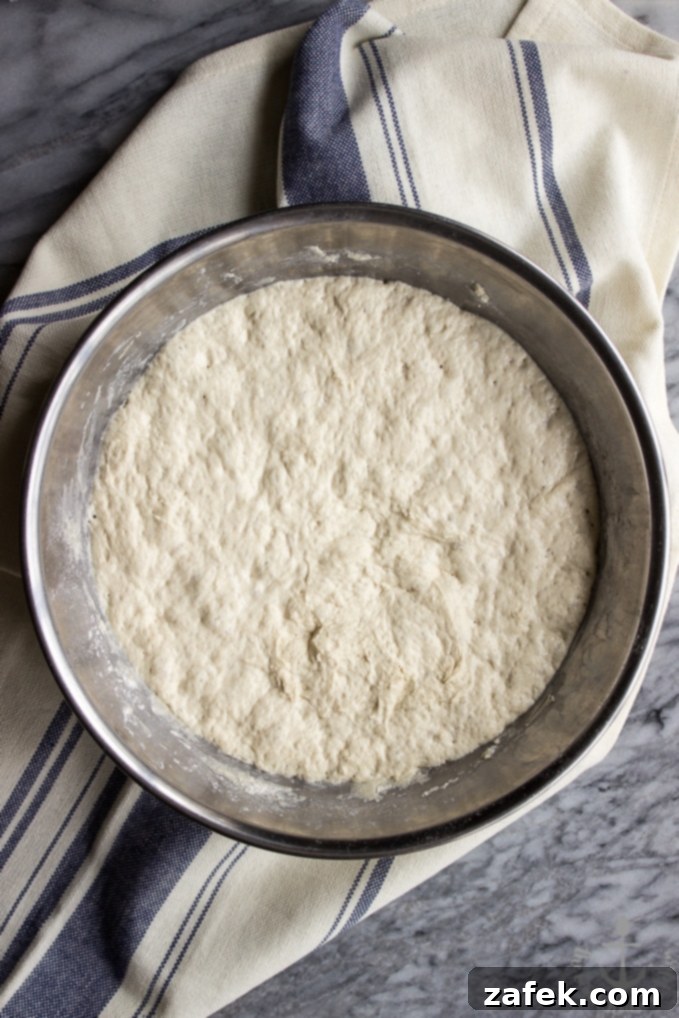
- Cover the bowl tightly with plastic wrap. Let the dough rise at room temperature (ideally around 72 degrees F, away from direct sunlight) until its surface is bubbly, and the dough has more than doubled in size. This crucial first fermentation should take at least 12 hours, but preferably 18 hours. This long, slow rise is key to developing the bread’s deep flavor and unique texture, so do not rush this step.
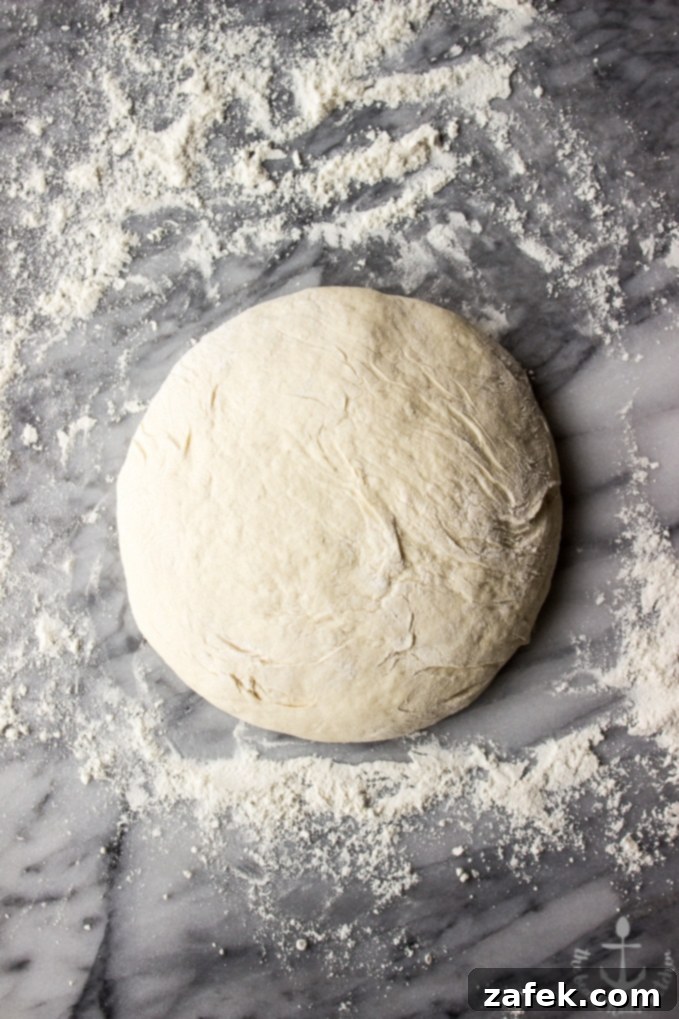
- Once the first fermentation is complete, generously dust a clean work surface with flour. Using a rubber spatula, gently scrape the very loose and sticky dough onto the prepared board in one piece. Resist the urge to add excessive amounts of flour at this stage, as it can stiffen the dough.
- Flour your hands lightly. Gently pull the edges of the dough towards the center, turning it into a round shape. Do this carefully to avoid deflating too much of the air.
- Take a clean linen tea towel (avoid terry cloth, which can stick) and dust it thoroughly with flour. Carefully lift the shaped dough, placing it seam-side down onto the prepared tea towel. If the top of the dough still feels tacky, lightly dust it with a bit more flour.
- Loosely cover the dough with another linen tea towel. Place it in a warm, draft-free spot for its second rise, which should take 1 to 2 hours.
- The dough is ready for baking when it has noticeably doubled in size and holds an impression when gently poked with your finger about 1/4 inch deep.
- Approximately 30 minutes before the end of the second rise, place an oven rack in the lower third position of your oven. Preheat your oven to 450 degrees F (232 degrees C) with your 4 1/2 to 5 1/2 quart cast iron pot (with its lid) inside, placed in the center of the rack. Allow the pot to preheat thoroughly for 30 minutes.
- Carefully remove the extremely hot preheated pot from the oven. Remove the lid. Unfold the tea towel and lightly dust the dough on top with a tiny bit of flour.
- Using oven mitts, carefully lift the dough on the towel, or gently invert it into your hand, and quickly but carefully place it into the preheated pot, seam side up. Be extremely cautious as the pot is very hot.
- Cover the pot with its lid and bake for 30 minutes.
- After 30 minutes, remove the lid and continue to bake for an additional 15 minutes, or until the crust is beautifully golden brown and deeply crackled.
- Using a heatproof spatula or tongs, carefully remove the bread from the hot pot and transfer it to a wire rack to cool completely. This cooling process, which takes about one hour, is essential for the crust to crisp up and for the interior texture to set properly.
- Once cooled, use a sharp serrated knife to slice and enjoy!
Course: Special Equipment: One 4 1/2 – 5 1/2 quart heavy cast iron pot with lid
Before your first bite, snap a photo and share!
If you make this recipe, I’d love to see! Be sure to follow and tag @thebeachhousekitchen or use the hashtag #thebeachhousekitchen on Instagram!
This recipe has been adapted from Jim Lahey’s masterful technique in My Bread, specifically his Basic No-Knead Bread recipe. It’s a testament to the fact that extraordinary results can come from the simplest methods. So go ahead, embrace the slow, simple joy of making your own rustic no-knead bread, and prepare to be amazed!