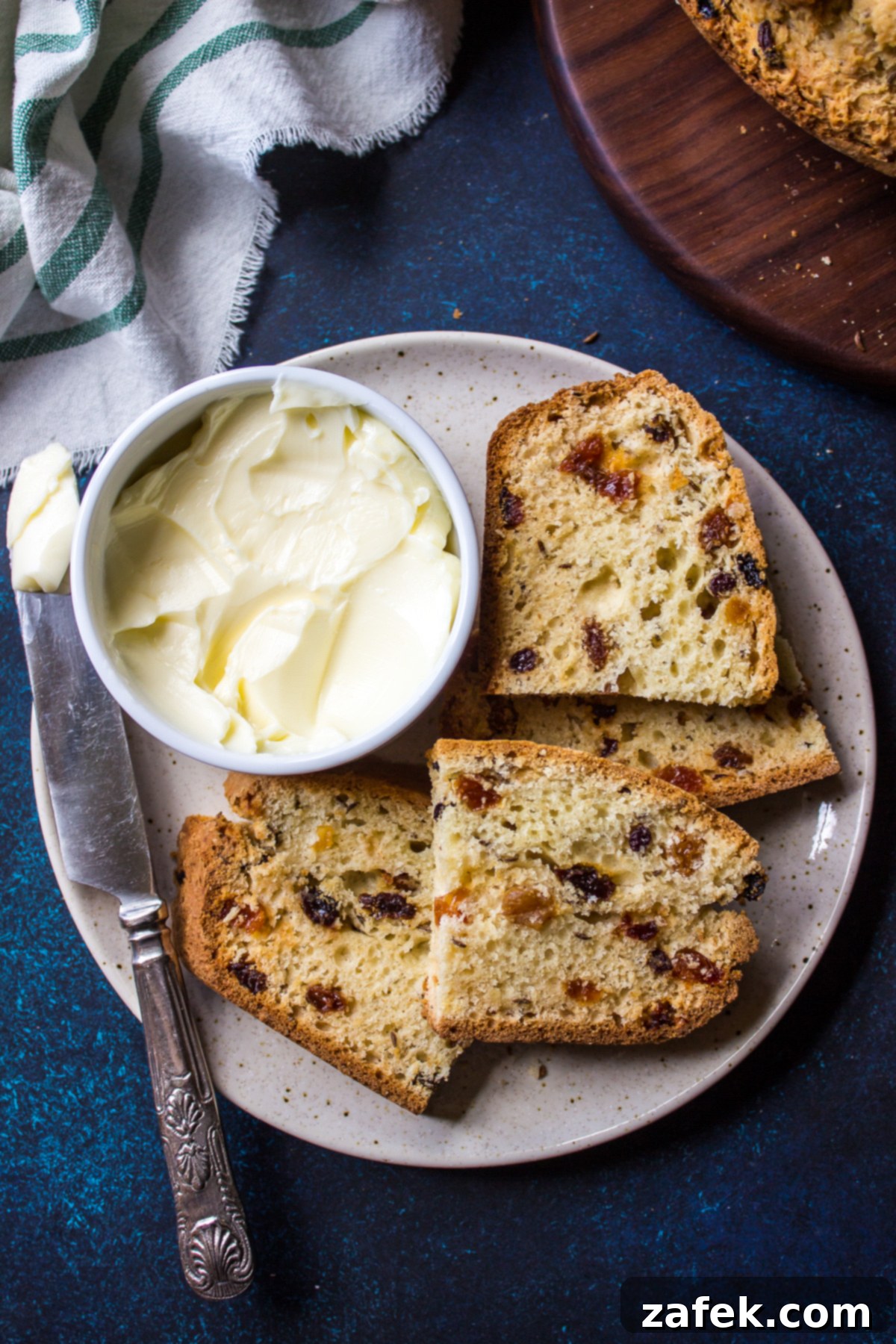
Welcome to a culinary journey that brings the warmth and tradition of Ireland right into your kitchen! While St. Patrick’s Day is a time for celebration, often marked by parades and vibrant green, for many, it’s also deeply rooted in the comfort of homemade food. And few dishes embody this comfort quite like a perfectly baked Irish Soda Bread. This particular recipe is more than just a bread; it’s a cherished family favorite, known for its incredibly moist texture and generous scattering of sweet currants and golden raisins. Imagine a slice, still warm from the oven, slathered with rich, melting butter – a truly irresistible treat that captures the spirit of the holiday, even if you don’t have a drop of Irish blood in your veins!
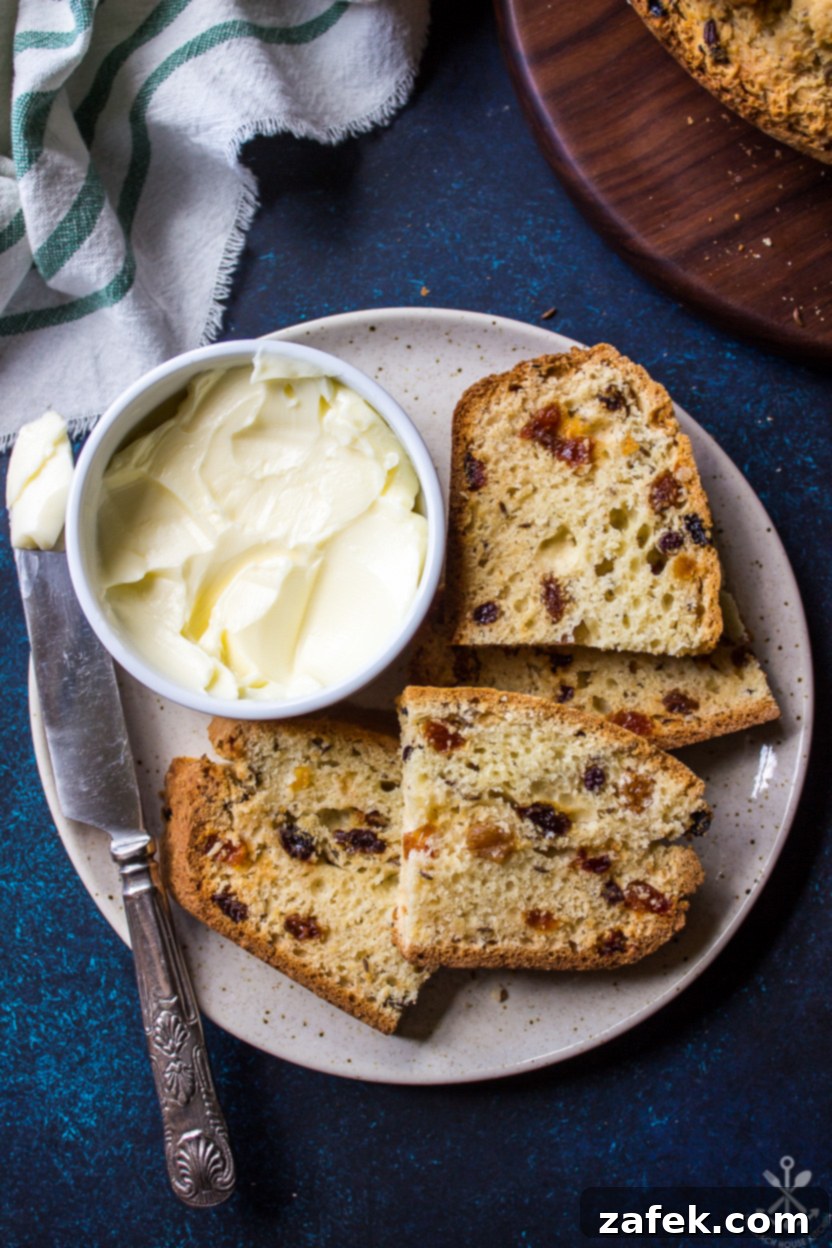
Growing up, St. Patrick’s Day at our house was always an event. The air would be filled with the tantalizing aroma of freshly baked Irish Soda Bread, mingling with the savory scent of corned beef and cabbage simmering on the stove. It was a feast that felt genuinely Irish, despite our family’s lack of any direct ancestral ties to the Emerald Isle. On that one special day, we wholeheartedly embraced our adopted Irish heritage, reveling in every moment and savoring every delicious bite. This bread became a cornerstone of our annual celebration, a tradition passed down and cherished, creating memories as warm and inviting as the bread itself.
Why This Irish Soda Bread Recipe Will Become Your New Favorite
There are countless reasons to fall in love with this particular Irish Soda Bread recipe, making it a standout choice for your St. Patrick’s Day festivities or any day you crave a comforting, hearty loaf. First and foremost is its remarkable moistness. Unlike some soda breads that can turn dry or crumbly, this recipe yields a loaf with a tender, inviting crumb that remains wonderfully soft for days. The secret lies in the careful balance of ingredients and precise mixing techniques, ensuring a rich and satisfying texture.
Beyond its perfect texture, the flavor profile is simply divine. The inclusion of plump currants and sweet golden raisins infuses each slice with bursts of fruity sweetness, adding a delightful counterpoint to the bread’s rustic essence. These dried fruits become beautifully rehydrated during baking, contributing to the bread’s overall moisture and enhancing its taste. While traditionalists might prefer a plainer loaf, these additions elevate it to something truly special.
For those who appreciate an aromatic touch, the subtle warmth of caraway seeds offers a unique layer of flavor. However, if caraway isn’t to your taste, feel free to omit them entirely; the bread is equally delicious without. This adaptability makes the recipe a crowd-pleaser for various palates. Whether enjoyed plain, lightly toasted, or generously spread with butter, this Irish Soda Bread is a versatile delight that promises to bring joy with every bite.
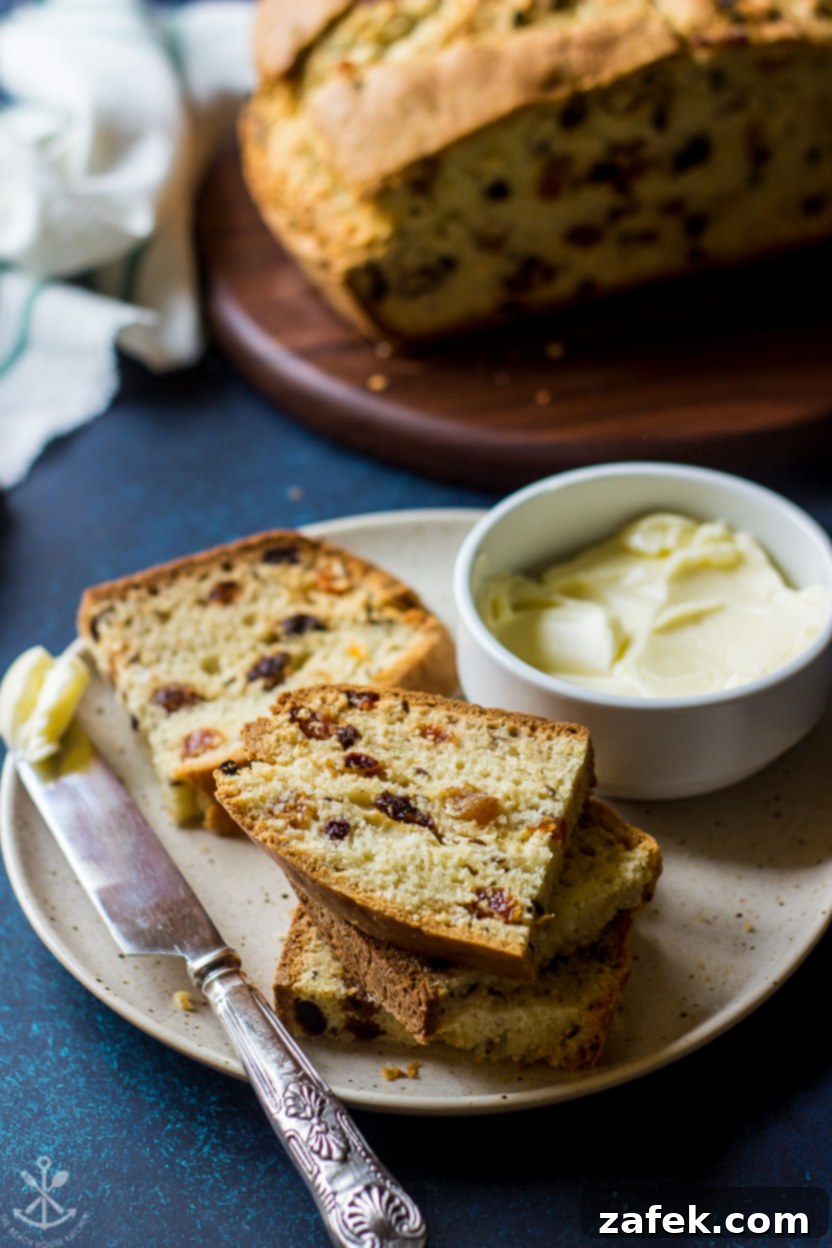
This treasured recipe comes with a story. My mother, while an extraordinary cook, was never much of a baker. So, when it came to creating the perfect Irish Soda Bread for our St. Patrick’s Day celebrations, she didn’t hesitate to call upon the expertise of a dear family friend who hailed directly from Ireland. This friend shared her authentic wisdom, imparting the secrets to a truly wonderful soda bread. It’s worth noting that truly traditional Irish soda bread, often referred to as “plain” or “daily” soda bread, typically does not include additions like raisins or caraway seeds. It’s a simpler, rustic white bread, historically a staple in Irish households, made with just flour, baking soda, salt, and buttermilk. However, over time, many beloved family recipes, including my mother’s version, have incorporated these delightful extras. Our recipe proudly features a generous mix of currants, golden raisins, and caraway seeds, creating a richer, sweeter, and more festive loaf that everyone adores.
What Exactly is Irish Soda Bread? A Brief History
Irish Soda Bread is a fascinating type of quick bread that stands apart from yeast-leavened varieties. Its distinct character comes from the use of sodium bicarbonate, commonly known as baking soda, as its primary leavening agent. This ingenious method means there’s no need for lengthy proofing times, making it a much faster and more accessible bread to prepare than traditional yeast breads.
While intimately associated with Ireland, the concept of using soda in bread making actually has earlier roots. Technically, the Irish weren’t the first to discover this technique. Native Americans were pioneers in this culinary innovation, utilizing naturally occurring pearl-ash or potash (derived from wood ashes, which are high in natural soda) in their breads to help them rise. It was in the 1800s that the Irish enthusiastically adopted soda bread, driven by necessity and resourcefulness. Ireland’s agricultural landscape made soft wheat more readily available than hard wheat, which is better suited for yeast breads. Combined with the widespread availability of buttermilk, a byproduct of butter making, baking soda became the perfect leavening solution. The acidity of the buttermilk reacts with the alkaline baking soda, creating carbon dioxide bubbles that cause the bread to rise, resulting in a dense yet tender crumb. This practical, economical, and delicious bread quickly became a cornerstone of the Irish diet, especially in rural areas, offering sustenance and comfort in every loaf.
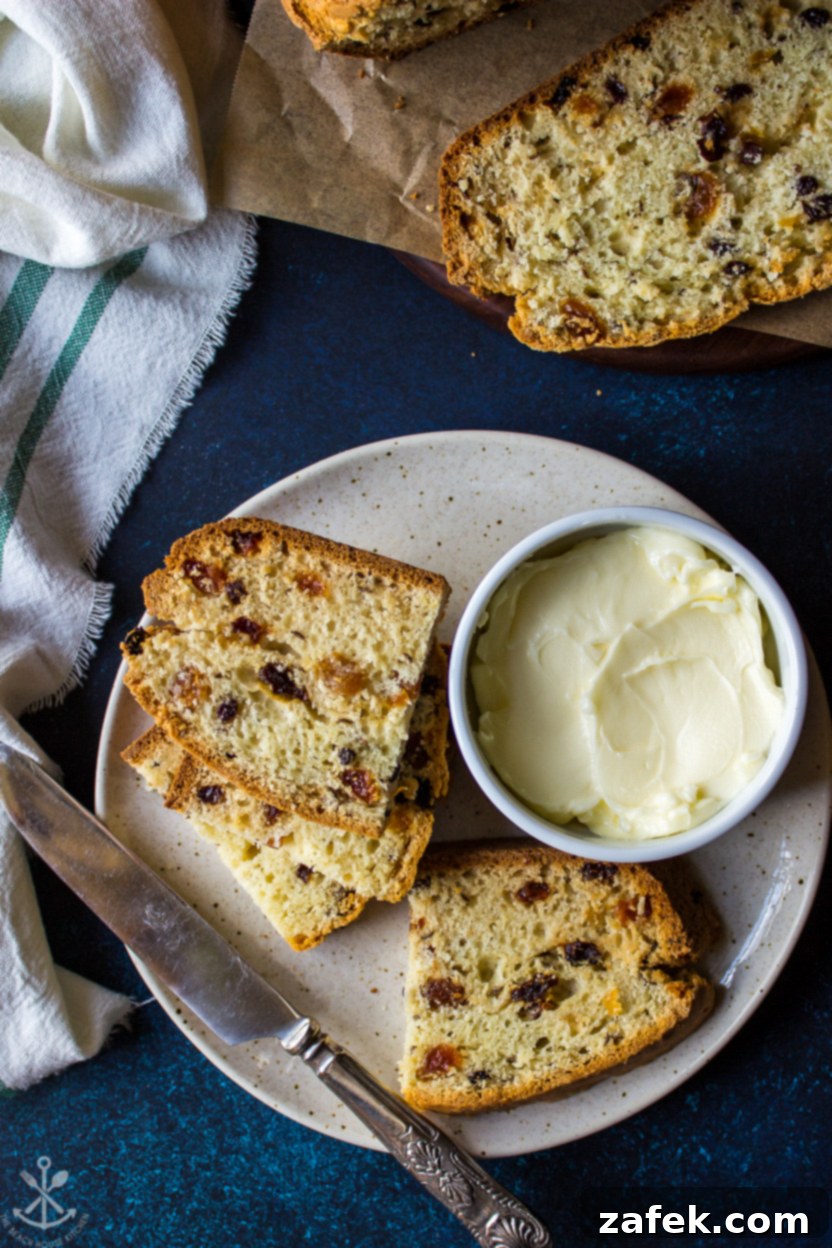
Key Ingredients for Your Perfect Irish Soda Bread
Crafting this delightful Irish Soda Bread requires a simple list of readily available ingredients. Each plays a crucial role in achieving that perfect moist texture and rich flavor:
- All-Purpose Flour: The foundation of our bread, providing structure.
- Granulated Sugar: Adds a touch of sweetness to balance the tangy buttermilk and enrich the flavor.
- Baking Powder & Baking Soda: These are the dynamic duo of our quick bread. Baking soda reacts with the buttermilk’s acidity for lift, while baking powder provides an extra boost, ensuring a tender, airy crumb.
- Kosher Salt: Enhances all the flavors and provides balance.
- Caraway Seeds: (Optional) These small, aromatic seeds lend a distinctive, slightly anise-like flavor. If you’re not a fan, feel free to omit them.
- Unsalted Butter: Adds richness and tenderness to the dough. Using cold, cubed butter and cutting it into the flour creates a crumbly texture similar to scone making, ensuring a flaky, moist bread.
- Buttermilk: Essential for its acidity, which activates the baking soda, and for contributing to the bread’s moistness and characteristic tangy flavor.
- Egg: Acts as a binder and adds richness, helping to create a tender, soft crumb.
- Dried Currants & Golden Raisins: These are the star additions in our family recipe, providing sweet, chewy bursts of fruit that make this bread truly special. Tossing them in a bit of flour before adding prevents them from sinking to the bottom of the loaf.
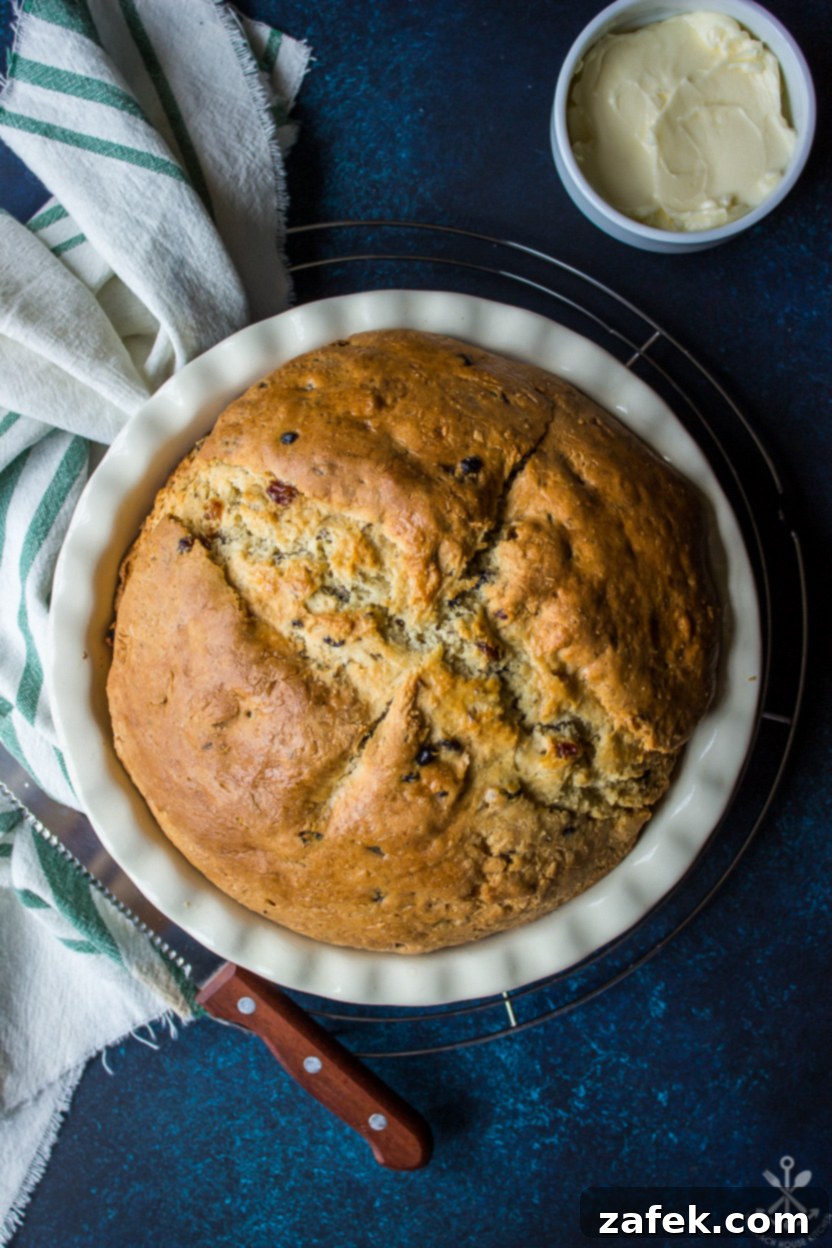
My mom always preferred baking her soda bread in a pie plate, which gives it a beautifully rounded shape and a consistently golden crust. However, you can easily achieve great results by simply placing the loaf on a baking sheet lined with parchment paper. Regardless of your chosen vessel, a few key tips will ensure your success: expect the dough to be quite shaggy and sticky – this is normal and desirable for a moist bread. Resist the urge to over-knead the dough, as excessive handling can develop the gluten too much, resulting in a tough loaf. Finally, before baking, remember to score the top of the dough with a deep ‘X’, about an inch and a half deep. This isn’t just for decoration; it’s a crucial step that allows the heat to penetrate evenly to the center of the loaf, ensuring it bakes through completely and expands beautifully.
Step-By-Step Instructions for Baking the Perfect Irish Soda Bread
Creating this delicious Irish Soda Bread is a straightforward and rewarding process. Follow these detailed steps for a perfect loaf every time:
Preparation: Begin by preheating your oven to 350 degrees Fahrenheit (175°C). Liberally spray a 9×2-inch deep pie plate with a nonstick cooking spray, or line a baking sheet with parchment paper, depending on your preferred baking method. This ensures easy removal and a beautiful crust.
Combine Dry Ingredients: In the large bowl of a stand mixer fitted with a paddle attachment (or a large mixing bowl if mixing by hand), whisk together the 4 1/4 cups of all-purpose flour, granulated sugar, baking powder, baking soda, kosher salt, and caraway seeds (if using). Add the cold, cubed unsalted butter to the flour mixture. Mix on low speed until the butter is fully incorporated and the mixture resembles coarse crumbs. This step is crucial for achieving a tender texture.
Whisk Wet Ingredients: In a separate small bowl, gently whisk together the cold buttermilk and the large egg until just combined. This mixture will provide the necessary moisture and tang to the bread.
Combine Wet and Dry: With your mixer still on low speed (or continuing to mix gently by hand), slowly pour the buttermilk and egg mixture into the flour and butter mixture. Mix just until the wet and dry ingredients are incorporated and a shaggy, sticky dough forms. Be careful not to overmix at this stage, as overworking the dough can lead to a tough bread.
Add Fruits and Shape: In another small bowl, toss the dried currants and golden raisins with the remaining 1/4 cup of all-purpose flour. This light coating of flour helps prevent the fruits from sinking to the bottom of the loaf during baking. Add the floured fruits to the dough and gently mix until they are evenly distributed. The dough will be quite sticky, which is perfectly normal. Turn the dough out onto a generously floured surface. Sprinkle a bit more flour over the dough to make it easier to handle and shape it into a round, domed loaf. Place the shaped dough into your prepared pie plate or onto the parchment-lined baking sheet.
Score and Bake: Using a very sharp knife, cut a deep ‘X’ into the top of the loaf, about an inch and a half deep. This scoring allows the bread to expand properly and ensures the center cooks thoroughly. Transfer the loaf to your preheated oven and bake for approximately 1 hour and 15 minutes, or until the loaf is golden brown and a wooden skewer or cake tester inserted into the center comes out clean. If the top is browning too quickly, you can loosely tent it with aluminum foil.
Cool and Serve: Once baked, remove the pie plate from the oven and let the bread cool in the plate for about 15 minutes. This allows the loaf to set. Then, carefully transfer the bread to a wire rack to cool completely. This Irish Soda Bread is absolutely divine when served warm, generously slathered with butter, but it’s also wonderful at room temperature.
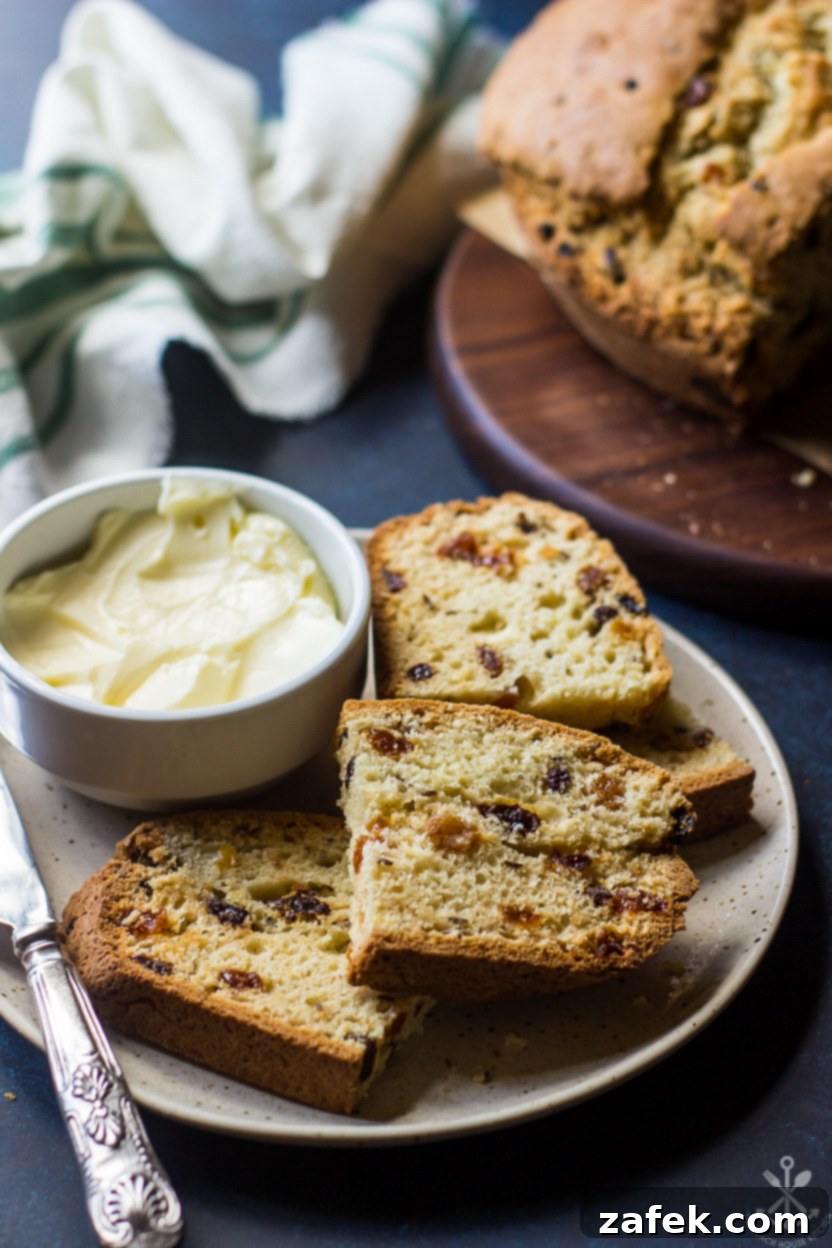
We truly hope this delightful Irish Soda Bread recipe becomes a cherished tradition in your home for St. Patrick’s Day, just as it has been for ours. It’s a simple pleasure that brings so much warmth and flavor to any celebration. And if you’re planning a larger spread for the holiday and looking for other delicious, festive recipes, be sure to explore my Bangers and Mash with Guinness Onion Gravy for a hearty main course, or my crowd-pleasing Reuben Poppers for a fun appetizer. They pair wonderfully with this bread!
Please don’t hesitate to share your experience if you give this recipe a try. Your feedback is always welcome! If you have any questions during the baking process or about any of the ingredients, just drop a comment below. Happy baking and enjoy your taste of Ireland!
Helpful Cook’s Notes & FAQs for Irish Soda Bread
To ensure your Irish Soda Bread turns out perfectly every time, keep these key tips in mind:
- Caraway Seeds are Optional: The caraway seeds offer a distinct, earthy, and slightly anise-like flavor. They are a beloved addition for many, but if you or your family aren’t fans, simply omit them from the recipe. The bread will still be wonderfully flavorful with just the currants and raisins.
- Understanding Scoring: The “X” you cut into the top of the loaf before baking is not merely decorative; it’s a critical technique known as scoring. When bread is first placed in a hot oven, it undergoes a rapid expansion often referred to as “oven spring.” Scoring provides a controlled weak point for the dough to expand, preventing it from cracking unpredictably. More importantly, it allows the heat to penetrate more deeply into the center of the dense loaf, ensuring it cooks evenly all the way through and results in a lighter, well-baked interior. Make sure your “X” is about an inch and a half deep for maximum effectiveness.
- Don’t Overmix: As with many quick breads, overmixing the dough can lead to a tough, dense loaf. Mix just until the ingredients are combined and no dry streaks of flour remain. The dough should still look shaggy and sticky.
- Storing Your Soda Bread: Leftover Irish Soda Bread keeps well at room temperature for 2-3 days, stored in an airtight container or wrapped tightly in plastic wrap. For longer storage, you can freeze individual slices or the whole loaf for up to 3 months. Thaw at room temperature and warm gently before serving for the best texture.
- Serving Suggestions: Beyond butter, try serving warm slices with a dollop of jam, a spread of cream cheese, or even alongside a savory stew or soup for a truly comforting meal.
More Delicious St. Patrick’s Day Recipes to Enjoy
Round out your St. Patrick’s Day celebration with these other fantastic recipes:
Classic Reuben Sandwich
Bangers and Mash with Guinness Onion Gravy
Reuben Poppers
Irish Soda Bread
Author: MaryAnn Dwyer
Servings: 10 servings
Print Recipe
This Irish Soda Bread is a family favorite for St. Patrick’s Day! It’s incredibly moist and loaded with currants and golden raisins.
Prep Time: 20 mins
Cook Time: 1 hr 15 mins
Total Time: 1 hr 35 mins
Ingredients
- 4 1/2 cups all-purpose flour
- 3/4 cup granulated sugar
- 2 tsp. baking powder
- 1 tsp. baking soda
- 1 tsp. kosher salt
- 2 Tbsp. caraway seeds (optional)
- 6 Tbsp. unsalted butter, cold and cut into cubes
- 2 cups cold buttermilk
- 1 large egg
- 1 cup dried currants
- 1 cup golden raisins
Instructions
- Preheat oven to 350 degrees F (175°C). Generously spray a 9×2-inch deep pie plate with nonstick cooking spray, or line a baking sheet with parchment paper.
- In the bowl of a stand mixer fitted with a paddle attachment (or a large mixing bowl), mix together 4 1/4 cups flour, sugar, baking powder, baking soda, salt, and caraway seeds (if using). Add the cold butter and mix on low speed until coarse crumbs form.
- In a small bowl, lightly whisk together the buttermilk and the egg. With the mixer on low, slowly add the buttermilk mixture to the flour mixture just until incorporated. Do not overmix.
- Toss the currants and raisins with the remaining 1/4 cup flour, and add to the dough. Gently mix until evenly distributed. The dough will be sticky. Dump the dough onto a well-floured surface. Sprinkle the dough with a bit of flour as needed and form it into a round, domed loaf. Place into the prepared pie plate or onto the baking sheet. Using a sharp knife, cut a deep ‘X’ (about 1.5 inches deep) in the top of the loaf. Bake until the loaf is cooked through and a tester inserted into the center of the loaf comes out clean, about 1 hour 15 minutes.
- Cool in the pie plate for 15 minutes, then move to a wire rack to cool completely. Can be served warm with butter or at room temperature.
Notes
The caraway seeds are optional in this recipe. If you’re not a fan, just omit them.
Make sure to cut the X at the top of your loaf before baking. This is called scoring. When bread bakes it quickly expands when it is first placed in the oven and scoring controls the expansion, allowing for even cooking.
Nutrition
Calories: 457kcal | Carbohydrates: 84g | Protein: 9g | Fat: 10g | Saturated Fat: 5g | Cholesterol: 40mg | Sodium: 389mg | Potassium: 507mg | Fiber: 4g | Sugar: 35g | Vitamin A: 345IU | Vitamin C: 1.7mg | Calcium: 151mg | Iron: 4mg
Keyword: caraway seeds, currants, raisins, Soda Bread, St. Patrick’s Day
Cuisine: Irish
Course: Breakfast
Before your first bite, snap a photo and share!
If you make this recipe, I’d love to see! Be sure to follow thebeachhousekitchen on Instagram and mention @thebeachhousekitchen or tag #thebeachhousekitchen!