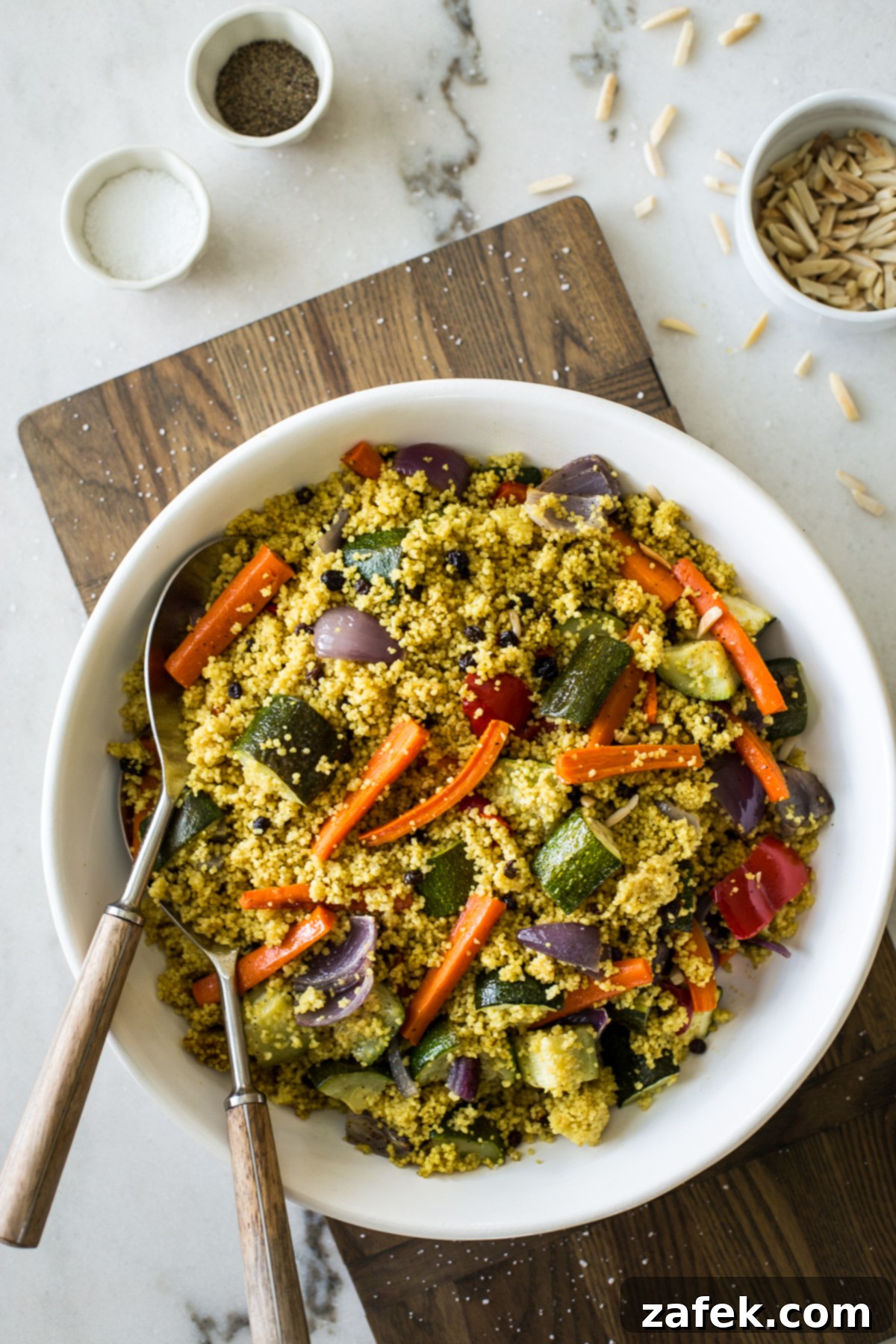
Welcome to a culinary journey that transforms simple, wholesome ingredients into an extraordinary dish: Roasted Vegetable Couscous. This incredibly versatile recipe shines equally as a vibrant main course or a delightful side dish, perfectly complementing roasted chicken, succulent lamb, or grilled beef. Our rendition features a colorful medley of red onion, crisp red bell pepper, sweet carrots, tender zucchini, and a surprising burst of flavor from sweet currants. It’s an effortlessly adaptable recipe designed for both seasoned cooks and kitchen newcomers alike, promising a satisfying, healthy, and utterly delicious experience.
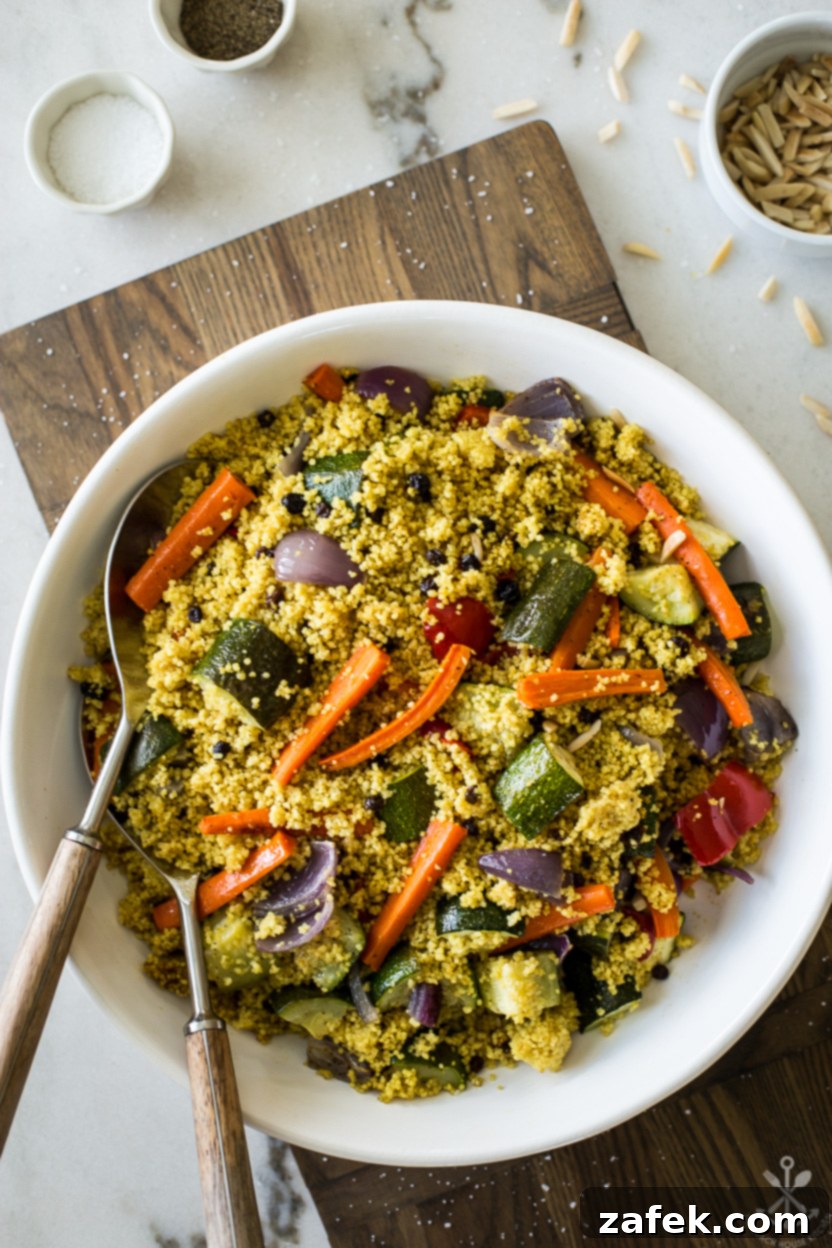
Unlocking Flavor: The Magic of Roasted Vegetable Couscous
The inspiration for truly remarkable recipes can strike from countless sources – a memorable restaurant meal, a friend’s inviting dinner party, or even the pages of a beloved cookbook. This particular Roasted Vegetable Couscous, a dish I first savored in a charming eatery, found its way back to my kitchen through a similar recipe in the Bon Appetit Cookbook. While honoring its origins, I’ve infused it with a personal touch: swapping raisins for the more delicate currants (due to availability and preference), opting for a convenient boxed couscous mix, and adding a delightful crunch with toasted slivered almonds, salvaged from a previous Lemon Blueberry Granola adventure.
This isn’t just a recipe; it’s a celebration of efficiency and flavor, ideal for those moments when you want to “clean out the pantry and vegetable bin.” It’s a healthy, filling, and incredibly easy dish that excels as a quick weeknight meal or a smart choice for your weekly meal prep. Get ready to discover how effortless it is to create something truly exceptional!
Why This Roasted Vegetable Couscous Will Become Your New Favorite
Beyond its simple preparation, this healthy roasted vegetable couscous offers a wealth of benefits that make it a standout in any recipe repertoire:
- Nutrient-Packed Goodness: Loaded with fresh, roasted vegetables, this dish provides essential vitamins, minerals, and fiber, contributing to a balanced diet and promoting overall well-being. It’s a delicious way to boost your daily vegetable intake.
- Effortless Preparation: With just a few straightforward steps – roasting vegetables and quickly preparing couscous – this recipe minimizes hands-on time, making it perfect for busy schedules. You’ll be amazed at the sophisticated flavor profile achieved with such minimal effort.
- Unmatched Versatility: Whether you need a satisfying vegetarian main dish, a robust side for grilled meats, or a vibrant addition to your lunchbox, this couscous delivers. It tastes fantastic served warm, at room temperature, or even cold, making it incredibly flexible.
- Customization at Your Fingertips: This recipe is a blank canvas for your culinary creativity. Easily swap out vegetables based on seasonal availability or personal preference, experiment with different dried fruits, or introduce new spices to craft a dish that’s uniquely yours.
- Ideal for Meal Prep: Its ability to hold up well in the refrigerator makes this easy couscous recipe a dream for meal preppers. Prepare a large batch at the beginning of the week for nutritious, ready-to-eat lunches or quick dinners.

The Heart of the Dish: Essential Ingredients for Roasted Vegetable Couscous
The beauty of this vegetarian couscous lies in its reliance on fresh, accessible ingredients that combine to create a symphony of flavors and textures. Each component plays a crucial role in building the dish’s delightful character.
Roasted Vegetable Couscous Ingredients At A Glance
- Olive Oil: Essential for coating vegetables before roasting, imparting a rich flavor and ensuring even caramelization.
- Red Onion: Roasts beautifully, developing a sweet, mellow flavor that contrasts wonderfully with the other savory elements.
- Red Bell Pepper: Adds vibrant color, a sweet crunch, and a boost of Vitamin C. When roasted, its natural sugars intensify.
- Carrots: Sweet and earthy, carrots become incredibly tender and flavorful once roasted, offering a pleasant sweetness to the dish.
- Zucchini: A light and tender addition that absorbs flavors well, providing a nice textural balance to the firmer vegetables.
- Kosher Salt and Pepper: The foundational seasonings that enhance the natural flavors of all ingredients.
- Chicken or Vegetable Broth: The liquid base for cooking the couscous, infusing it with depth and savory notes. Use vegetable broth for a fully vegan option.
- Currants: These tiny dried fruits provide a delicate sweetness and a hint of tang, offering a delightful counterpoint to the savory vegetables and warm spices.
- Ground Cinnamon: A touch of cinnamon lends a warm, aromatic, and subtly exotic flavor, elevating the dish beyond ordinary.
- Turmeric: Known for its beautiful golden color and earthy notes, turmeric adds both visual appeal and a gentle, warm spice profile, along with its renowned health benefits.
- Couscous (not pearl couscous): The star grain of the dish. Regular, fine-grain couscous cooks quickly and provides a light, fluffy texture that perfectly soaks up the flavors.
- Butter: A small amount of butter added to the couscous cooking liquid enhances richness and flavor, contributing to a wonderfully satisfying mouthfeel.
- Slivered Almonds: Toasted slivered almonds are an optional but highly recommended addition, providing a fantastic crunch and nutty flavor that complements the soft couscous and tender vegetables.

Step-by-Step Guide to Perfect Roasted Vegetable Couscous
Creating this flavorful dish is a breeze, divided into two main components: roasting your vibrant vegetables and preparing your fluffy couscous. Let’s break down each step to ensure perfect results every time.
1. Preparing Your Vibrant Vegetables for Roasting
The roasting process is where the magic truly happens, transforming raw vegetables into tender, caramelized, and intensely flavored morsels. Begin by preheating your oven to a robust 400 degrees Fahrenheit (200°C). This high heat is key to achieving that desirable browning and sweetness. While the oven heats, line a large baking sheet with parchment paper; this prevents sticking and makes cleanup a breeze.
In a spacious bowl, combine your coarsely chopped red onion, large red bell pepper, thickly cut carrots, and 1 1/2 to 2-inch pieces of zucchini. Drizzle generously with olive oil and toss everything until each piece of vegetable is beautifully coated. Even coating ensures consistent roasting. Spread the seasoned vegetables in a single layer on your prepared baking sheet. Overcrowding the pan can lead to steaming rather than roasting, so use two sheets if necessary. Sprinkle generously with kosher salt and freshly ground black pepper.
Roast the vegetables for approximately 25 minutes. About halfway through the cooking time (around the 12-15 minute mark), give them a good stir to ensure even browning. You’re looking for them to be lightly browned, tender, and slightly caramelized at the edges. This caramelization is what brings out their natural sweetness and depth of flavor.


2. Crafting Fluffy, Flavorful Couscous
While your vegetables are busy roasting to perfection, you’ll prepare the couscous. This step is incredibly quick and infuses the tiny grains with wonderful aroma and flavor. In a medium saucepan, combine your choice of chicken or vegetable broth, a tablespoon of butter, the sweet currants, ground cinnamon, and a pinch of turmeric. Bring this mixture to a rolling boil over medium-high heat. The spices will bloom in the hot liquid, releasing their full fragrance.
Once the broth reaches a boil, promptly add the couscous (remember, we’re using regular couscous, not the larger pearl variety). Immediately remove the saucepan from the heat and cover it tightly with a lid. The residual heat from the broth will gently cook the couscous. Let it stand undisturbed for about five minutes. Resist the urge to peek! This resting period allows the couscous to absorb all the flavorful liquid and steam perfectly. After five minutes, remove the lid and use a fork to fluff the couscous. This separates the grains, creating that light, airy texture we all love.


3. Bringing It All Together: A Symphony of Flavors and Textures
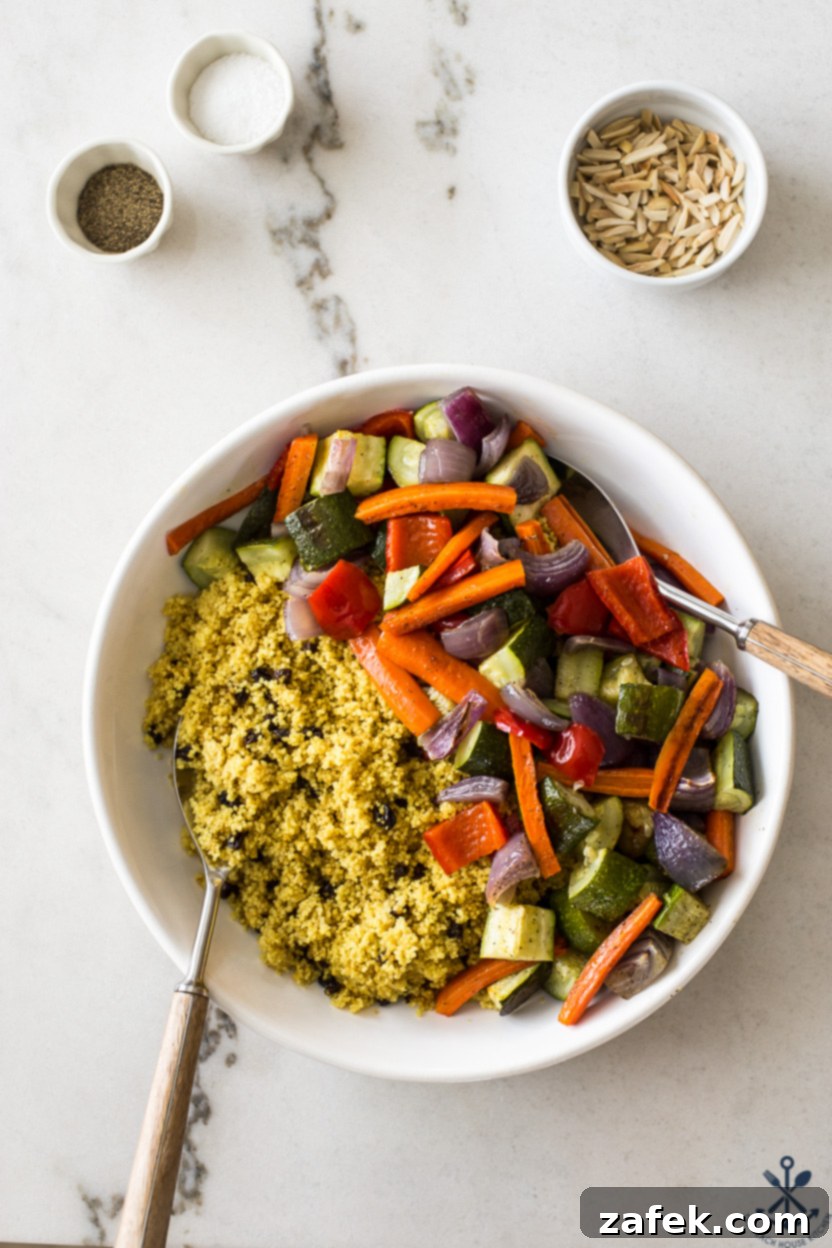
Once your vegetables are roasted and the couscous is perfectly fluffed, it’s time to unite these delicious components. Transfer both the roasted vegetables and the cooked couscous into a large serving dish. Toss gently until all the ingredients are thoroughly combined, ensuring every spoonful offers a mix of tender vegetables and flavorful grains. Taste and adjust seasoning with additional salt and pepper as needed. Sometimes a final squeeze of fresh lemon juice can brighten all the flavors beautifully.
For an extra layer of texture and nutty aroma, I highly recommend adding some toasted slivered almonds. Simply toast the almonds in a small dry frying pan over medium heat, stirring frequently, until they turn lightly golden and you catch a delightful nutty scent. Be careful, they can burn quickly! This step is optional, but the crunchy almonds add a fantastic contrast to the tender components of the dish. This Mediterranean-inspired couscous is ready to be served warm, at room temperature, or chilled – it’s delicious at any temperature!
Serving Suggestions & Meal Prep Tips
This Moroccan-inspired couscous dish is a true chameleon in the kitchen. Enjoy it as a satisfying vegetarian main course, perhaps with a sprinkle of crumbled feta cheese or fresh chopped herbs like parsley or mint. Alternatively, it makes an excellent and substantial side dish for a variety of proteins. Think alongside grilled chicken or fish, roasted lamb, or even simple pan-seared tofu. Its vibrant flavors and textures can elevate any meal.
For meal prep, this recipe is a lifesaver. Prepare a batch on Sunday, and you’ll have healthy, ready-to-eat lunches or quick dinner components for several days. Store leftovers in an airtight container in the refrigerator for up to 3-4 days. Reheat gently in the microwave, adding a splash of broth if it seems dry, or enjoy it cold as a refreshing salad.
This dish is not only brimming with delicious, complex flavors, but it’s also incredibly good for you. It effortlessly incorporates your daily dose of wholesome vegetables and so much more, making it a guilt-free pleasure you’ll want to make again and again!

Customization and Creative Variations for Your Couscous Dish
One of the most appealing aspects of this roasted vegetable couscous recipe is its incredible adaptability. While our chosen medley of red onion, red bell pepper, carrots, and zucchini is fantastic, feel free to unleash your creativity and use any vegetables you enjoy roasted. Here are a few ideas to get you started:
- Vegetable Swaps: Instead of or in addition to the suggested vegetables, consider green bell pepper, eggplant, tender broccoli florets, asparagus spears, cauliflower, sweet potatoes (cut into smaller cubes for faster roasting), or even mushrooms. Seasonal produce is always a great choice for maximum flavor.
- Dried Fruit Alternatives: If currants are hard to find, regular raisins are an excellent substitute and will provide a similar sweetness. Other dried fruits like chopped apricots, cranberries, or even chopped dates could also add a unique twist.
- Spice Exploration: Enhance the warm, earthy notes by adding a pinch of ground cumin or coriander alongside the cinnamon and turmeric. A touch of smoked paprika could also introduce a deeper, smoky undertone.
- Protein Boosts: To make this dish even more substantial, consider adding plant-based proteins. Roasted chickpeas, black beans, or lentils can be tossed in with the vegetables post-roasting. For non-vegan options, crumbled feta cheese, grilled halloumi, or even leftover shredded chicken can be mixed in.
- Herbaceous Finish: Fresh herbs truly brighten this dish. A generous handful of chopped fresh parsley, mint, or cilantro stirred in just before serving will add a burst of freshness and aroma.
- Zesty Kick: A final drizzle of fresh lemon juice or a good quality extra virgin olive oil before serving can enhance all the flavors and add a pleasant tang.
Frequently Asked Questions (FAQ) About Roasted Vegetable Couscous
We’ve gathered some common questions to help you master this delicious and adaptable dish.
Q: What kind of couscous should I use for this recipe?
A: For this recipe, you’ll need regular, fine-grain couscous, often found in boxes or bags in the pasta aisle. Avoid pearl couscous (also known as Israeli couscous), which has a much larger grain and requires a different cooking method and time.
Q: Can I make this Roasted Vegetable Couscous vegan?
A: Absolutely! This recipe is very easy to adapt for a vegan diet. Simply use vegetable broth instead of chicken broth, and substitute the butter with a plant-based butter alternative or an additional tablespoon of olive oil.
Q: How long does Roasted Vegetable Couscous last in the refrigerator?
A: When stored in an airtight container, your roasted vegetable couscous will stay fresh in the refrigerator for 3-4 days. It’s perfect for make-ahead meals!
Q: Can I use frozen vegetables for this dish?
A: While fresh vegetables are recommended for the best texture and flavor when roasting, you can use frozen vegetables in a pinch. If using frozen, spread them in a single layer on the baking sheet without thawing, and they might require a slightly longer roasting time to cook through and brown. Be aware that the texture might be a bit softer than with fresh produce.
Q: What are the benefits of adding turmeric to the couscous?
A: Turmeric not only lends a beautiful golden color and a subtle earthy flavor to the couscous, but it’s also known for its powerful anti-inflammatory and antioxidant properties. It adds both taste and health benefits to your meal.
More Delicious Couscous Recipes to Enjoy
If you love this simple couscous recipe, you’ll be thrilled to explore other ways to incorporate this versatile grain into your cooking. Couscous is fantastic in salads, hearty side dishes, and even as a base for main courses. Check out these other delightful couscous creations:
- Greek Couscous Salad: A refreshing and vibrant salad packed with Mediterranean flavors.
- Curried Couscous with Apples and Fennel: A unique blend of sweet, savory, and aromatic spices.
- Watermelon, Feta and Couscous Salad with Citrus Vinaigrette: A light, bright, and unexpected flavor combination perfect for summer.

Roasted Vegetable Couscous
Print Recipe
SaveSaved!
Pin Recipe
Ingredients
- 2 Tbsp. olive oil
- 1 medium red onion, coarsely chopped
- 1 large red bell pepper, coarsley chopped
- 3 large carrots, peeled and cut into thick strips (as pictured)
- 2 zucchini, cut into 1 1/2-2-inch. pieces
- kosher salt and pepper
- 2 cups low-sodium chicken broth, or you can use vegetable broth
- 1 Tbsp. butter
- 1/2 tsp. ground cinnamon
- 1/4 tsp. turmeric
- 1/2 cup currants
- 1 1/2 cups couscous, or one 10-oz. box Near East Original Couscous
- 1/3 cup toasted slivered almonds
Instructions
- Preheat oven to 400 degrees Fahrenheit (200°C). Line a large baking sheet with parchment paper. Set aside.
- In a large bowl, combine all vegetables with olive oil and toss until well coated. Spread vegetables on prepared sheet in a single layer and sprinkle with salt and pepper. Roast for 25 minutes, stirring halfway through until lightly browned and tender.
- While the veggies are roasting, bring the broth, butter, cinnamon, turmeric, and currants to a boil in a medium saucepan. Once boiling, add the couscous, remove from heat immediately, and cover. Let stand for 5 minutes, then fluff with a fork.
- When the vegetables are done roasting, remove them from the oven. Combine the cooked couscous and roasted vegetables in a large serving bowl, tossing until well combined. Season with additional salt and pepper to taste. Top with toasted slivered almonds, if desired. This dish can be served warm, cold, or at room temperature.
Notes
Ensure you use regular couscous, not pearl (Israeli) couscous, for this dish.
If currants are unavailable, regular raisins make an excellent substitute.