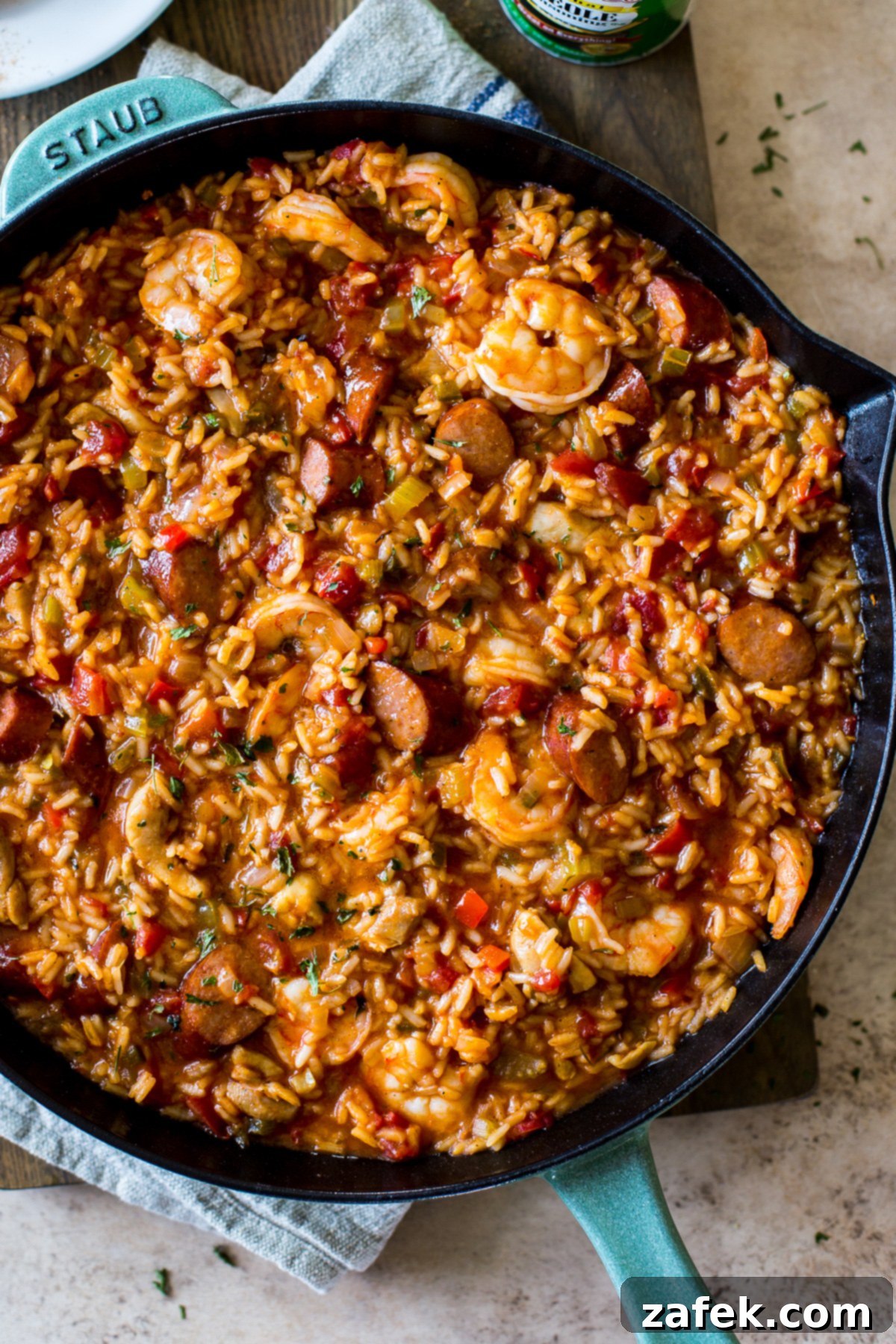
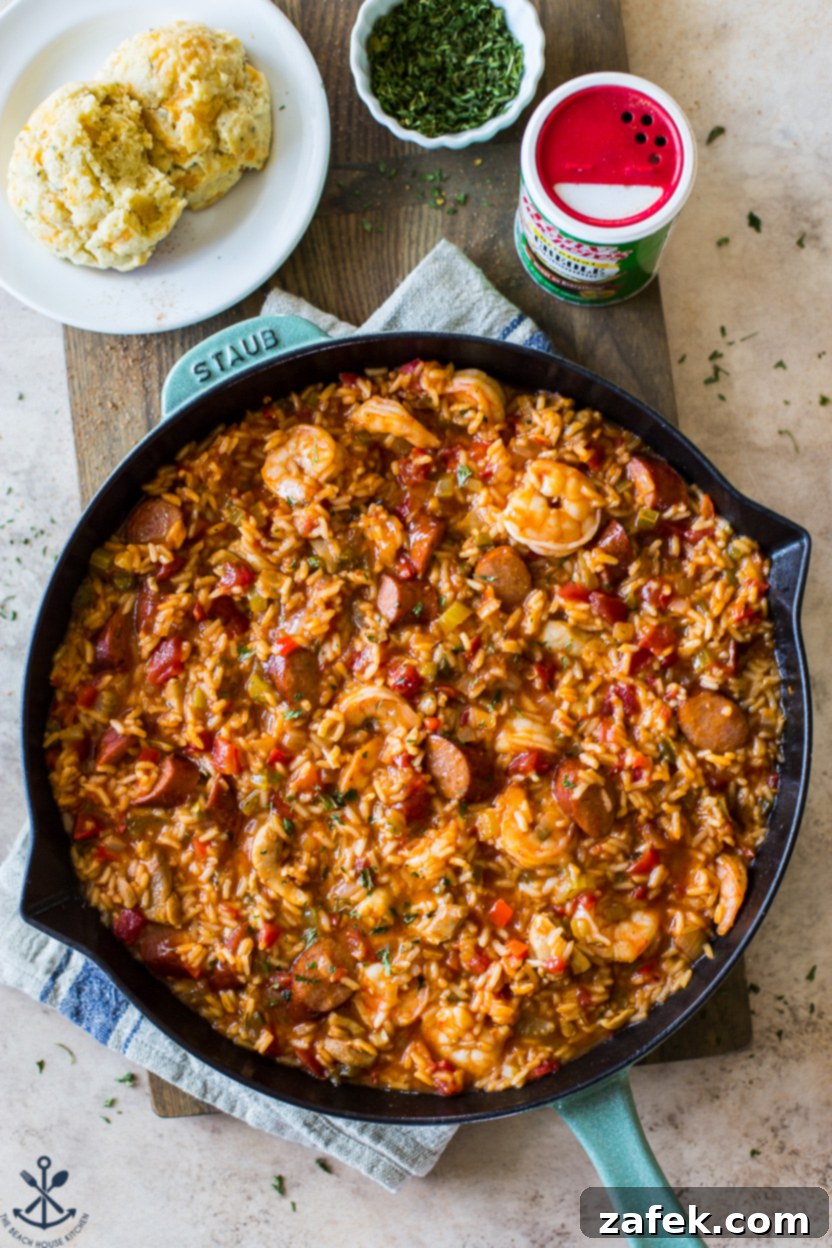
This zesty Jambalaya never fails to impress! It’s loaded with shrimp, chicken, and sausage and is made entirely in one large pot or deep skillet. Perfect for entertaining a crowd or simply enjoying a hearty family meal!
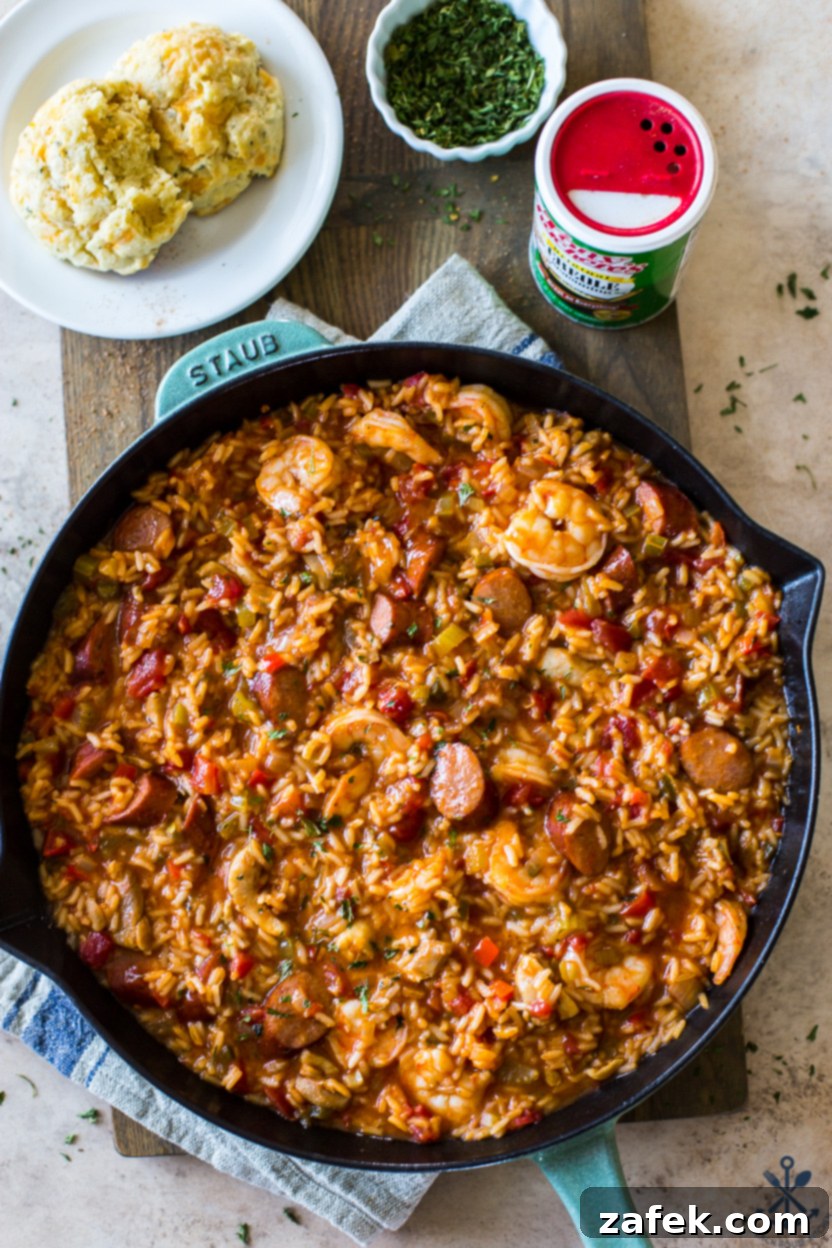
Authentic One-Pot Jambalaya: Your Go-To Recipe for Flavorful Feasts
Imagine gathering your loved ones around a steaming pot of rich, aromatic Jambalaya – a dish so vibrant and satisfying, it instantly transports you to the heart of Louisiana. Today, I’m thrilled to share my absolute favorite, tried-and-true Jambalaya recipe, a culinary masterpiece that has earned its place as a guaranteed crowd-pleaser at countless gatherings, especially when hosting friends and family. This isn’t just a meal; it’s an experience, promising bold flavors, hearty ingredients, and the incredible convenience of a single pot, making it perfect for any occasion.
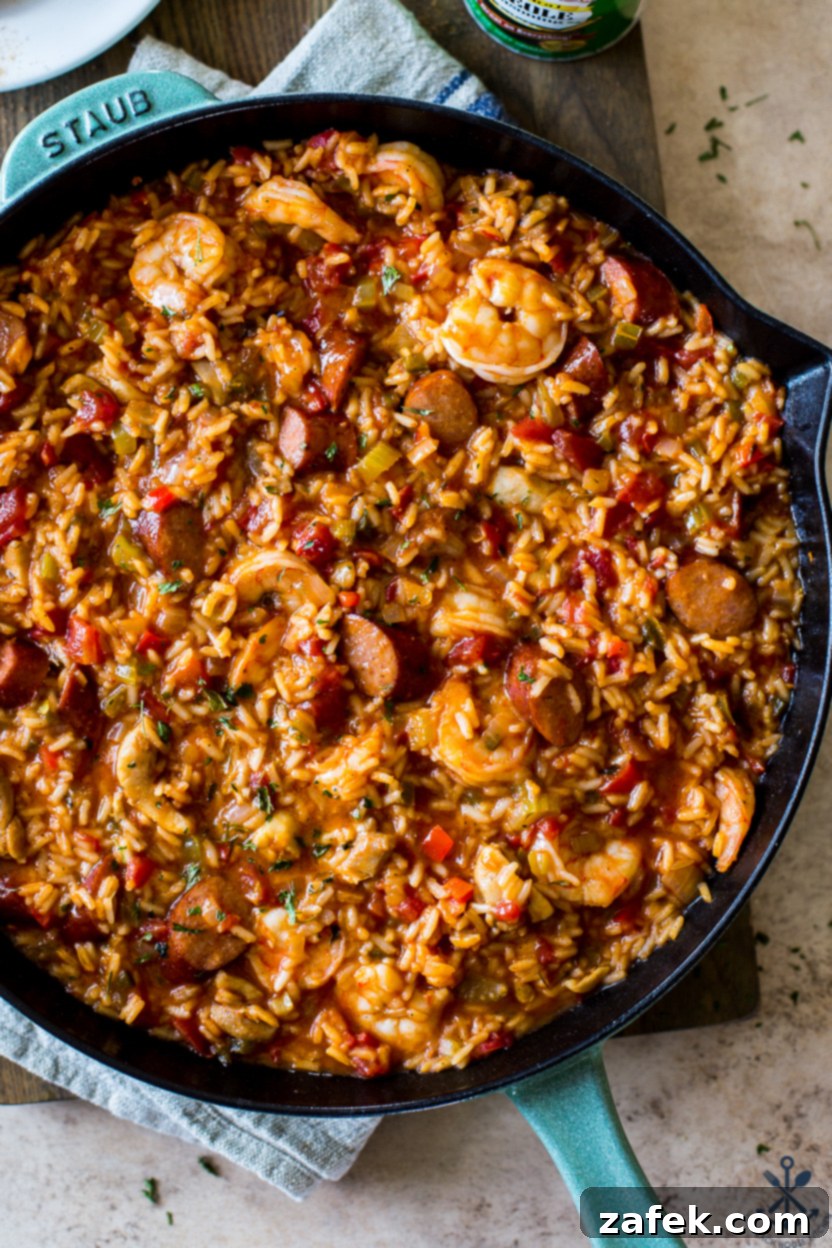
Why This One-Pot Jambalaya Recipe is a Must-Try
In a world of complicated recipes and endless dishes, there’s nothing quite as appealing as a delicious one-pot meal. This Jambalaya perfectly embodies that charm, standing out as a complete culinary package, brimming with diverse proteins, fresh vegetables, and flavorful rice, all cooked together to create a symphony of tastes. Here’s why this recipe will quickly become a cherished staple in your kitchen:
- Effortless Entertaining: Designed for feeding a crowd, this Jambalaya takes the stress out of hosting. Its generous yield ensures everyone gets a satisfying serving, making it ideal for large family dinners, holiday celebrations like the Fourth of July, or any event where good food and good company are paramount.
- Packed with Bold Flavor: Each spoonful bursts with the classic spicy and savory notes characteristic of Creole cuisine. The harmonious blend of succulent chicken, smoky sausage, and tender shrimp, combined with aromatic vegetables and a vibrant tomato base, creates an unforgettable taste profile that will have everyone asking for seconds.
- Minimal Cleanup: The undeniable beauty of a one-pot dish cannot be overstated. By cooking everything in a single large pot or Dutch oven, you drastically cut down on post-meal cleanup, leaving you more time to relax and enjoy your guests, and less time scrubbing pans. It’s truly a “wham, bam, one-stop shop” for culinary satisfaction.
- Nutritionally Balanced: This hearty dish isn’t just flavorful; it’s a remarkably well-rounded meal in itself. With lean proteins, a generous helping of colorful vegetables, and satisfying rice, it covers multiple food groups, ensuring a fulfilling and nourishing experience without the need for additional side dishes.
- Authentic Creole Experience: This recipe delivers an authentic taste of Louisiana, perfect for those craving genuine Southern comfort food with a kick.
The Rich History and Soul of Jambalaya
To truly appreciate the depth of flavor in Jambalaya, it’s worth delving into its fascinating origins. This iconic dish is a cornerstone of both Cajun and Creole cuisines, each with distinct influences that tell a vibrant story of cultural fusion in Louisiana. The name “Jambalaya” itself is believed to have multiple possible derivations, perhaps from the French word “jambon” (ham) and an African word for rice, or even a Spanish term, highlighting its diverse heritage rooted in a melting pot of cultures.
Creole vs. Cajun Jambalaya: A Subtle but Significant Distinction
While often grouped, there’s a key difference between Creole and Cajun Jambalaya that reflects their geographical and historical origins. Creole Jambalaya, also known as “red Jambalaya,” hails from the sophisticated urban setting of New Orleans. This style reflects the city’s cosmopolitan history, incorporating Spanish, French, African, and Caribbean culinary influences. It typically includes tomatoes and a wider array of spices, often featuring the classic “holy trinity” of onion, celery, and bell pepper sautéed in fat, then followed by various meats like chicken, sausage, and seafood.
Cajun Jambalaya, on the other hand, originates from the more rural, French Acadian communities of Southwest Louisiana. It’s often referred to as “brown Jambalaya” because it typically omits tomatoes and begins by browning meat (often pork or chicken) in a heavy pot to create a rich, dark base before adding the trinity and rice. Both styles are incredibly delicious and robust, but this particular recipe leans into the vibrant, tomato-rich Creole tradition, offering a beautiful balance of flavors and colors that many have come to love.
Regardless of its specific lineage, Jambalaya symbolizes a hearty, community-oriented meal designed to feed many. It’s a dish that historically evolved with what was readily available, making it endlessly adaptable and always comforting. Our version captures the essence of this rich tradition, bringing that warmth, zesty flavor, and historical narrative directly to your table.
Essential Ingredients for Authentic Jambalaya Flavor
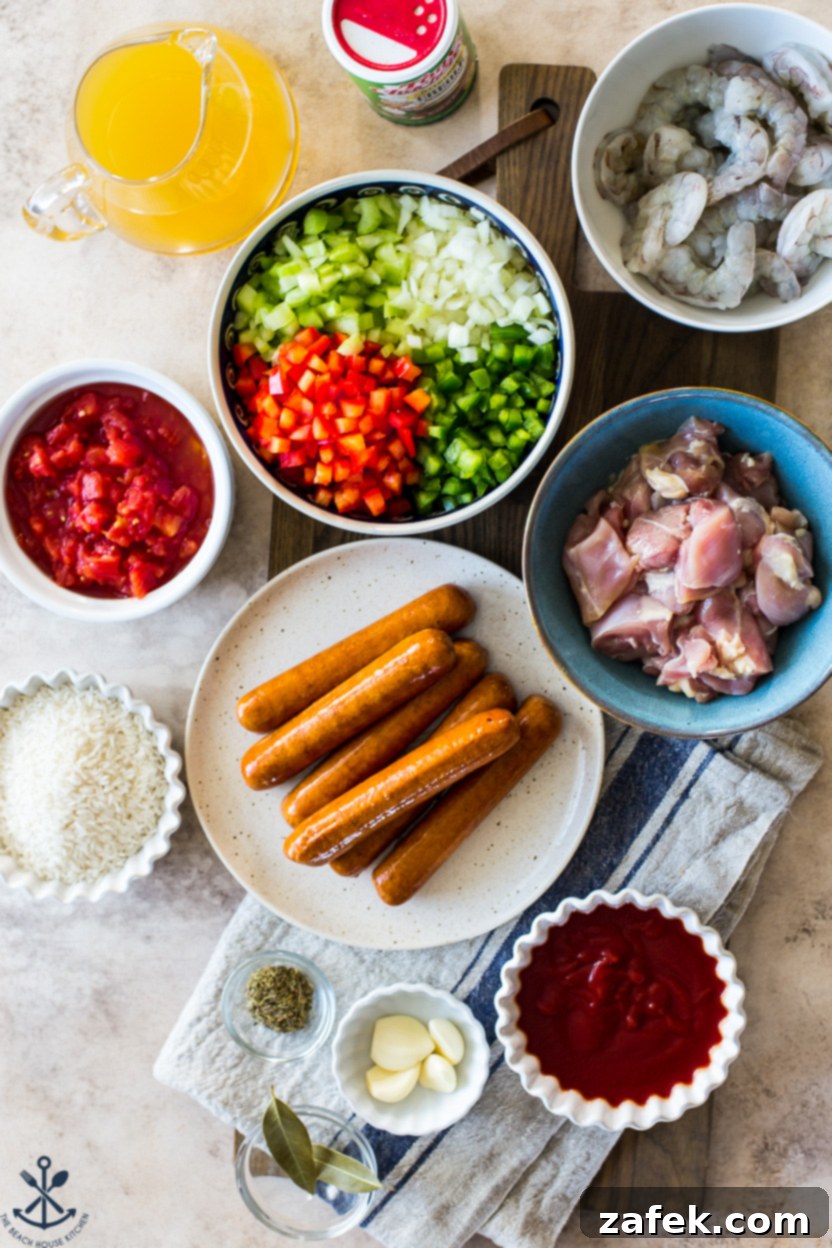
Creating an exceptional Jambalaya starts with selecting quality ingredients that contribute to its distinctive taste and texture. Each component plays a crucial role in building the layered and complex flavors of this classic dish:
- Olive Oil: Used for sautéing the proteins and vegetables, it provides a foundational, healthy fat for flavor development.
- Chicken (Boneless, Skinless Thighs): Thighs are highly recommended over breasts for their superior tenderness and richer flavor, which holds up wonderfully to the longer cooking process. Cubing them ensures even cooking and distribution throughout the dish. Seasoning with salt and pepper before cooking enhances their natural savory taste and helps develop a delicious crust.
- The “Holy Trinity” (Yellow Onion, Celery, Red & Green Bell Peppers): This iconic trio forms the aromatic foundation of most Cajun and Creole dishes. Chopping them uniformly ensures they soften evenly and release their full spectrum of sweet and savory flavors, creating a robust base for the Jambalaya.
- Garlic: Freshly minced garlic adds a pungent depth and indispensable aroma, complementing the trinity and infusing the entire dish with its unmistakable essence.
- Low-Sodium Chicken Broth: This is the primary liquid for cooking the rice and building the flavorful sauce. Opting for low-sodium broth allows you to precisely control the overall saltiness of the dish, especially crucial with the addition of Creole seasoning, which can already be quite salty.
- Canned Diced Tomatoes & Tomato Sauce: These are the defining ingredients of Creole Jambalaya, contributing a bright, acidic tang and a rich, savory body to the sauce. They also provide essential moisture for the rice and impart a beautiful reddish hue to the finished dish.
- Long Grain Rice (Uncooked): The star carbohydrate that absorbs all the incredible flavors of the pot. Long grain white rice is crucial here as it tends to cook up fluffy and separate, preventing a sticky, mushy result that would detract from the dish’s texture.
- Creole Seasoning (e.g., Tony Chachere’s): This is where the signature zesty, spicy kick comes from. A good Creole seasoning blend typically includes paprika, cayenne pepper, garlic powder, onion powder, and a variety of other herbs and spices. Adjust the amount to suit your personal spice preference.
- Bay Leaf & Dried Thyme Leaves: These herbs provide subtle, earthy, and aromatic undertones that deepen the complexity of the stew-like rice, adding a traditional and comforting fragrance.
- Smoked or Andouille Sausage: Essential for its smoky, spicy punch and chewy texture. Andouille sausage, a smoked pork sausage seasoned with garlic and cayenne, is the traditional choice for its robust and fiery flavor. If unavailable or if you prefer a milder taste, a good quality smoked sausage (like kielbasa) works wonderfully. Sliced into half-inch pieces, it releases its delicious fats and flavors into the pot, enriching the entire dish.
- Shrimp (Cleaned and Deveined): Added towards the very end of cooking, shrimp provides a delicate, sweet seafood counterpoint to the richer meats. Ensuring they are cleaned and deveined makes for a more pleasant and effortless eating experience.
- Fresh Parsley & Hot Sauce (for garnish): A sprinkle of fresh chopped parsley not only brightens the dish with vibrant color but also adds a touch of fresh herbaceousness. A dash of your favorite hot sauce, served on the side, allows individual diners to customize their preferred level of heat.
Mastering the One-Pot Jambalaya: Step-By-Step Instructions
Follow these detailed steps carefully to create a truly unforgettable Jambalaya that’s both bursting with flavor and surprisingly simple to prepare:
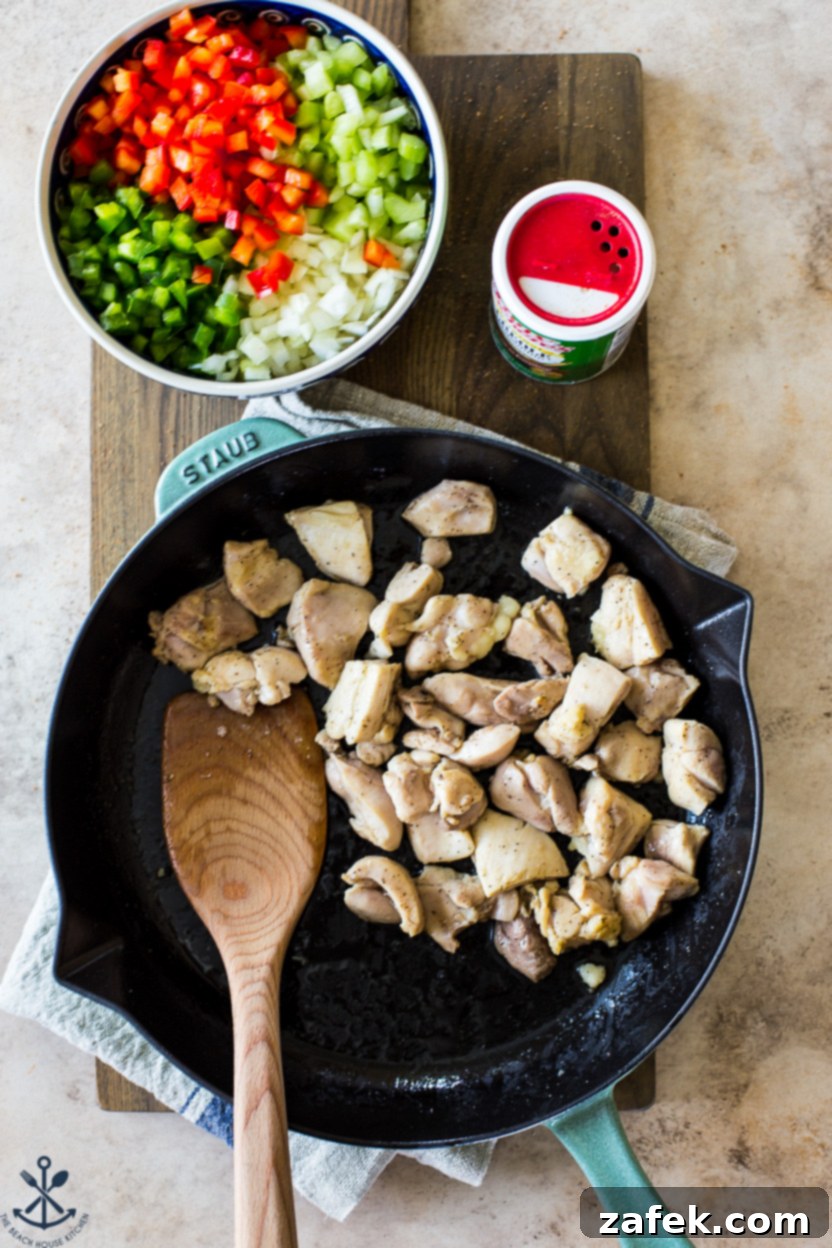
Step 1: Brown the Chicken for Deep Flavor
Begin by heating 2 tablespoons of olive oil in a very large Dutch oven or a deep, heavy-bottomed skillet over medium heat. Season your cubed boneless, skinless chicken thighs generously with salt and freshly ground black pepper. Carefully add the chicken to the hot pan in a single layer, ensuring not to overcrowd it. Cook, stirring frequently, for about 8-10 minutes. Your primary goal here is to achieve a beautiful golden-brown sear on all sides, and for the chicken to be mostly cooked through. This crucial browning step is essential for developing deep, savory, complex flavors that will permeate the entire dish. Once nicely browned, remove the chicken with a slotted spoon and transfer it to a plate, setting it aside and leaving any delicious drippings and browned bits in the pan.
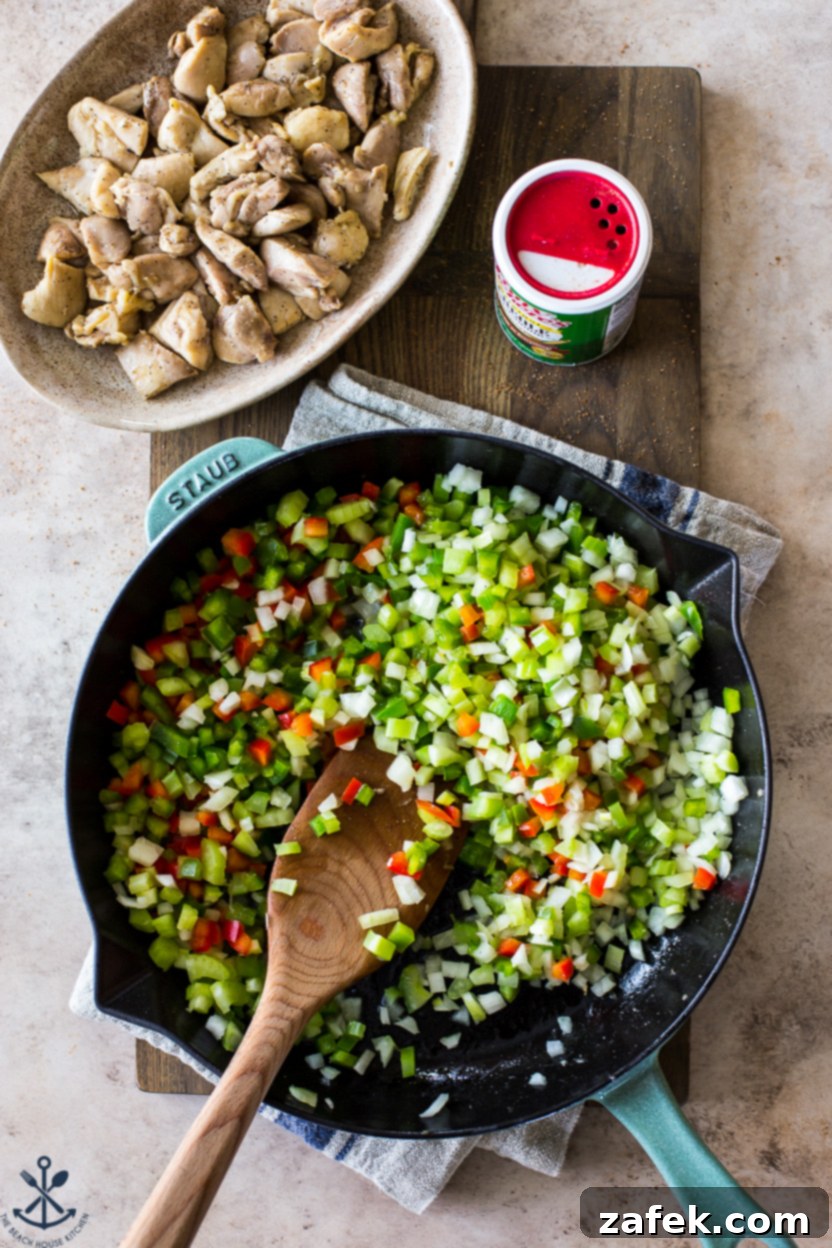
Step 2: Sauté the “Holy Trinity” and Garlic
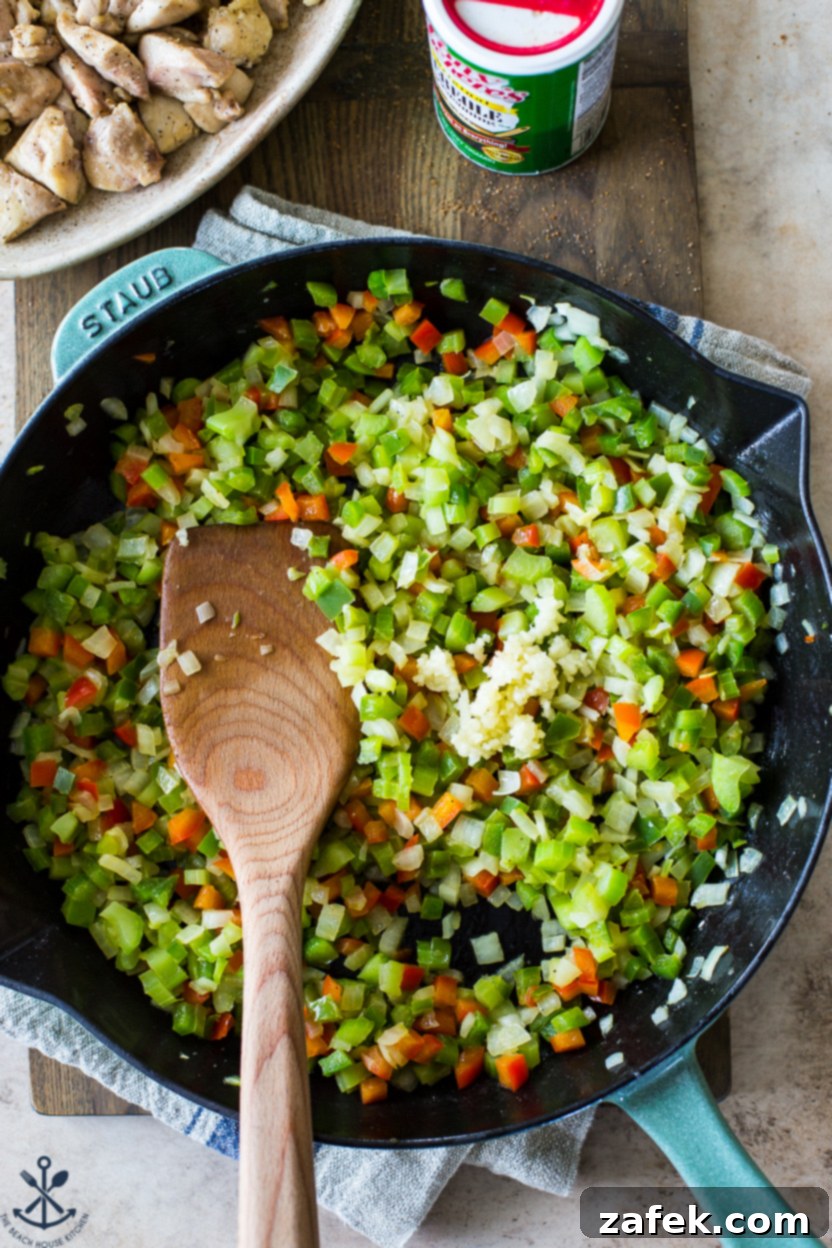
Add the remaining 2 tablespoons of olive oil to the same pan, which should still contain some of the chicken drippings. Introduce the chopped yellow onion, celery, red bell pepper, and green bell pepper. Cook these aromatic vegetables for 5-6 minutes, stirring occasionally, until they begin to soften and become translucent. As you stir, make sure to scrape up any flavorful browned bits (fond) from the bottom of the pan – this is packed with concentrated flavor. Next, add the minced garlic and continue to cook for just 1 more minute until it becomes wonderfully fragrant, being very careful not to burn it, as burnt garlic can taste bitter.
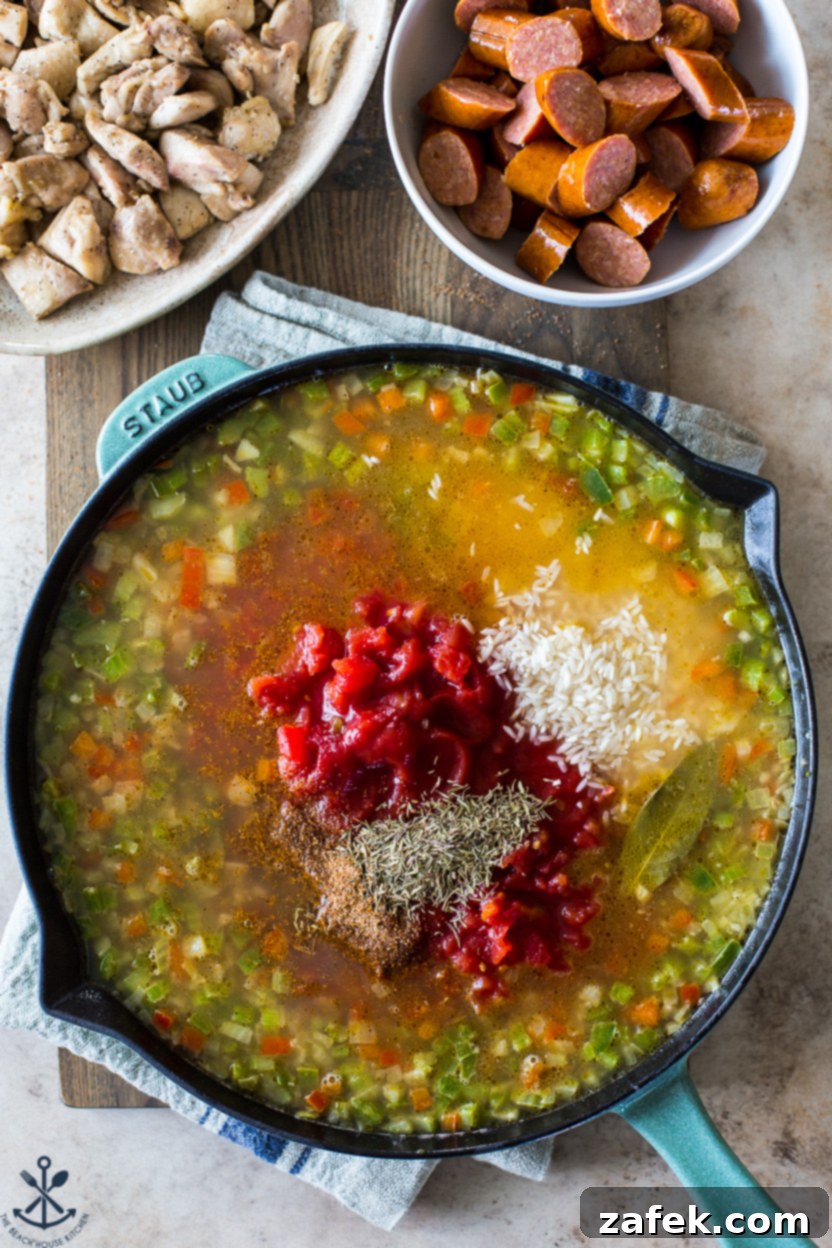
Step 3: Build the Flavor Base and Simmer the Rice
Now, it’s time to bring all those wonderful flavors together to create the heart of the Jambalaya. Pour in the low-sodium chicken broth, canned diced tomatoes (undrained), and tomato sauce. Stir in the uncooked long grain rice, Creole seasoning, bay leaf, dried thyme, the sliced smoked or Andouille sausage, and return the previously cooked chicken to the pot. Stir everything thoroughly to combine, ensuring the rice is fully submerged in the liquid and evenly distributed throughout the mixture.
Increase the heat to medium-high and bring the mixture to a strong, rolling boil. Once boiling, immediately reduce the heat to medium-low, cover the pot tightly with its lid, and let it simmer gently for 25-30 minutes, or until the rice is tender, cooked through, and has absorbed most of the liquid. Remember to stir occasionally during this simmering stage to prevent the rice from sticking to the bottom of the pan and to ensure all components cook evenly. Resist the urge to lift the lid too frequently, as this releases steam essential for cooking the rice.
Step 4: Finish with Shrimp and Serve
The final touch that completes this magnificent dish! Once the rice is tender and the liquid is mostly absorbed, stir in the cleaned and deveined shrimp. Continue to cook, stirring frequently, for only about 3-5 minutes, or until the shrimp turn opaque and pink and are fully cooked through. Be very careful not to overcook the shrimp, as they can quickly become tough and rubbery. Before serving, remember to remove and discard the bay leaf. Taste the Jambalaya and adjust seasoning with additional salt and pepper if needed. Your magnificent, authentic Jambalaya is now ready to be enjoyed!
Serving Suggestions & Wine Pairings
As emphasized, this Jambalaya is a complete and incredibly satisfying meal in itself, requiring no additional side dishes. Its richness and complexity mean it stands alone beautifully. However, to enhance the dining experience, consider pairing it with a few simple accompaniments. A crisp, refreshing green salad with a light vinaigrette can provide a pleasant contrast to the hearty flavors. For beverages, a cold beer, a crisp dry white wine (like a Sauvignon Blanc or Pinot Grigio), or even a refreshing iced tea complements its spicy notes perfectly. A basket of warm, crusty bread can also be a wonderful addition for soaking up any remaining sauce.
We’d absolutely love to hear from you if you give this fantastic recipe a try! Please feel free to share your culinary adventures, thoughts, or any questions you might have in the comments section below. Enjoy every zesty, savory bite of your homemade Jambalaya!
Expert Cook’s Notes & Tips for Perfect Jambalaya
To ensure your Jambalaya turns out perfectly every time, keep these helpful tips and considerations in mind:
- Choosing Your Cooking Vessel: A heavy-bottomed Dutch oven (5-quart or larger) is highly recommended for this recipe. Its superior heat distribution and sturdy construction help prevent scorching and ensure the rice cooks perfectly and evenly. If you don’t have a Dutch oven, a very large, deep skillet with a tight-fitting lid can work, but you’ll need to watch it closely to avoid overflowing or uneven cooking. The Dutch oven provides optimal depth and heat retention for best results.
- Adjusting Batch Size: This recipe is designed to generously serve 8 people, making it perfect for larger gatherings. If you’re cooking for a smaller crowd, feel free to half the recipe. Remember to adjust all liquid and seasoning measurements accordingly when scaling down.
- Sausage Selection is Key: The type of sausage significantly impacts the overall flavor profile. Traditional Andouille sausage offers a distinctly spicy, smoky, and robust flavor that is classic for authentic Jambalaya. Brands like Johnsonville or Aidells are excellent, widely available choices. If Andouille is too spicy for your preference or difficult to find, a good quality smoked sausage (such as kielbasa or a mild pork sausage) can be a milder but still delicious alternative.
- Customizing Spice Level: Creole seasoning blends vary in their heat intensity. If you prefer a milder dish, start with slightly less seasoning than recommended and add more to taste at the very end. For those who love a fiery kick, a dash or two of your favorite hot sauce stirred in at the end or served on the side is perfect for individual customization.
- The Importance of Rice Type: Stick exclusively to long-grain white rice for this recipe. Medium or short-grain rice varieties contain more starch and tend to release it during cooking, which can result in a stickier, gummier Jambalaya. The goal is for fluffy, separate grains of rice, which long-grain provides.
- Resist the Urge to Peek: While the Jambalaya is simmering, try to resist the urge to lift the lid too often. This allows heat and steam to build up inside the pot, which is essential for properly cooking the rice. Frequent peeking will release steam, extend cooking time, and can lead to unevenly cooked or undercooked rice.
- Rest Before Serving: Once the shrimp are cooked and the heat is turned off, remove the pot from the heat and let the Jambalaya rest, covered, for 5-10 minutes. This crucial resting period allows the flavors to meld even further and the rice grains to firm up slightly, resulting in a perfectly textured dish.
Explore More Delicious Cajun & Creole Delights
If you’ve enjoyed this delightful taste of Louisiana, we invite you to explore more of our beloved Cajun and Creole-inspired recipes. These dishes share the same vibrant spirit, rich heritage, and incredible flavors that make Southern cooking so irresistible:
- Shrimp Etoufee Vol au Vents
- Cajun Poutine
- Lobster Hush Puppies with Creole Remoulade
Jambalaya
Author: MaryAnn Dwyer
Servings: 8 servings
Print Recipe
Pin Recipe
This zesty Jambalaya never fails to impress! It’s loaded with shrimp, chicken and sausage and is made in one large pot or deep skillet. Perfect for entertaining a crowd!
Prep Time: 20 mins
Cook Time: 40 mins
Total Time: 1 hr
Ingredients
- 4 Tbsp. olive oil
- 1 lb. boneless skinless chicken thighs, cubed
- 1/2 tsp. salt
- 1/4 tsp. freshly ground black pepper
- 1 1/2 cups yellow onion, chopped
- 1 cup celery, chopped (2-3 ribs)
- 1 1/4 cups red bell pepper, chopped
- 1 1/4 cups green pepper, chopped
- 4 cloves garlic, minced
- 3 cups chicken broth
- 28 oz. can diced tomatoes
- 8 oz. can tomato sauce
- 2 cups long grain rice, uncooked
- 1 1/2 Tbsp. Creole seasoning (I use Tony Chachere’s)
- 1 bay leaf
- 1 tsp. dried thyme leaves
- 1 lb. smoked sausage, cut into 1/2 inch slices
- 1 1/2 lb. shrimp, cleaned and deveined
- Chopped fresh parsley and hot sauce for garnish if desired
Instructions
- Heat 2 Tbsp. oil in an extra large saute pan or Dutch oven over medium heat. Sprinkle chicken with salt and pepper. Add chicken to pan and cook, stirring often, for 8-10 minutes until nicely browned and mostly cooked through. Remove chicken with a slotted spoon to a plate.
- Add remaining 2 Tbsp. oil to the pan along with onions, celery, and peppers and cook for 5-6 minutes, until softened, stirring to loosen brown bits from the bottom of the pan. Add garlic and continue to cook for 1 minute.
- Add chicken broth, diced tomatoes, tomato sauce, rice, seasonings, sausage and cooked chicken and stir to combine. Bring to a boil over medium-high heat. Once mixture starts to boil, reduce heat to medium-low, cover and simmer, stirring often for 25-30 minutes or until rice is cooked.
- Stir in shrimp and continue to cook, stirring often until shrimp are pink and cooked through.
- Remove bay leaf and season with salt and pepper to taste.
Notes
- You can use either a Dutch oven for this recipe or a very deep, large skillet if you have one. I actually recommend the Dutch oven so you don’t need to worry about the skillet overflowing on your stove.
- You can also half this recipe for a smaller crowd.
- You can use smoked sausage for this recipe or andouille sausage. I use either Johnsonville or Aidells.
Nutrition
Calories: 555kcal | Carbohydrates: 53g | Protein: 27g | Fat: 26g | Saturated Fat: 7g | Polyunsaturated Fat: 3g | Monounsaturated Fat: 14g | Cholesterol: 76mg | Sodium: 962mg | Potassium: 963mg | Fiber: 5g | Sugar: 7g | Vitamin A: 2295IU | Vitamin C: 66mg | Calcium: 84mg | Iron: 3mg
Keyword: Chicken, one-pot meal, rice, sausage, shrimp
Cuisine: Cajun, Creole
Course: Dinner, Main Dish
Before your first bite, snap a photo and share!
If you make this recipe, I’d love to see! Be sure to follow thebeachhousekitchen on Instagram and tag Mention @thebeachhousekitchen or tag #thebeachhousekitchen!