
Experience the unparalleled richness of White Bolognese, a classic Italian meat sauce that defies tradition by omitting tomatoes. This exquisite dish masterfully blends beef and pork with aromatic herbs, delicate white wine, and luscious cream, resulting in a profoundly comforting, savory, and incredibly zesty culinary masterpiece.

Unveiling the Delights of White Bolognese: A Creamy, No-Tomato Masterpiece
For many, the word “Bolognese” immediately conjures images of a deep red, tomato-rich meat sauce, simmered for hours to perfection. It’s a classic for a reason, a true labor of love that yields an undeniably flavorful and comforting dish. If you’re a fan of traditional Bolognese, you absolutely must explore my recipes for Lasagna Bolognese or myBucatini Bolognese – they are tried, true, and beloved.
Crafting any great Bolognese, whether red or white, demands a commitment of time and a fair bit of chopping. Yet, every minute spent meticulously preparing this sauce is an investment that pays off handsomely. The reward is a deeply satisfying meal, brimming with layers of complex flavor that warm the soul and satisfy even the most discerning palate.
Today, however, we’re embarking on a journey into a lesser-known but equally enchanting variation: White Bolognese, or Bolognese Bianco. Have you encountered this delightful creation before? My first introduction to this unique meat sauce was at Joe Leone’s, an incredible Italian specialty store renowned for its authentic and delicious foods. Walking into Leone’s is always an inspiring experience for me. The aromas, the fresh ingredients, and the expertly prepared dishes ignite countless ideas for recipes I yearn to recreate and share with all of you. And, naturally, I never leave without a bag full of gourmet treats to savor and enjoy at home!
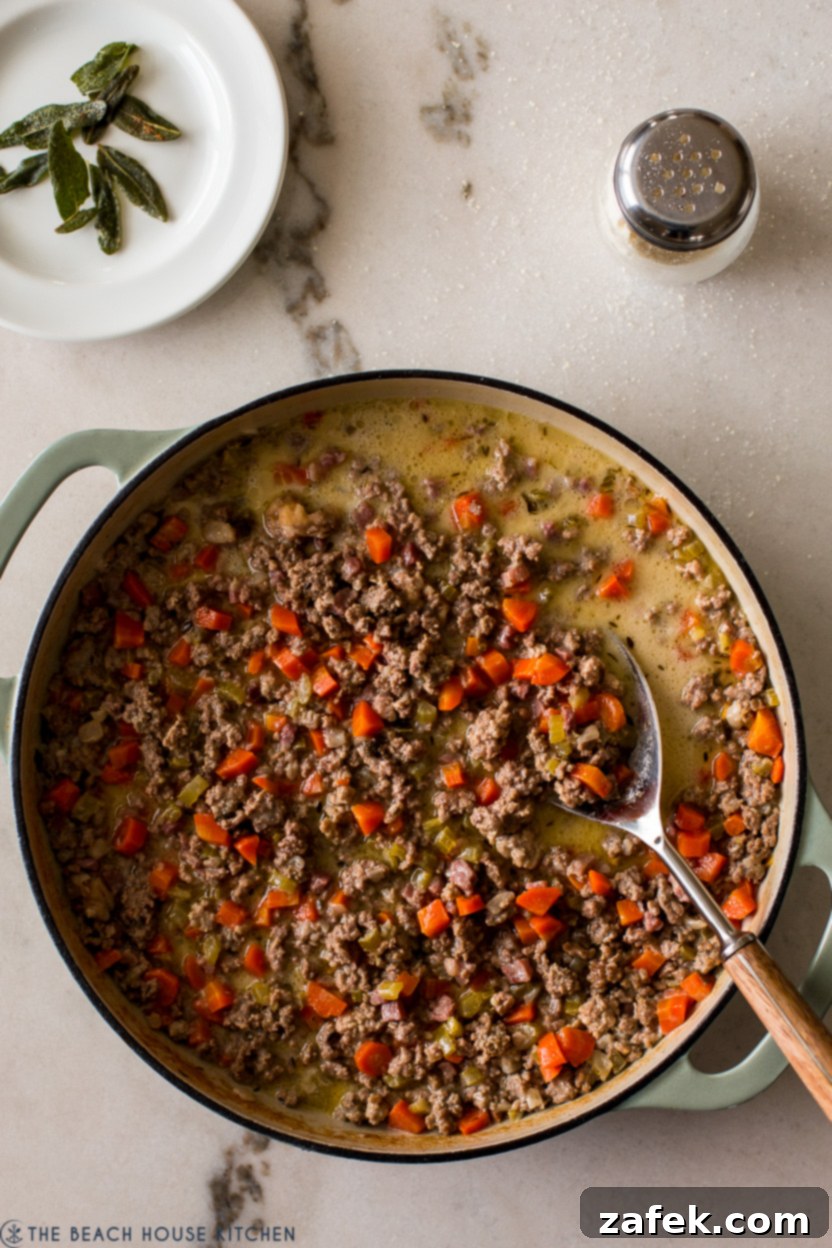
The very concept of White Bolognese has sparked lively debates within my own family. My brother-in-law, John, for instance, adamantly insisted that such a thing couldn’t possibly exist! Despite my fervent attempts to convince him, citing its deliciousness and Italian roots, I ultimately realized that actions speak louder than words. So, I set out to concoct my own rendition, drawing inspiration from the ingredients I observed at Joe Leone’s and refining it with the techniques I apply to my cherished traditional Bolognese recipe.
The outcome? Absolutely DELICIOUS! This White Bolognese recipe not only silenced the skeptics but also created a new favorite in our household. Its rich, nuanced flavor profile offers a refreshing alternative to its tomato-based counterpart, proving that sometimes, breaking tradition can lead to culinary revelation.
Why You’ll Fall in Love with this White Bolognese Recipe
This White Bolognese isn’t just a meal; it’s an experience. Here’s why it’s destined to become a staple in your kitchen:
- The Ultimate Comfort Food: At its core, this dish embodies warmth and coziness. It’s a hearty, satisfying meal served in a single bowl, featuring a perfect harmony of tender meat, nutritious vegetables, and comforting pasta. It’s the kind of food that makes you feel utterly content after a long day.
- A Symphony of Zesty, Rich Flavors: Unlike its tomato-laden cousin, White Bolognese offers a lighter yet profoundly flavorful profile. The absence of tomato allows the natural sweetness of the carrots, the earthy notes of the celery, the pungent depth of garlic and herbs, and the savory richness of the pancetta, beef, and pork to truly shine. Deglazing with white wine adds a vibrant zest, while the cream brings a luxurious silkiness that rounds out every bite.
- Surprisingly Versatile: While utterly decadent on its own, this sauce is incredibly versatile. It pairs beautifully with a variety of pasta shapes, from wide tagliatelle to delicate spaghetti, or even hearty rigatoni. You can also adapt it with minor tweaks, making it a flexible addition to your culinary repertoire.
- A Unique Twist on a Classic: For those looking to explore beyond traditional Italian fare, or simply seeking a fresh perspective on Bolognese, this white version offers an exciting and delightful departure. It’s a conversation starter and a palate pleaser, proving that Italian cuisine holds many delicious secrets.
- Perfect for Meal Prep: Like many ragùs, White Bolognese often tastes even better the next day as the flavors continue to meld and deepen. This makes it an excellent candidate for meal prepping, allowing you to enjoy gourmet-level meals with minimal effort during busy weeknights.
Essential Ingredients for a Perfect White Bolognese
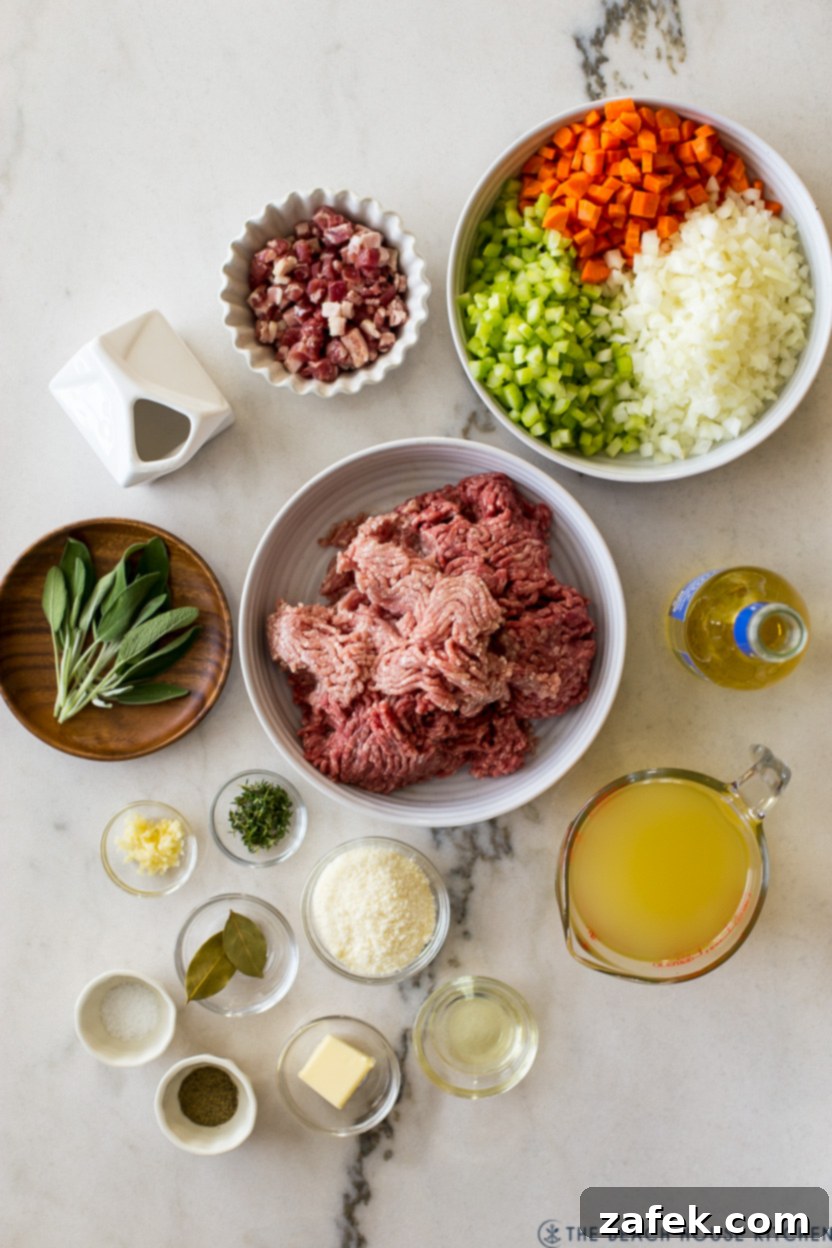
Crafting an authentic and deeply flavorful White Bolognese relies on a selection of high-quality ingredients. Each component plays a crucial role in building the sauce’s characteristic richness and depth. Here’s a breakdown of what you’ll need:
- Butter & Olive Oil: The dynamic duo for sautéing, providing a rich base and preventing scorching.
- Fresh Sage Leaves: These fragrant leaves are first crisped in butter for garnish and later chopped into the sauce, infusing it with an earthy, slightly peppery aroma.
- Yellow Onion, Celery, Carrots (Mirepoix): The holy trinity of French cooking, known as *soffritto* in Italian. Finely chopped, these vegetables create the aromatic foundation for the sauce, lending sweetness and depth.
- Garlic: Essential for its pungent, savory notes that elevate any Italian dish.
- Fresh Thyme Leaves: Adds a delicate, herbaceous counterpoint to the richness of the meats and cream.
- Kosher Salt and Pepper: Basic seasonings, crucial for enhancing and balancing all the flavors.
- Bay Leaves: These humble leaves contribute a subtle, almost medicinal depth that slowly develops as the sauce simmers.
- Pancetta: Italian cured pork belly, diced and rendered, provides incomparable savory fat and a crispy texture, laying down a robust flavor base.
- Ground Beef (90/10 recommended): Offers a hearty, umami-rich component. The lean-to-fat ratio is ideal for balancing flavor without excessive greasiness.
- Ground Pork: Adds a lovely sweetness and tenderness that complements the beef perfectly, creating a more complex meat profile.
- White Cooking Wine: Used for deglazing, it lifts all the browned bits from the pan, adding acidity and a sophisticated depth of flavor that evaporates as it cooks.
- Low-Sodium Chicken Stock: The primary liquid for simmering, providing a savory backbone without overpowering the other ingredients. Using low-sodium allows you to control the salt level.
- Heavy Cream: The star ingredient that gives White Bolognese its signature creamy texture and luxurious mouthfeel.
- Grated Parmesan Cheese: Stirred in at the end and served as garnish, it brings a salty, nutty, umami finish that truly completes the dish.
- Pasta for Serving: While spaghetti is a classic choice, this rich sauce pairs wonderfully with various pasta shapes, especially those that can hold onto the creamy sauce, like tagliatelle, pappardelle, or even penne.
- Parmesan Rind (Optional but highly recommended): A secret weapon for infusing the sauce with an incredible depth of cheesy, umami flavor as it simmers. Don’t discard those rinds!
Step-By-Step Instructions for Crafting Your White Bolognese
Making this White Bolognese is a culinary journey, and each step is designed to build layers of incredible flavor. Follow these instructions carefully for the best results:
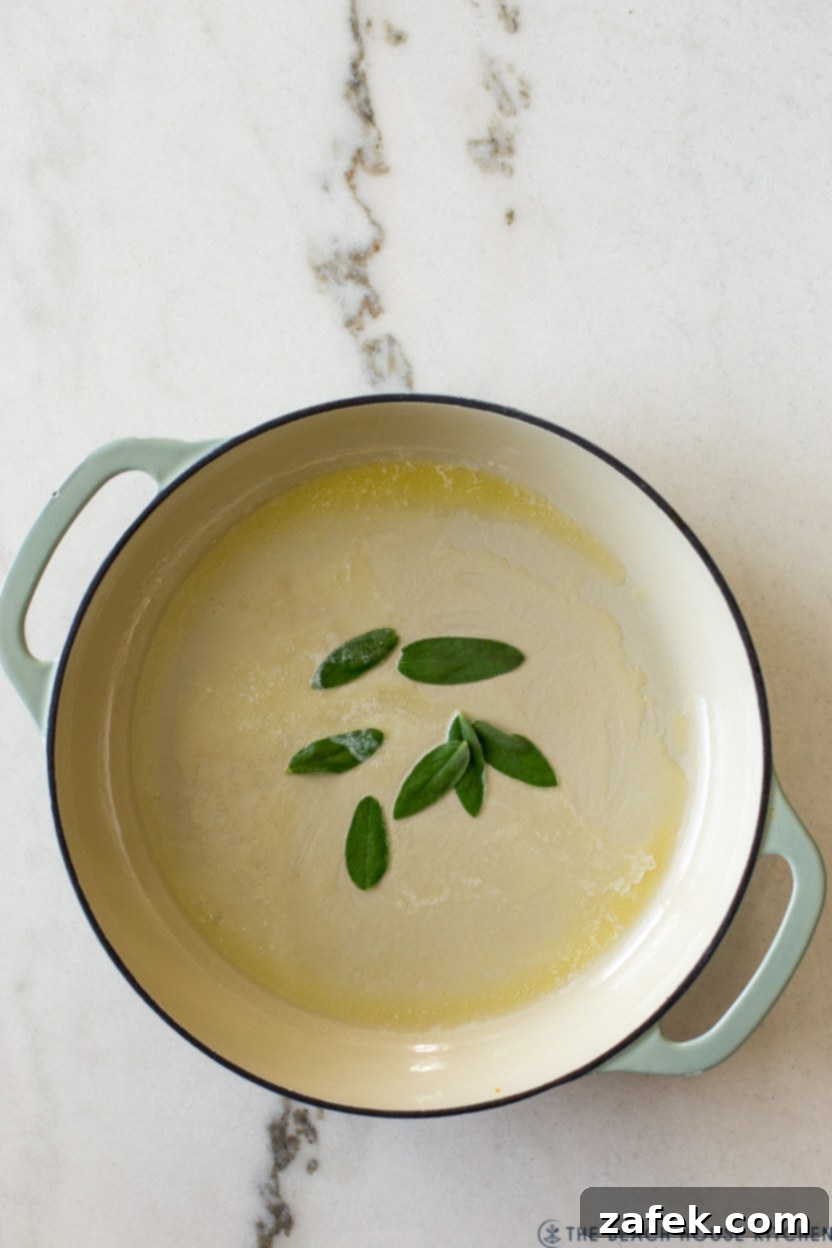
Step 1: Prepare the Crispy Sage. Begin by melting butter in a large, deep skillet over medium heat. Add seven whole fresh sage leaves and cook for approximately 3 minutes, or until they become beautifully crisp. Remember to flip them halfway through to ensure even browning. Once crisp, carefully remove them from the skillet and place them on a plate lined with a paper towel to drain. Set these aside; they will be used as a delightful garnish later.
Step 2: Sauté the Aromatics. To the same skillet, add the olive oil. Then, introduce your finely chopped yellow onions, celery, carrots (the *soffritto*), minced garlic, fresh thyme leaves, the remaining chopped sage leaves, and a generous pinch of kosher salt and freshly ground black pepper. Cook these vegetables over medium heat, stirring occasionally, until they are beautifully softened and fragrant, which typically takes about 10 minutes. This step is crucial for building the foundational flavors of your sauce.
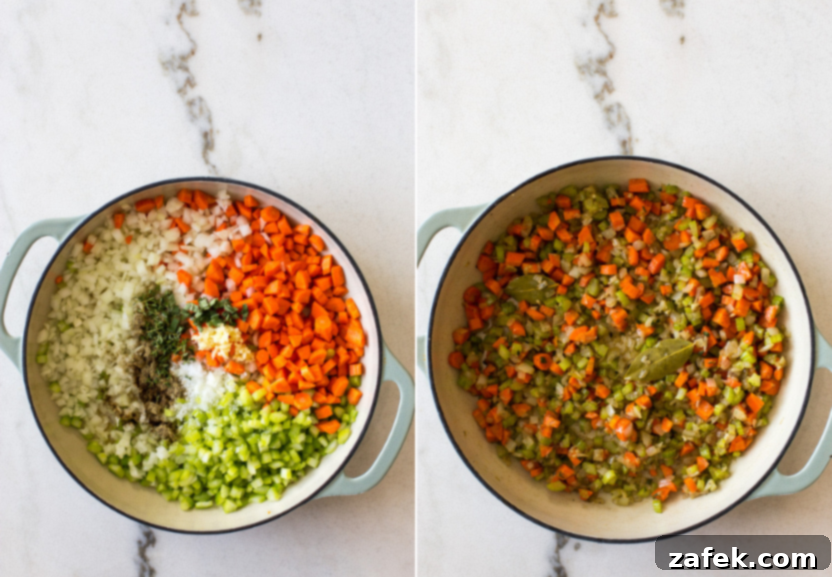
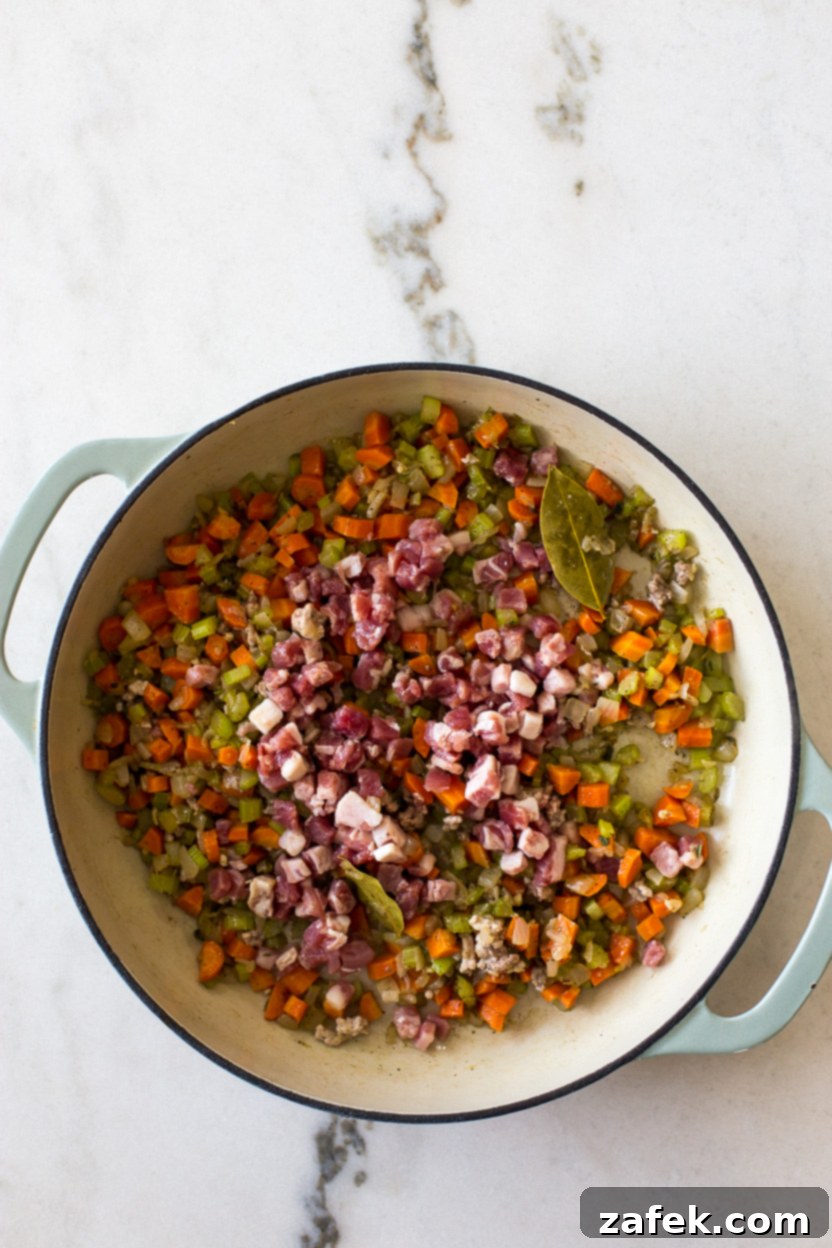
Step 3: Render the Pancetta. Add the bay leaves and the chopped pancetta to the softened vegetables. Continue to cook for approximately 3 minutes, stirring frequently, until the pancetta’s fat has rendered out and the pieces are slightly crisp. The rendered fat will add another layer of savory richness to the sauce.
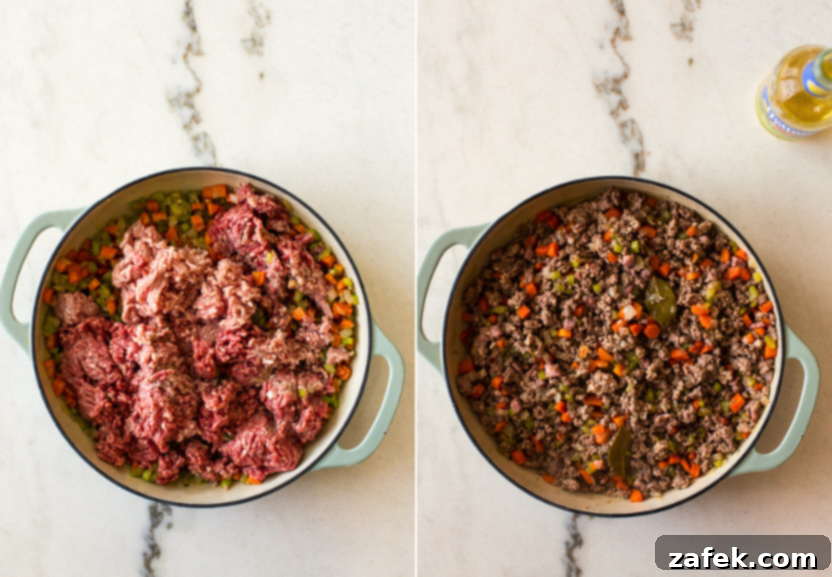
Step 4: Brown the Meats and Deglaze. Increase the heat to medium-high. Add both the ground beef and ground pork to the skillet. Cook, breaking up the meat with a spoon or spatula as it cooks, until it is no longer pink and any released liquid has mostly evaporated. This usually takes about 7-8 minutes. Browning the meat properly is key to developing deep, savory flavors. Next, pour in the white cooking wine. Continue to cook, stirring, until the wine has mostly evaporated. This step deglazes the pan, capturing all the flavorful browned bits from the bottom and adding a beautiful acidity to the sauce.
Step 5: Simmer to Perfection. Now, add the low-sodium chicken stock, heavy cream, and the Parmesan rind (if you’re using it for that extra depth of flavor). Bring the mixture to a gentle boil, then immediately reduce the heat to a low simmer. Allow the sauce to simmer uncovered for 35-45 minutes, stirring occasionally. The goal here is to allow the flavors to meld and deepen, and for the sauce to thicken slightly. The longer it simmers, the more complex its flavor profile becomes.

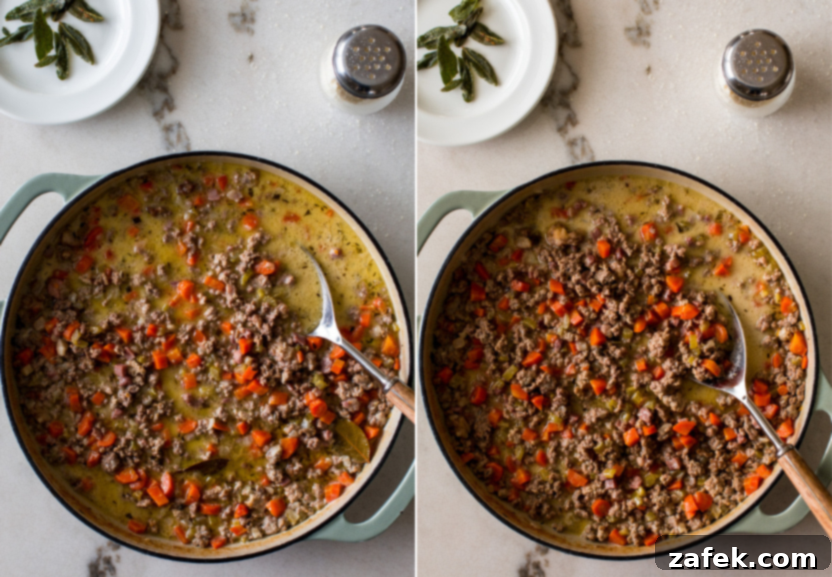
Step 6: Final Touches. Once the sauce has reached its desired consistency, remove the bay leaves and the Parmesan rind. Stir in the grated Parmesan cheese until it’s fully incorporated, lending a final creamy, salty kick. Gently fold in the reserved crispy sage leaves you prepared in Step 1. Your magnificent White Bolognese is now ready to be enjoyed.
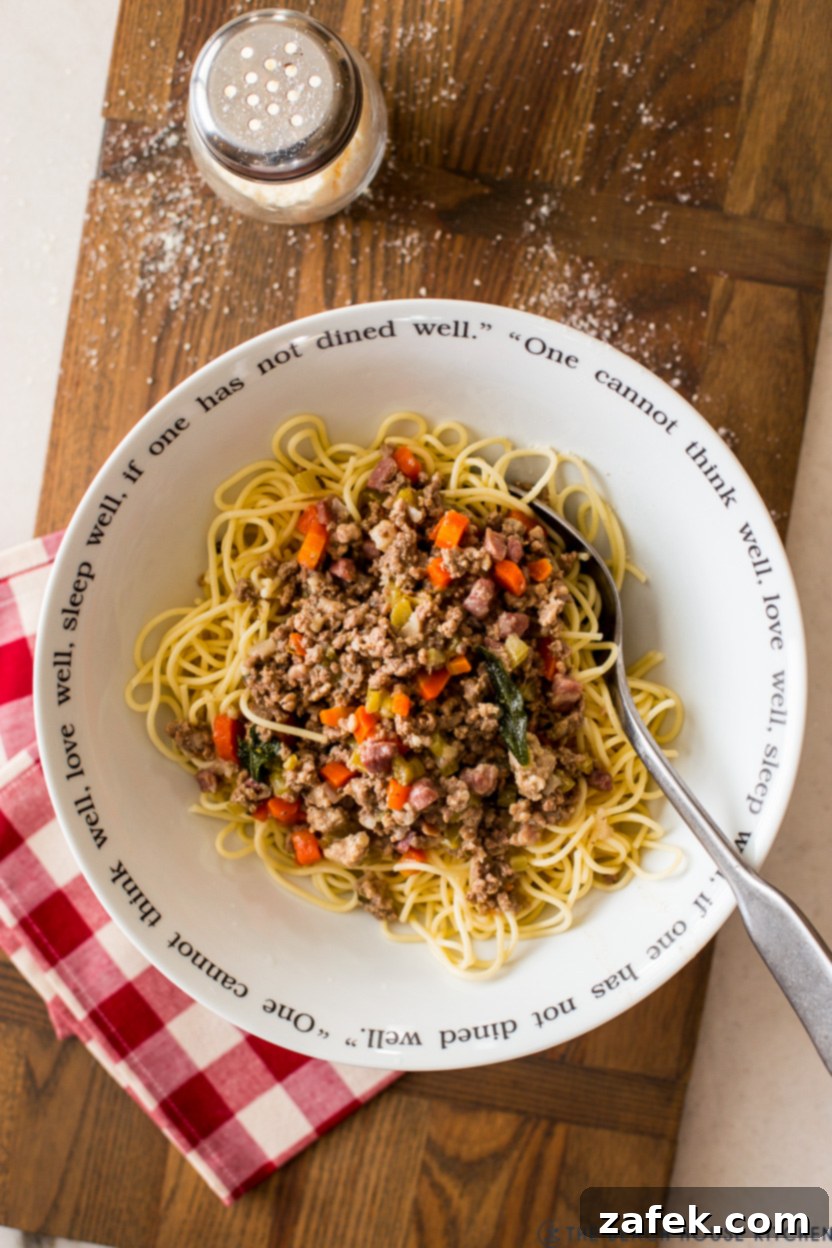
For today’s recipe, I served this incredible sauce with classic spaghetti, allowing the rich, creamy sauce to cling beautifully to each strand. However, the beauty of White Bolognese lies in its versatility; it truly complements any pasta shape you prefer. Imagine it with wide pappardelle, sturdy rigatoni, or even delicate cavatelli. The choice is yours!
I recently prepared this dish for my husband, Tom, a few weeks ago, and it received his coveted “double thumbs up” endorsement – a high honor indeed, given his discerning palate. While he’s a devoted admirer of my traditional Bolognese, he was genuinely captivated by the unique and sophisticated flavors of the white version. He even went so far as to claim the leftovers for himself the very next day, a true testament to its deliciousness! The magic of this sauce is that its flavors deepen and meld even more harmoniously after sitting overnight, making it an excellent meal prep option.
So, yes, John… White Bolognese is unequivocally a “thing,” and an exceptionally delicious one at that! You absolutely must give it a try. I promise it will redefine your understanding of classic Italian comfort food.
I would be absolutely delighted to hear if you decide to try out this recipe. Please feel free to share your thoughts, experiences, or any questions you might have in the comments section below. Enjoy the journey of creating and savoring this magnificent dish!
Essential Cook’s Notes and Pro Tips for Your White Bolognese
To ensure your White Bolognese turns out perfectly every time, here are a few key insights and tips from my kitchen to yours:
- Meat Ratio Matters: For the ideal balance of flavor and texture, I highly recommend using a combination of one pound of 90/10 ground beef and one pound of ground pork. The leaner beef provides substance, while the pork adds a wonderful tenderness and slightly sweeter, richer flavor that truly elevates the sauce.
- The Secret Weapon: Parmesan Rind: Don’t ever throw away your Parmesan rinds! Adding a piece of Parmesan rind to the bolognese while it’s simmering is a game-changer. As it cooks, it slowly releases incredible umami depth and a subtle nutty flavor into the sauce, making it even more complex and satisfying. Just remember to remove it before serving.
- Prep Ahead for Ease: Bolognese, by nature, is a process. To make your cooking experience smoother and more enjoyable, I always suggest chopping all of your vegetables (onions, carrots, celery, garlic) the night before. This simple act of mise en place significantly reduces your active cooking time on the day you plan to make the bolognese, allowing you to focus on the cooking itself without feeling rushed.
- Don’t Rush the Browning: Achieving a deep, golden-brown sear on your meats and aromatics is fundamental. This process, known as the Maillard reaction, creates incredible flavor compounds that cannot be replicated. Take your time, don’t overcrowd the pan, and allow each component to properly brown before moving to the next step.
- Taste and Adjust: Always taste your sauce as it simmers and at the end of cooking. Seasoning is a personal preference, so feel free to adjust the salt, pepper, or even add a pinch more fresh herbs to suit your palate.
- White Wine Choice: While “white cooking wine” is suggested, a dry white wine you’d enjoy drinking, like a Pinot Grigio or Sauvignon Blanc, will provide a superior flavor profile to your sauce. Avoid anything too sweet.
- Serving Temperature: Serve the White Bolognese piping hot, freshly tossed with your favorite pasta. The warmth helps to release its rich aromas and ensures the creamy sauce perfectly coats every piece of pasta.
More Delicious Italian Recipes to Explore and Enjoy
If you’ve loved the unique flavors of this White Bolognese, you’ll undoubtedly appreciate these other Italian classics from my kitchen:
Bucatini Bolognese: A hearty, traditional red Bolognese sauce served with the wonderfully thick and chewy bucatini pasta, perfect for soaking up every drop of rich flavor.
Lasagna Bolognese: The ultimate layered pasta dish featuring sheets of pasta, a decadent Bolognese sauce, creamy béchamel, and plenty of cheese, baked until bubbly and golden.
Mom’s Meatballs and Marinara Sauce: A comforting classic from my family’s recipe collection, featuring tender, flavorful meatballs simmered in a rich, homemade marinara sauce – pure Italian comfort.
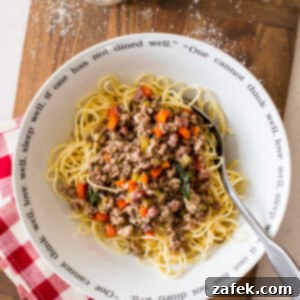
White Bolognese
Print Recipe
SaveSaved!
Pin Recipe
Ingredients
- 1 Tbsp. butter
- 1 Tbsp. olive oil
- 14 sage leaves, keep seven whole and chop the remaining
- 1 1/2 cups yellow onion, finely chopped
- 1 1/2 cups celery, finely chopped
- 1 cup carrots, finely chopped
- 5 cloves garlic, finely minced
- 2 tsp. fresh thyme leaves
- 1 tsp. kosher salt
- 1 tsp. pepper
- 2 bay leaves
- 4 oz. pancetta, chopped
- 1 lb. ground beef, I use 90/10
- 1 lb. ground pork
- 1 cup white cooking wine
- 1 3/4 cups low-sodium chicken stock
- 1/2 cup heavy cream
- Parmesan rind, if desired for extra flavor
- 1/4 cup grated Parmesan cheese, plus extra for serving
- 1 lb. spaghetti, for serving
Instructions
- Melt your butter in a large deep skillet over medium heat. Add your seven fresh sage leaves and cook for about 3 minutes until crisp, flipping halfway through. Remove to a plate and set aside.
- Add the olive oil to the skillet as well as the onions, celery, carrots, garlic, thyme leaves, chopped sage leaves and salt and pepper and cook over medium heat until softened, about 10 minutes. Add the bay leaves and pancetta and cook for about 3 minutes, stirring often, until the fat is rendered.
- Raise the heat to medium-high and add your beef and pork and cook, breaking up as it cooks, until the meat is no longer pink and until the the liquid has mostly evaporated, about 7-8 minutes. Add the wine and continue to cook until it has mostly evaporated.
- Add your chicken stock, cream and Parmesan rind, if using, and bring to a boil before reducing the heat to a simmer. Simmer for 35-45 minutes until the mixture thickens slightly, stirring occasionally. Remove the bay leaves and Parmesan rind. Add your grated Parmesan and crispy sage leaves and mix gently until well combined. Remove from the heat and serve over the pasta of your choice with extra grated Parmesan cheese.
Notes
I like to add a Parmesan rind to the bolognese while it’s simmering for added flavor.
To make things easier, I usually chop all of my veggies the night before, so I don’t have as much work to do the day I make the bolognese.